Most packing checklists look pretty similar, no matter the destination. Stockholm isn’t completely different, but there are a few practical details that tend to catch first-time visitors off guard.
Things like how little cash is used, how alcohol sales are regulated, or how quickly accommodation fills up in summer can make a bigger difference than you might expect.
In this checklist, we’ll walk through what’s worth booking in advance, what to pack for a city built on water and cobblestones, and a few local details that can help your trip run more smoothly.
Before you leave home
The admin that saves you on the ground. Most of this section applies two to eight weeks before departure, not the night before.
Documents and money
- Passport valid for the full trip duration. Non-EU visitors should check the three-month validity rule beyond the return date.
- Travel insurance confirmed and accessible on your phone.
- Notify your bank of travel dates. Card declines at the first café are a common and entirely preventable start to a Stockholm trip.
- Do not pre-order SEK cash. Cards are accepted almost universally, including market stalls, museum cafés, and small independent shops.
Book in advance
- Accommodation: Stockholm fills quickly from June through August, and around events like Stockholm Marathon and Midsommar week. Book as early as you can.
- Archipelago ferries: if you are travelling June through August, book Cinderellabåtarna day trips well in advance. Day sailings to Grinda, Sandhamn, and Finnhamn sell out on summer weekends.
- Restaurants: anything mid-range and above operates on reservations, typically two to four weeks out in peak season. Walk-ins at well-regarded spots are rarely possible on a Friday or Saturday evening.
- ABBA Museum: online tickets are recommended, particularly on weekends.
- Gröna Lund: booking online avoids queues in summer.
- Vasa Museum: no advance booking required, but arrive when it opens or after 3 pm to avoid the busiest period.
Seasonal notes
- Summer (Jun–Aug): Book ferries and accommodation early. Midsommar falls in late June and closes many shops and restaurants for two to three days; factor this in if it overlaps with your trip.
- Winter (Nov–Mar): Archipelago ferry routes run reduced schedules. Fewer restaurants require weeks of advance notice. Check museum hours, as some have shortened winter opening times.
Download before you fly
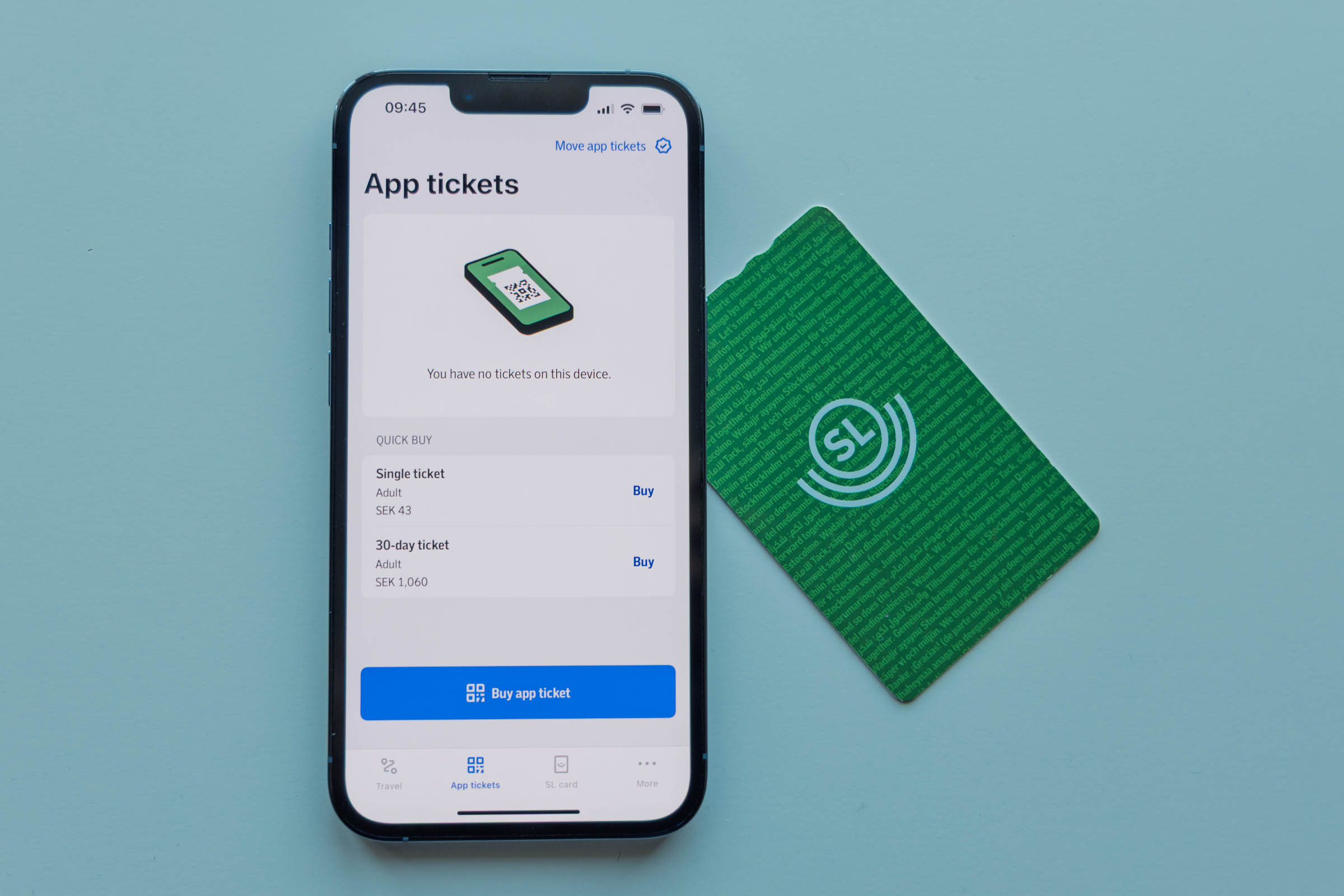
- The SL app: Stockholm’s public transit app. Covers metro, bus, tram, and most city ferries. You can buy tickets directly in the app.
- Google Maps (Android or iPhone) or Maps.me with Stockholm downloaded as an offline map.
- Airline app and all booking confirmations saved locally in case of poor connectivity.
Pack for Stockholm
Stockholm is a very walkable city, and what you pack should reflect that. You’ll likely spend a lot of time on your feet, moving between districts, parks, and waterfront areas. Comfort and flexibility tend to matter more than packing for every possible scenario.
If you do forget something, it’s easy to pick it up once you’re here.
Clothing
- Comfortable, broken-in walking shoes. Gamla Stan is cobblestoned throughout, and Djurgården has a mix of gravel paths and uneven trails..
- Pack layers. Stockholm’s weather can shift within the same day, especially near the water.
- A packable rain jacket or waterproof shell. Rain can come and go quickly, even in summer.
- Summer: Light layers for the evening. Even in July, temperatures often drop once the sun goes down. Sunglasses are also useful on bright days.
- Winter: A proper winter coat, thermal base layers, waterproof boots, plus a hat and gloves. Temperatures often sit around -5°C to -10°C (23°F to 14°F) between December and February, and wind near the water can make it feel colder.
Practical items
- EU plug adapter if you are arriving from outside Europe. Sweden uses Type F sockets.
- Portable charger. Long days out and frequent map use drain your phone faster than expected.
- Reusable water bottle. Tap water in Stockholm is safe to drink and widely available.
- A small day bag or backpack, especially if you’re planning day trips where you’ll carry what you need with you.
What you can skip
- Large amounts of cash. Cards are accepted almost everywhere, though having a small backup amount can still be useful in occasional cash-only situations.
- Overly formal clothing unless you have specific plans. Stockholm is stylish, but the overall dress code is fairly relaxed.
Know before you go
These aren’t things you pack or book, but they do shape how your trip works once you’re here. A few small details about payments, transport, and opening hours can save time and avoid confusion, especially on a first visit.
Payments and money
- Sweden is one of the most cashless countries in the world. Cards work at almost all cafés, transport options, museums, and shops.
- Swish is widely used by locals. Visitors can’t usually access it, which mainly comes up at smaller markets or events. In those cases, paying by card is often still possible, but having a small amount of cash as a backup can be useful.
- Tipping is not expected. Rounding up or adding 5–10% at restaurants is appreciated, but it’s optional rather than something you’re expected to do.
Alcohol rules
- Wine, spirits, and beer above 3.5% ABV are sold through Systembolaget, the state-run alcohol store. Supermarkets do not carry these.
- Systembolaget is closed on Sundays and closes at around 3 pm on Saturdays. If you want something for the evening, it’s worth planning ahead.
- Bars and restaurants serve alcohol as usual. These rules only apply to takeaway purchases.
Getting from Arlanda Airport
- Arlanda Express is a direct high-speed train between the airport and Stockholm Central Station, taking about 20 minutes. A single ticket is around 340 SEK
- Flygbussarna runs airport coaches that take 40 to 50 minutes depending on traffic and cost around 129 SEK. They stop at several central locations, including Cityterminalen next to Stockholm Central.
- The SL commuter train (pendeltåg) is a more budget-friendly option if you’re using public transport, though it includes an additional airport access fee. We cover the differences in detail in our airport transit guide.
Getting around the city
- Stockholm’s public transport system, run by SL, covers metro, buses, trams, and some commuter ferries within the city on the same ticket system.
- Travel cards (for example 24, 72, or 120 hours) can be good value if you plan to use public transport frequently, but they’re not always necessary for shorter stays or if you prefer to walk. See our guide to getting around Stockholm: a guide to public transport for a clearer breakdown.
- Cycling is a practical option from May through September. Rental bikes are available across the city, and the cycling infrastructure is well developed. We cover this in more detail in our bike rental guide.
Opening hours
- Shops typically open 10 am to 7 pm on weekdays, with shorter hours on Saturdays and limited hours on Sundays.
- Systembolaget and many smaller independent shops are closed Sundays entirely.
- Many museums are open on Sundays, but a more important detail for planning is that several are closed on Mondays. It’s worth checking opening hours in advance, especially outside peak season.
If you want to put this checklist to work, our Stockholm itineraries and getting around guides cover the day-by-day detail and transit logistics once you arrive.