

Last updated: November 9, 2026
Gamla Stan is Stockholm’s oldest district, a small island of medieval lanes one metro stop from T-Centralen. Plan two to three hours to walk from Mårten Trotzigs gränd to Stortorget, Storkyrkan and the Royal Palace, and eat at lunch, when many restaurants serve a weekday lunch special at a lower price than their dinner menu.
In short
- What it is: Stockholm’s medieval old town, on a small island. The Royal Palace, Storkyrkan and Stortorget are a few minutes’ walk apart.
- How long: 2–3 hours for a walk with a coffee break. Add about 2 hours for the Royal Palace or the Nobel Prize Museum.
- When to go: Early morning, before the shops open around 10:00, or in the evening. January to March is quietest and summer middays are busiest.
- Getting there: From T-Centralen, take the red or green line one stop to Gamla stan.
How to spend 2–3 hours in Gamla Stan
Gamla Stan is compact, but it rewards going slowly. This walk takes in the main sights in two to three hours, including a coffee break. Start at Gamla stan metro station, on the red and green lines.
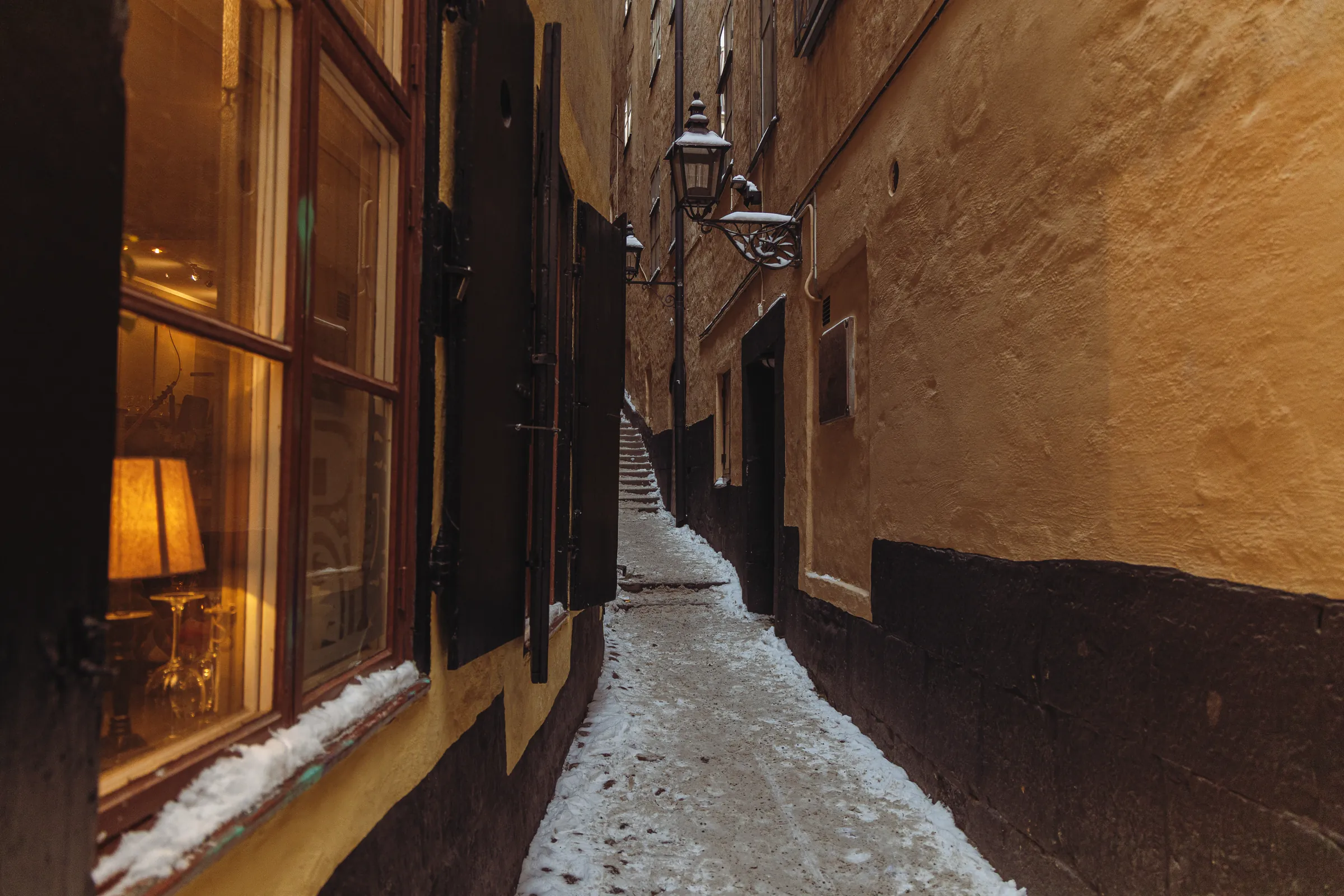
- Mårten Trotzigs gränd. From the metro station, walk along Västerlånggatan to Stockholm’s narrowest alley, just 90 cm wide at its tightest point, and climb the steps up to Prästgatan.
- Järntorget and Österlånggatan. Continue to Järntorget, the square with the Evert Taube statue, then walk north along Österlånggatan, the quieter street running parallel to Västerlånggatan.
- Köpmantorget. Look for the bronze statue of Saint George slaying the dragon in this small square.
- Stortorget. Stockholm’s oldest square, with its colorful gabled houses and the Nobel Prize Museum. Stop for fika at Chokladkoppen or Grillska Huset.
- Storkyrkan. Just off the square, Stockholm Cathedral holds the original wooden Saint George and the Dragon sculpture.
- Järnpojke. Find Stockholm’s smallest public statue, just 15 cm tall, in the courtyard behind the Finnish Church.
- The Royal Palace. Finish at the palace. The changing of the guard in the outer courtyard runs daily in summer and on fewer days the rest of the year, so check the times before you go.
Tip: The lanes are busiest from late morning to mid-afternoon, especially in summer. Start before 10:00, when most shops are still closed, and you’ll have the streets more to yourself.
Things to see and do in Gamla Stan

Gamla Stan is a tight grid of cobblestone lanes and narrow alleys, lined with tall houses painted in ochre, red and yellow. Here you’ll find churches, museums and the Royal Palace, along with shops, cafés and restaurants.
Churches
Some of Stockholm’s oldest churches are in Gamla Stan. Stockholm Cathedral (Storkyrkan), right next to the Royal Palace, is the oldest parish church in Stockholm: it was consecrated in 1306 and served the medieval town’s residents. It is built in the Gothic style and is open to visitors daily for an entrance fee (see the link above for prices).
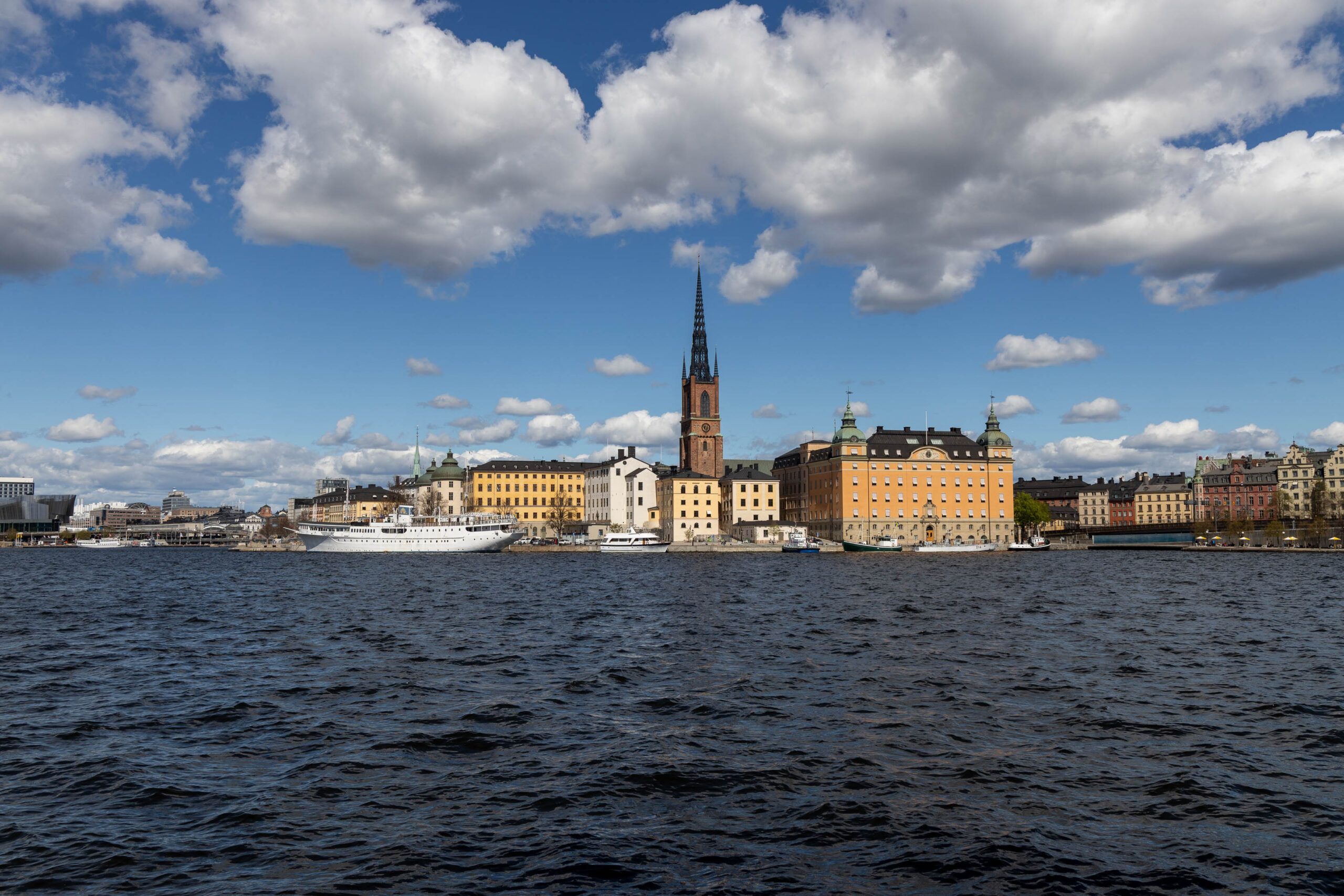
Riddarholmen Church (Riddarholmskyrkan) stands on the neighboring island of Riddarholmen, which is often considered part of Gamla Stan. It was built as a monastery church for the Greyfriars (Franciscan monks) in the late 1200s, slightly before Storkyrkan, and later became a royal burial church. It is Stockholm’s only preserved medieval monastery church. The church is generally accessible during the main season from April to October. From November to March, it has limited hours and may be closed entirely during certain periods.
The German Church (Tyska kyrkan) was originally built to cater for Stockholm’s large German-speaking community in the early 1600s. It features Gothic and Baroque elements, with a tall spire that is a prominent feature in Gamla Stan’s skyline. With its tower reaching a height of 96 meters (315 feet), it is the tallest building in Gamla Stan. The church is still used by a German-speaking parish, with Sunday services at 11:00, and visiting hours vary around services and concerts, so check the parish calendar before you go.
Museums

The Nobel Prize Museum is dedicated to Alfred Nobel’s legacy showcasing his life, inventions and the story behind the establishment of the Nobel Prize. The museum also showcases artifacts and personal stories of past Nobel Prize winners like Marie Curie and Nelson Mandela, aiming to inspire visitors through their achievements. The museum is located at Stortorget square, which is known for its colorful buildings and is a popular photo spot.

The Royal Palace is the official residence of the Swedish royal family and King Carl XVI Gustaf, though they actually live at Drottningholm Palace. The Royal Palace in Gamla Stan is primarily used for ceremonial purposes and official events. With 600 rooms spread over seven floors, it is one of the largest palaces in the world still serving its original purpose. The Royal Palace is one of the few royal residences in the world that is open to the public.
Apart from the royal state rooms (collectively called the Royal Apartments) there are also several museums located within the Royal Palace: The Museum Three Crowns (Tre Kronor), where you can learn about the history of the original Tre Kronor Palace, that was located at the same location as today’s palace. Gustav III’s Museum of Antiquities, which showcases Gustav III’s collection of sculptures. And the Treasury that is located in the cellar vaults.
The Royal Armoury is also one of the Royal Palace museums. It’s located in the basement of the palace and has a separate entrance. It has a large collection of armor, weapons and historical garments. It’s one of the oldest museums in Sweden and with artifacts dating back to the 16th century.
Postmuseum covers the history of the Swedish postal service. It is at Lilla Nygatan 6, in a 17th-century building that is the oldest owned by the Swedish postal service. The main exhibition, POST, follows the mail from the 1600s to today with about 400 objects. It is open Tuesday to Friday 11:00–17:00 and weekends 10:00–16:00, and closed on Mondays and public holidays. Tickets cost 150 SEK for adults, 100 SEK for students and seniors and 50 SEK for children aged 3–18. The elevator is closed until December 20, 2026.
Sights
Mårten Trotzigs Gränd is Stockholm’s narrowest alley, measuring only 90 centimeters (35 inches) at its tightest point. It’s a popular photo spot where visitors enjoy seeing just how tightly they can squeeze through.
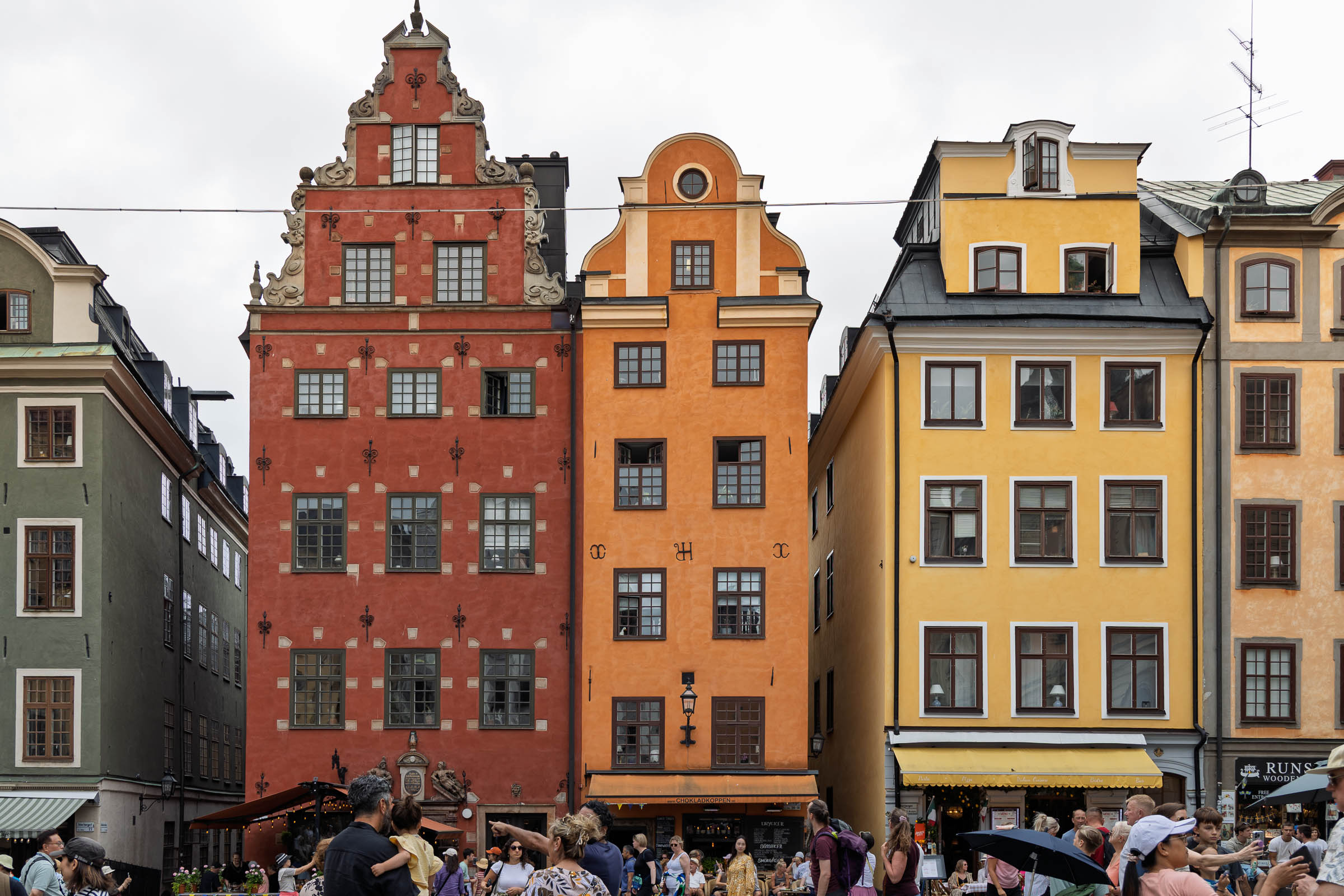
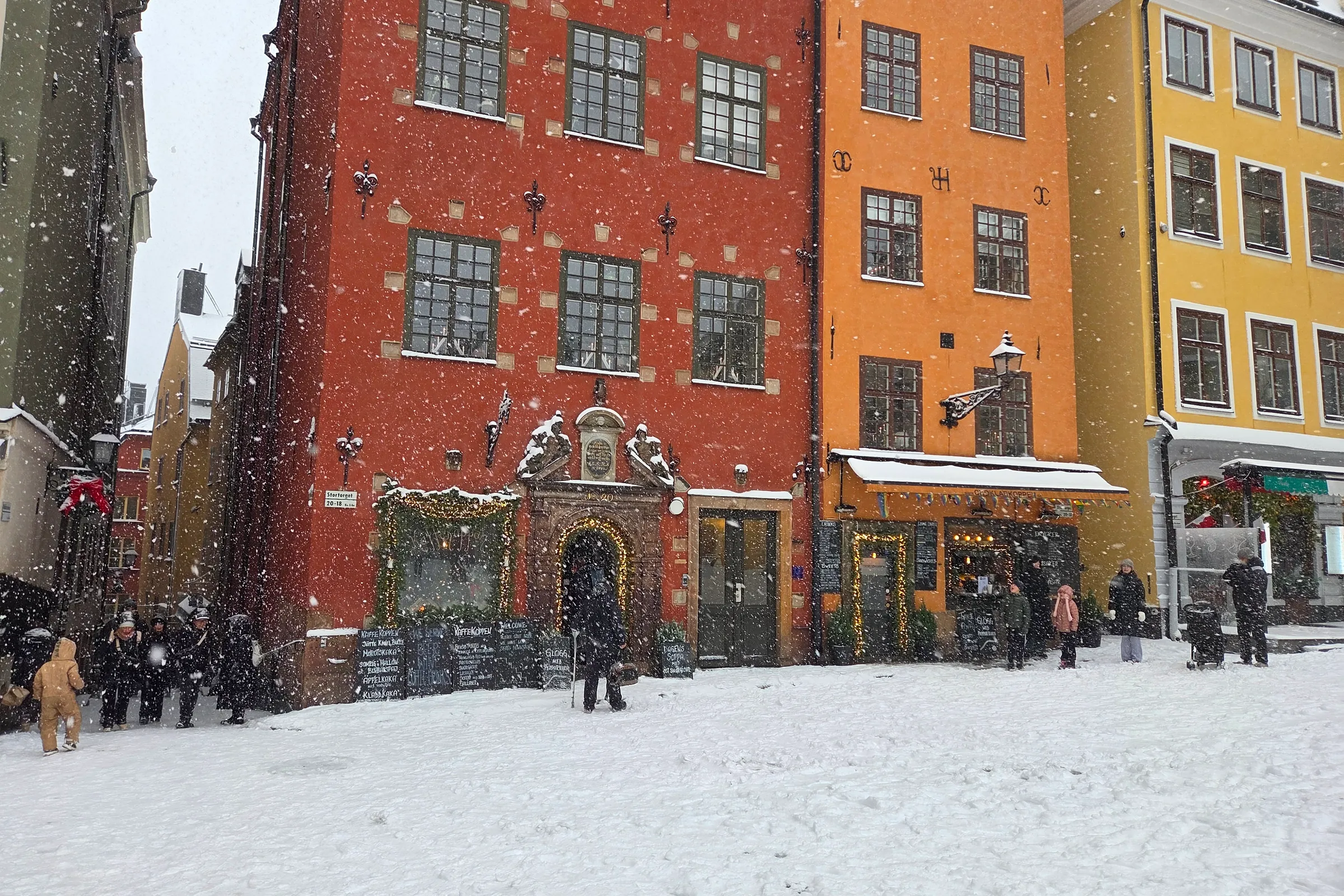
Stortorget is the oldest square in Stockholm, next to Stockholm Cathedral. The tall, narrow houses on its west side are the most photographed in Gamla Stan. The red one at number 20 has 82 white stones set into its facade, which legend says stand for the people executed on the square in the Stockholm Bloodbath of 1520. The house is older than that, and the stones were added in 1628. The well in the middle of the square dates from 1778, and the former Stock Exchange (Börshuset) on the north side houses the Nobel Prize Museum.
The Iron Boy (Järnpojke), also called “Boy Watching the Moon”, is Stockholm’s smallest public statue. You’ll find the 15 centimeters (6 inches) tall statue in a courtyard behind the Finnish Church. If you visit the statue during the winter the locals might have dressed it up with scarves and hats.
Saint George and the Dragon is a dramatic statue depicting the legendary tale of Saint George slaying a dragon to save a princess. The sculpture is incredibly detailed, with Saint George in armor and the dragon beneath him, representing the struggle between good and evil. The original wooden statue is inside Storkyrkan (Stockholm Cathedral), while a bronze replica stands outside the Köpmantorget square.

The Evert Taube statue is a bronze statue in memory of one of Sweden’s best-known singer-songwriters, Evert Taube. You’ll find the statue at the square Järntorget. From Järntorget, it’s a short walk across Slussen to Södermalm.
Brantingtorget is a public square, named after the former Swedish prime minister Hjalmar Branting. Its design is unusual for Gamla Stan, making it easy to miss unless you’re looking for it. The square is circular, ringed by a single curved building, and opens up suddenly at the end of the narrow alleys that lead into it.
Gamla Stan through the seasons
Spring: From April the lanes fill up again and Riddarholmen Church reopens for the season (April to October). Mornings are still quiet before the summer crowds arrive.
Summer: The busiest season. Cafés and restaurants open their outdoor terraces, Gustav III’s Museum of Antiquities in the Royal Palace is open (June to August), and the changing of the guard takes place every day. Come early or in the evening to avoid the midday crowds.
Autumn: September and October bring fewer visitors than summer, and the low light suits photos of Stortorget’s colorful houses. By November the days are short, but the lanes are atmospheric once the lights come on.
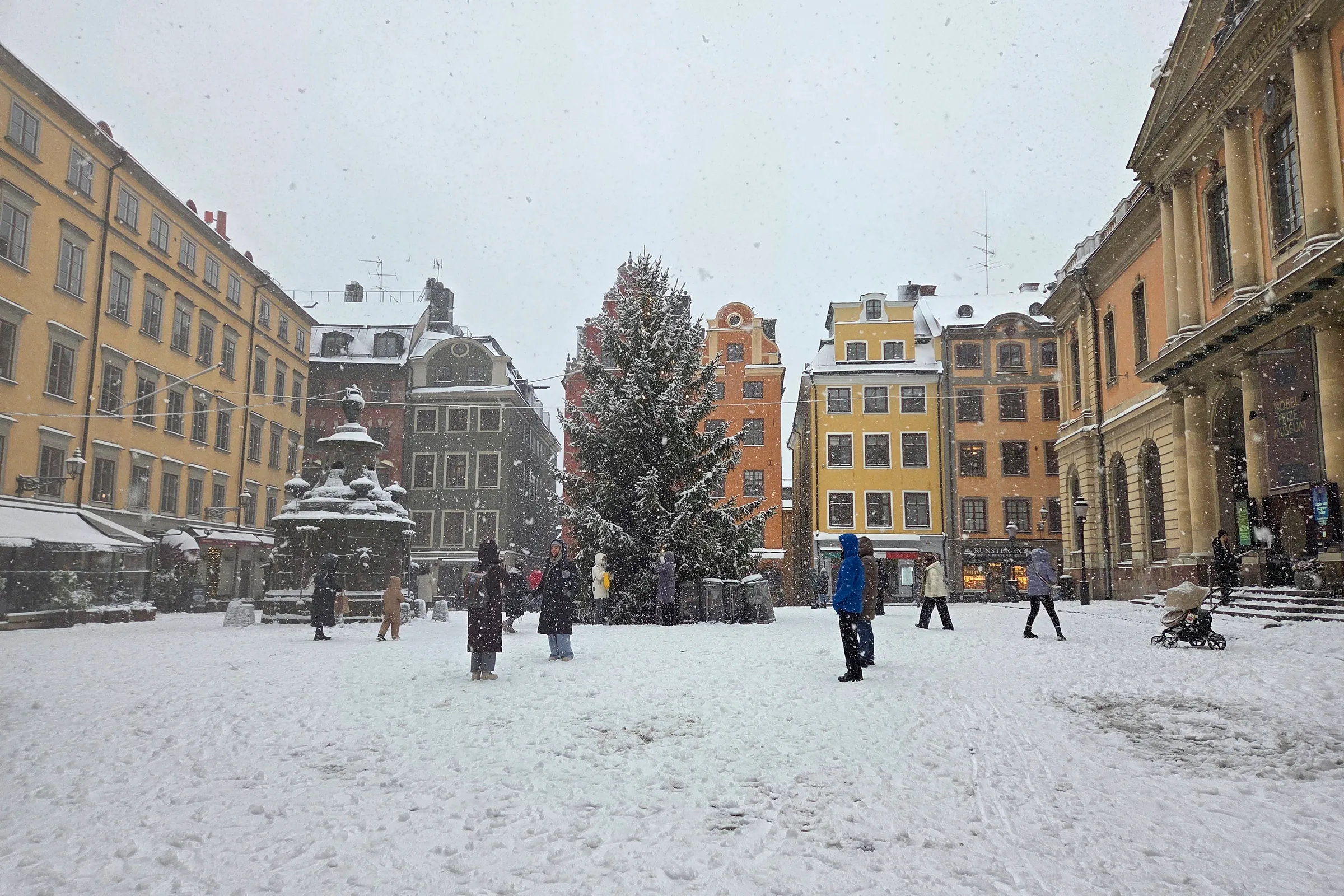
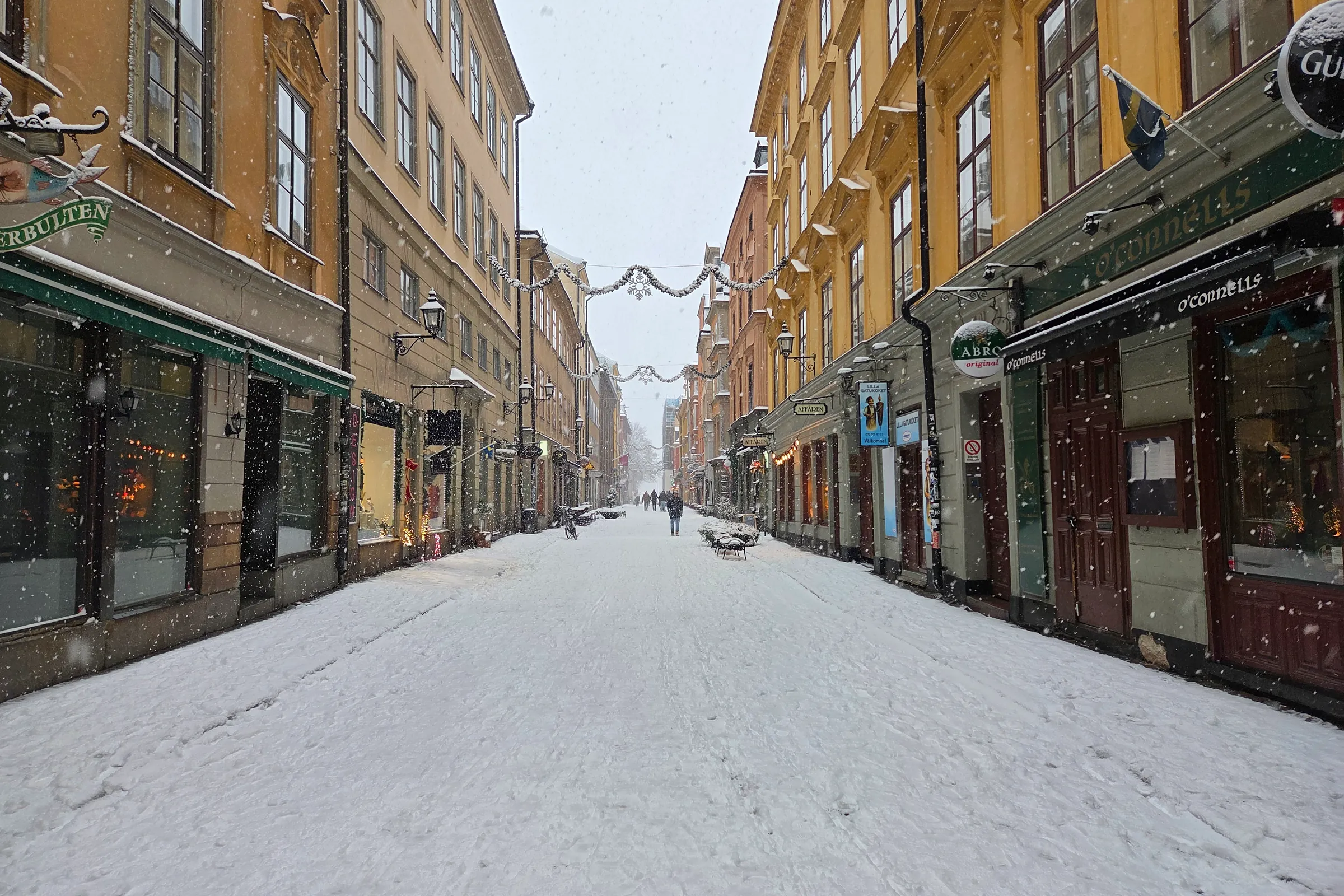
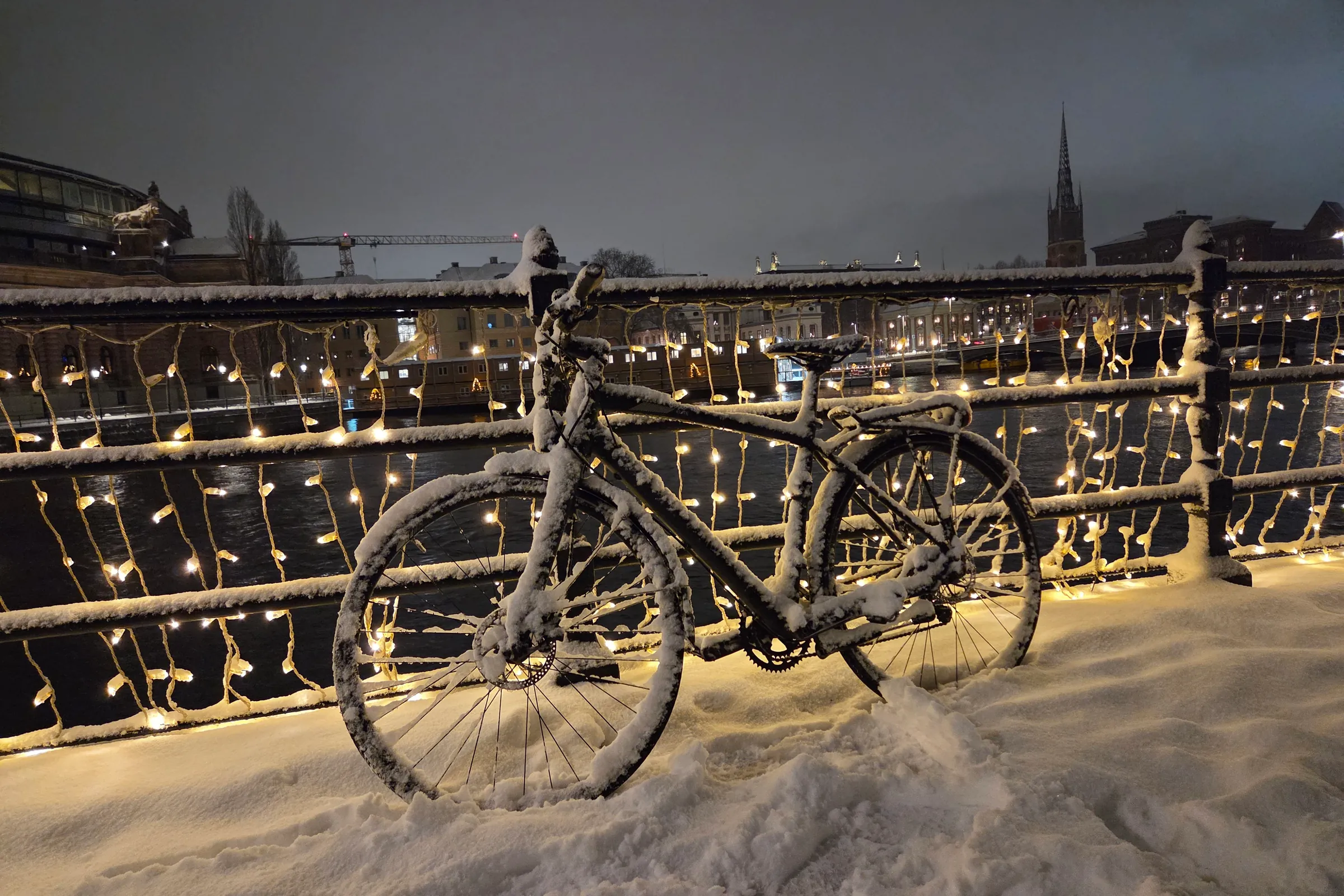
Winter: From November 21 to December 23, 2026, Stortorgets Julmarknad, the Christmas market on Stortorget, fills the square every day with red wooden stalls selling glögg and gingerbread. See our guide to Christmas markets in Stockholm. Locals sometimes dress Järnpojke, the Iron Boy, in a tiny scarf and hat. Riddarholmen Church has limited hours from November to March.
Restaurants in Gamla Stan
Gamla Stan has some of Stockholm’s best-known restaurants, but also plenty of places that live off passing tourists. As a rule of thumb, the restaurants with picture menus on Västerlånggatan, the main tourist street, tend to charge more for less. The side streets and Österlånggatan are calmer, and that’s where many of the places below are.
For the best value, come at lunch. Many restaurants serve a weekday lunch special (dagens rätt) for less than their dinner menu, including Tradition, and Stiernan Ramen is open for lunch only.
Swedish food

Tradition serves Swedish home cooking (husmanskost), such as meatballs with lingonberries, herring, and dill-cured salmon. They excel at preserving traditional Swedish recipes while adding a modern touch, such as serving butter with Swedish caviar.
Kryp In serves a mix of traditional and modern Scandinavian dishes. The menu changes seasonally, using fresh, locally sourced ingredients. Dishes are beautifully presented plates that feel both rustic and refined.
Established in 1722, Den Gyldene Freden is one of Stockholm’s oldest restaurants and among the oldest continuously operating restaurants in the world. It serves traditional Swedish cuisine as fine dining, at candlelit tables.
Leijontornet offers a refined dining experience, focusing on high-quality ingredients with innovative presentations. Located in a cellar that incorporates sections of the medieval city wall, it combines upscale elegance with a strong sense of history.
Skeppsbron 10 offers a menu of Swedish dishes with a contemporary twist, emphasizing fresh, seasonal ingredients. Guests can enjoy seafood, traditional Swedish meats, and creative interpretations of local cuisine, on the Skeppsbron waterfront.
European food
Österlånggatan 17 serves modern European food with Swedish influences. As its name suggests, it’s located at Österlånggatan 17. It serves both lunch and dinner.
Järnet specializes in hearty European dishes with Swedish influences, offering a mix of traditional flavors with an emphasis on meat dishes like meatballs and grilled steaks. With its wooden interiors and old-world decor, Järnet provides an intimate setting, making it an ideal spot for experiencing traditional Swedish hospitality.
Pastis serves French cuisine on a narrow street in Gamla Stan. The menu changes with the seasons. The small room is set up like a French bistro, which suits a date night or a relaxed evening with friends.
Asian food
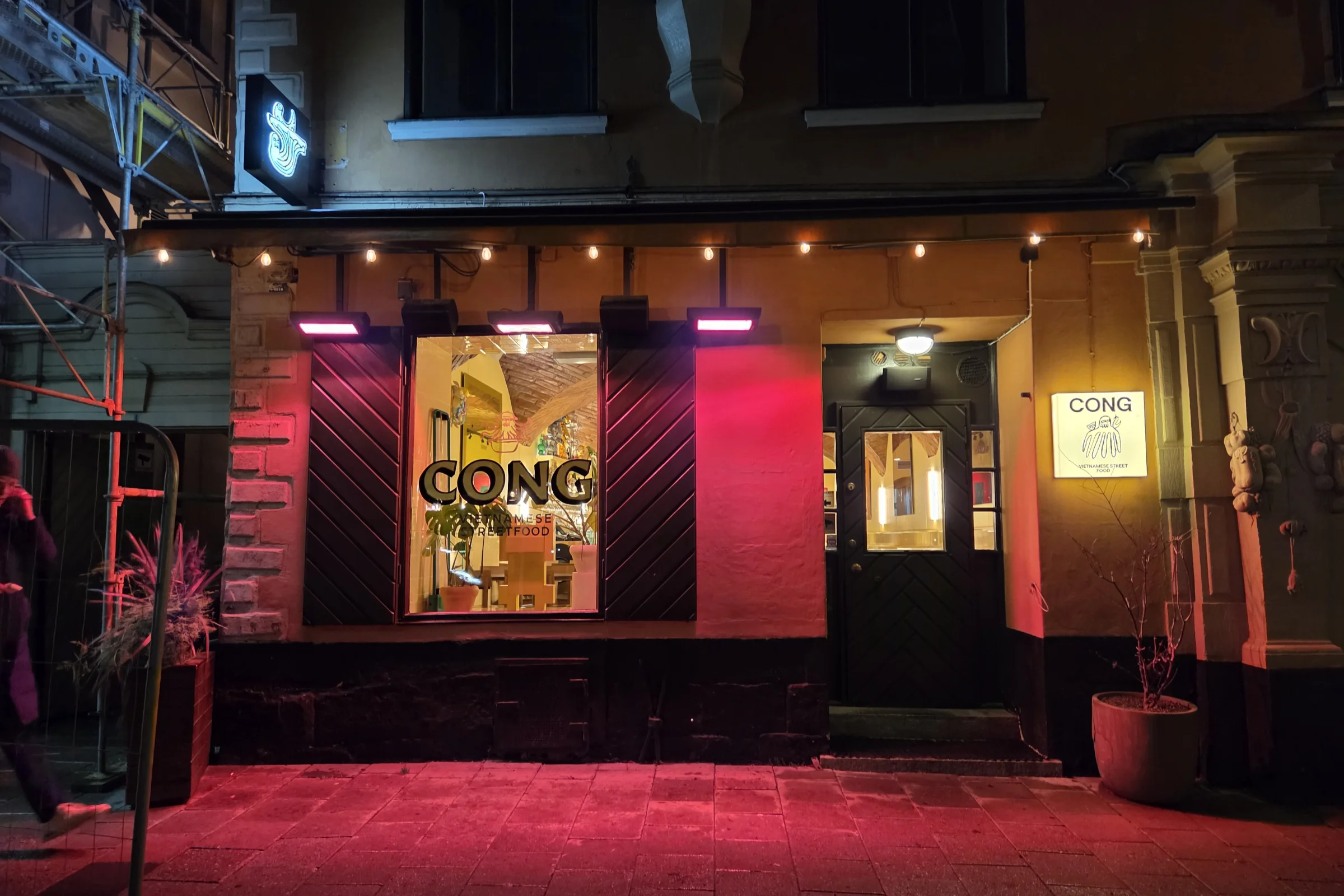
Cong offers authentic Vietnamese dishes, ideal for sharing small plates. The service is friendly and personal, and the flavors are true to Vietnamese cuisine. The restaurant is popular and doesn’t take reservations, so simply stop by to leave your name and number; they’ll let you know the estimated wait time and send a text message when your table is ready.
Stiernan Ramen is a lunch-only ramen restaurant with a short menu. Choose between shoyu and shio ramen, with optional extras. The room is as minimal as the menu.
Formosa is a Taiwanese restaurant with a diverse menu of Taiwanese dishes. It’s an excellent option for those looking to explore Taiwanese flavors, from savory street food to comforting soups.
Cafés in Gamla Stan
Panem is a relatively new café in Gamla Stan, with a modern look among the old buildings. It serves specialty coffee, and its pastries put a modern twist on traditional Swedish recipes.

Located right by the waterfront, Skeppsbro Bageri is a small bakery-café that bakes its breads and pastries from scratch with organic ingredients. Get a croissant or a sourdough loaf and look out at the boats in the harbor.
Under Kastanjen (‘Under the Chestnut Tree’) is a café on a quiet square, named after the chestnut tree that stands just outside.
Chokladkoppen is a small café on Stortorget, known for its hot chocolate. Inside, the décor is colorful and mismatched, and the outdoor tables face the crowds crossing the square.
Augustas Folksalong combines the charm of a vintage living room with contemporary touches. The café’s interior transports you to the 19th century, with lit candles and kerosene lamps adding to the ambiance. They serve traditional Swedish baked goods, freshly brewed coffee, and offer some vegan-friendly options.
Located on the historic Stortorget square, Grillska Huset is run by the Stockholm City Mission, with profits supporting social initiatives. It sells traditional Swedish pastries and sandwiches, and its outdoor terrace looks across the square’s painted houses. The café is in a 17th-century building.
Bars in Gamla Stan
Cork Vinbar is an intimate wine bar focusing on wines from Portugal, paired with Mediterranean food. It suits wine drinkers who want to try lesser-known grapes and regions.
Pharmarium is a cocktail bar serving creative cocktails that often incorporate herbal and botanical ingredients, blending historical inspiration with modern mixology. The menu leans on unusual flavor combinations, so it suits drinkers who want to try something new.
Karamell is a tucked-away cocktail bar in Gamla Stan. Known for its intimate and laid-back atmosphere, it’s an ideal spot for those looking to escape the busier venues nearby. The bar specializes in a range of well-known and contemporary cocktails.
Ardbeg Embassy is centered around Ardbeg, a whisky from the Scottish island of Islay, but it offers an extensive collection of other whiskies from around the world, with a particular focus on Scottish single malts. The bar is pub-like, with dark wood interiors.
Bar Brahe is a modern bar in one of Gamla Stan’s old buildings, known for regular live jazz. Its decor draws on the history of the S/S Brahe steamship.
Skeppsbar is a traditional, unpretentious Stockholm bar near Järntorget, and one of the older bars in Gamla Stan.
Luxury hotels in Gamla Stan
Hôtel Reisen, situated along the waterfront on Skeppsbron, boasts an excellent location close to both Gamla Stan and central Stockholm. As part of the Unbound Collection by Hyatt, the hotel offers amenities including a spa and sauna.
Victory Hotel is an intimate hotel with a nautical theme, paying homage to Admiral Lord Nelson. The hotel is named after HMS Victory, Nelson’s flagship. It’s filled with maritime antiques, so the hotel feels part museum.
Mid-range hotels in Gamla Stan
Hotel Sven Vintappare is an intimate boutique hotel that feels like stepping back in time. It has only a handful of rooms, each decorated differently.
Scandic Gamla Stan is part of the Scandinavian Scandic chain, with modern rooms in Gamla Stan.
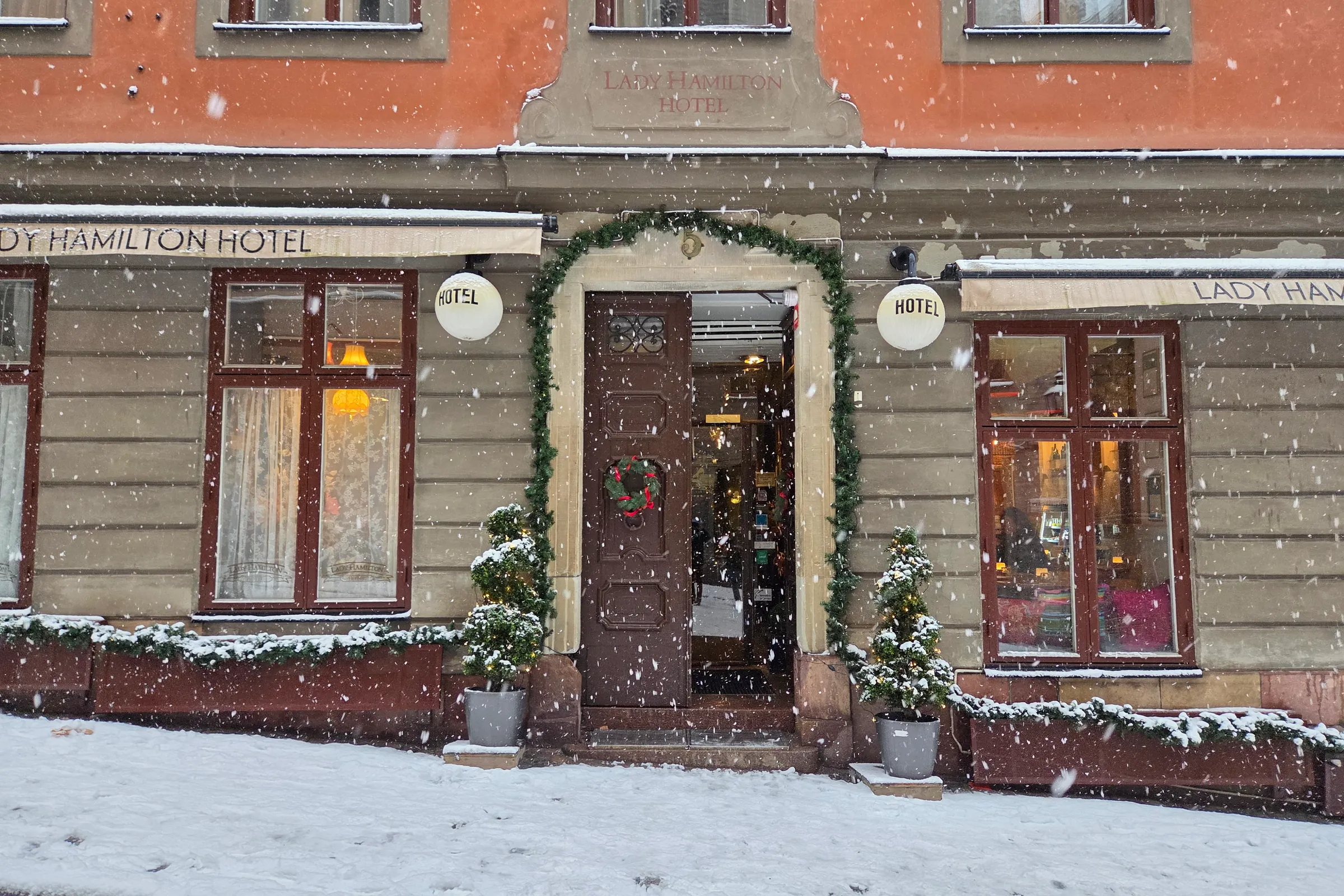
Lady Hamilton is a hotel with an antique charm and decorated in a maritime theme, honoring Lady Hamilton, the mistress of Admiral Lord Nelson. The rooms mix vintage furniture with modern elements.
Lord Nelson Hotel is filled with nautical memorabilia, celebrating Admiral Lord Nelson. The hotel has a strong maritime theme and vintage furniture throughout.
Hotell Skeppsbron has a central location on Skeppsbron, near the waterfront. It’s ideal if you are looking for a well-priced stay in a prime location with a touch of historical charm.
Budget hotels in Gamla Stan
Castle House Inn is located on the alley Brunnsgränd, close to the Royal Palace. It suits travelers who want a budget room within walking distance of the palace.
Hostels in Gamla Stan
Castanea Old Town Hostel is located just a short walk from the Stortorget square. The hostel has a mix of dormitory rooms and private rooms, with shared bathrooms.
Dockside Hostel is situated right on Skeppsbron by the waterfront. This straightforward hostel offers mixed and female-only dormitories, along with a few private rooms, all featuring shared bathrooms.
Frequently asked questions
Can you visit Gamla Stan at Christmas?
Yes. Stortorgets Julmarknad, the Christmas market on Stortorget, runs every day from November 21 to December 23, 2026, 11:00–18:00 Sunday to Thursday and 11:00–19:00 on Fridays and Saturdays. Riddarholmen Church keeps limited hours in winter, and many museums and restaurants change their hours on December 24–26. See our guide to Christmas in Stockholm.
How long do you need in Gamla Stan?
Two to three hours covers the main sights and a coffee break. Add another couple of hours if you want to tour the Royal Palace or visit the Nobel Prize Museum.
When is Gamla Stan least crowded?
Early mornings, before most shops open around 10:00, and evenings, all year round. Over the year, January to March is quietest and midday in summer is busiest. September and October fall in between.
Where can you eat cheaply in Gamla Stan?
Go at lunchtime, when many restaurants serve a weekday lunch special (dagens rätt) at a lower price than their dinner menu. Tradition serves Swedish home cooking, and Stiernan Ramen is a simple lunch-only option. For fika, Grillska Huset on Stortorget is run by the Stockholm City Mission, with profits going to social initiatives.
How do you get to Gamla Stan?
Take the metro to Gamla stan station, on the red and green lines, one stop from T-Centralen. From Södermalm you can also walk across Slussen.