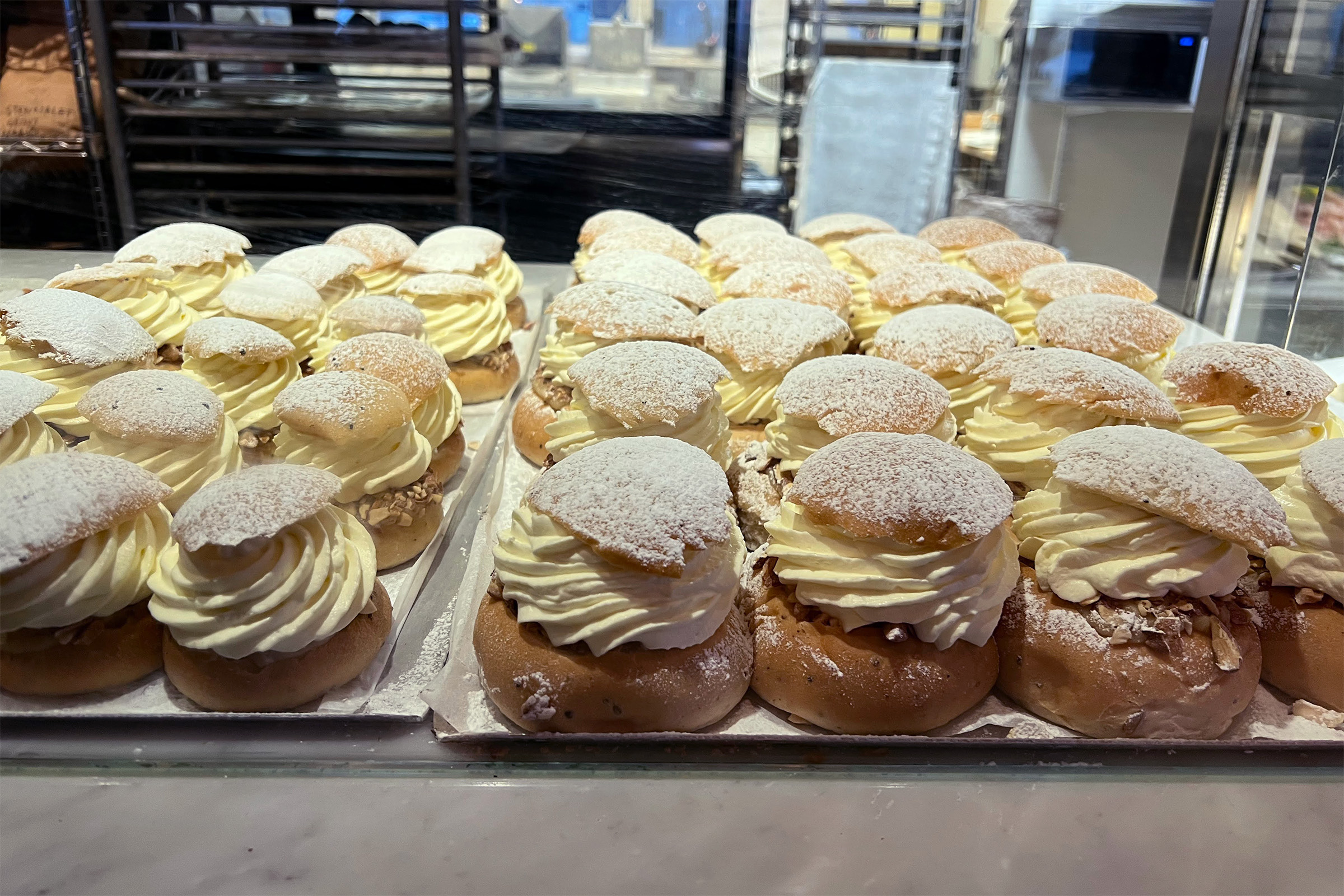
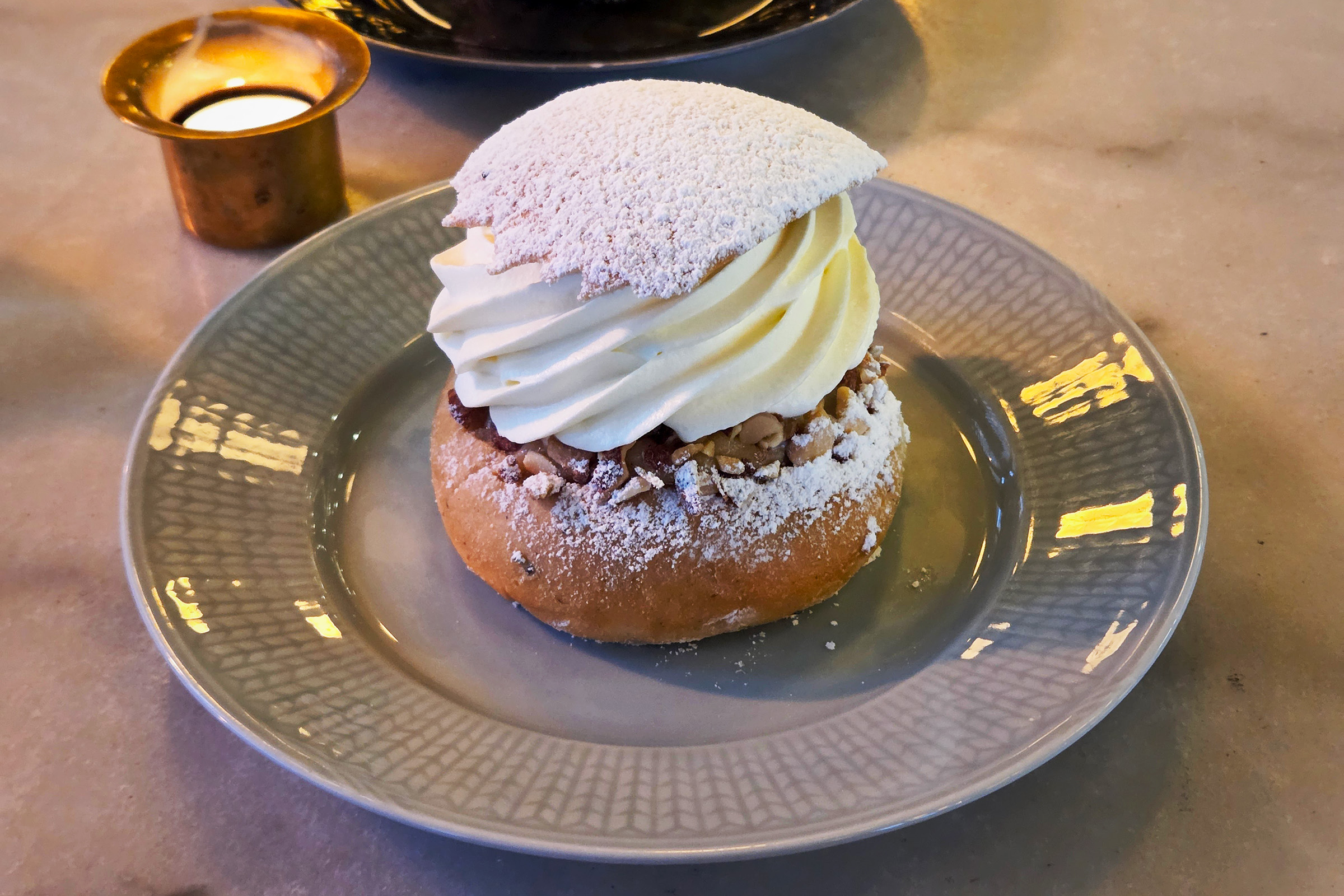
Walk past any Stockholm bakery between January and March, and you’ll spot them: tall cardamom buns piled with whipped cream, sitting in their own dedicated display. These are semlor (plural of semla), Sweden’s seasonal pastry obsession. They’re most common from mid-January through March, and after that they become much harder to find.
Traditionally, semlor are linked to Shrove Tuesday (Fettisdagen), the day right before Lent begins. In Sweden, this sits within fastlagen, the three-day lead-up to Lent: Fastelavn Sunday (fastlagssöndag), Shrove Monday (blåmåndag), and Shrove Tuesday (fettisdag).
A quick bit of background
Traditionally, semlor were connected to the Christian calendar: Swedes ate them as part of a final, festive meal before the fasting period of Lent.
The modern “classic” version (with whipped cream and almond paste) became widely common relatively late, in the mid-1900s.
What does it taste like?
Think: lightly cardamon spiced bun, with nutty sweetness from the almond paste, and a big hit of cream. If you didn’t grow up with it, it can feel a bit unusual at first, mostly because it’s rich and fluffy at the same time. But for many visitors, it’s a quick “okay, I get it now” moment after the first few bites.
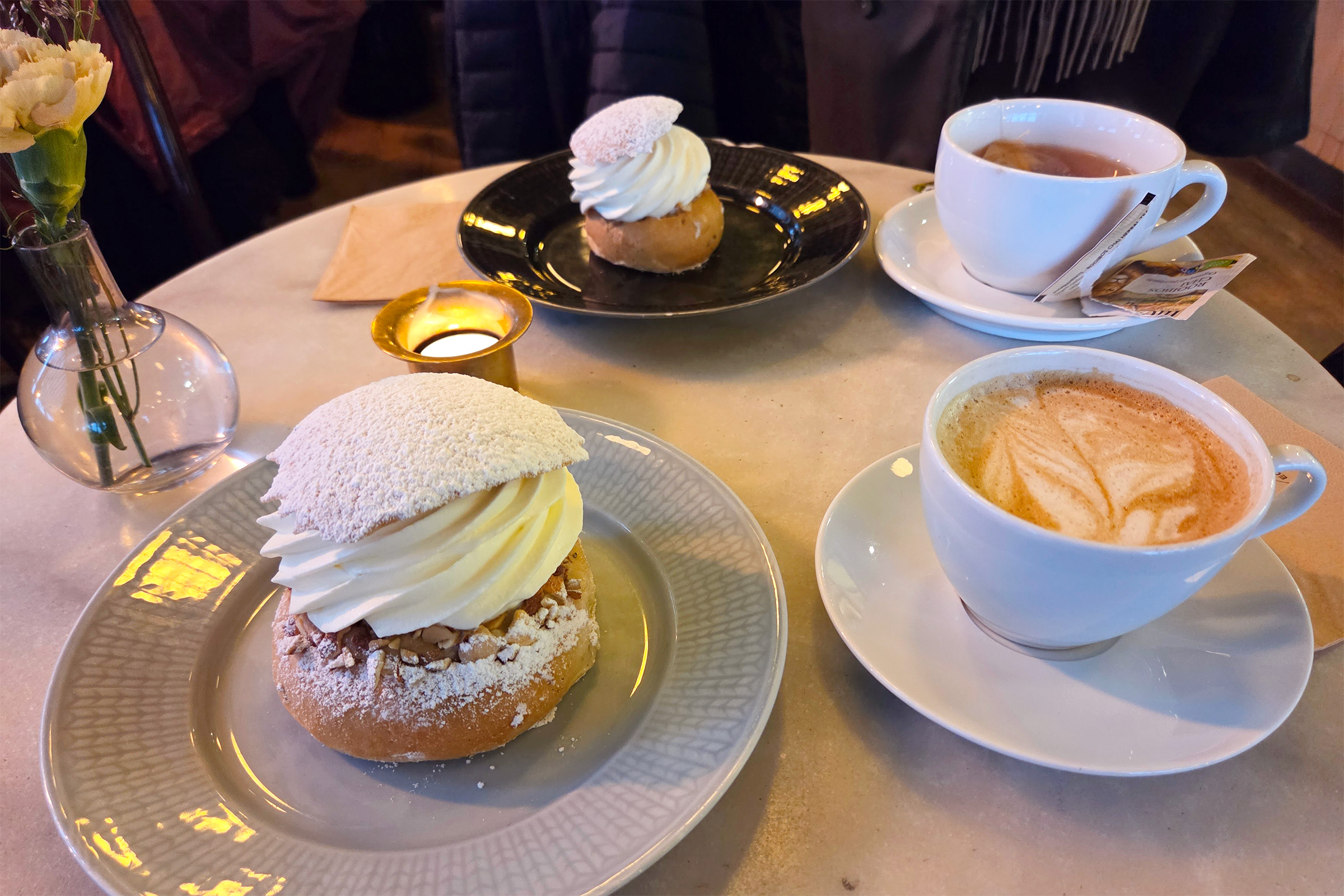
How do you eat it?
There’s no correct method, but a napkin is smart.
Most semlor are too tall to eat neatly, so people tend to do one of these:
- Lift off the “lid” first, then eat the layers bit by bit (downside here is that you don’t get to mix all of the layers in one bite, which is arguably where the semla really shines).
- Use the lid like a scoop for some of the cream before diving into the full pastry.
- The YOLO style: bite in the whole bun. This may get messy, but it’s part of the fun of enjoying a semla.
- Go in with a knife and fork (this is probably the cleanest way if you want to avoid the mess, but still get to experience all the layers in one bite).
“Hetvägg”: the older, more traditional style
There’s also an older way to eat semla called hetvägg: the bun comes in warm milk (and eaten with a spoon). The literal translation would be “hot wall”, but the name doesn’t mean “hot wall” in Swedish, even if it looks like it. It comes from the German heisse wecke (“hot wedge/roll”).
You won’t see hetvägg everywhere, but some traditional cafés serve it during semla season.
Can you find vegan semlor?
Yes. Since semlor are normally made with dairy cream, vegans often skip the classic version. But in Stockholm, it’s common to find plant-based semlor during the season, especially at bakeries that already focus on vegetarian and vegan options.
Curious on tasting a semla i Stockholm? See our article: Where to find the best semla in Stockholm.
Freqently asked questions
These days, semlor usually start showing up around New Year (sometimes even in late December), and they’re easy to find throughout January and February.
The traditional “main day” is Fettisdagen (Shrove Tuesday), which falls on a Tuesday sometime between early February and early March, depending on the year.
In practice, many bakeries keep selling semlor well after Fettisdagen. It’s common to still see them into March, and some places continue as far as the Easter holidays. After that, they become much harder to find, although a few bakeries may keep a version on the menu longer.
In Stockholm, a semla from a bakery or café usually costs around 55–70 SEK (often close to 60 SEK). That’s roughly $5–$7 for a quick mental conversion.
More premium patisseries can be 70–85 SEK+ (about $7–$9), while supermarket semlor are usually cheaper, especially if you buy a multi-pack.
Price often reflects ingredients and freshness, but it’s not a perfect rule. If you want the “classic experience,” a bakery semla is usually the safest bet for better cream and a more flavourful almond filling.
Prices vary by season and bakery, so treat these as typical ranges rather than fixed rules.
You’ll find semlor almost everywhere during the season: traditional bakeries (konditori), cafés, supermarkets like ICA and Coop, and even convenience stores. For the best quality, head to established bakeries rather than grabbing one from a chain. They’re meant to be eaten fresh, so most places bake them daily and they sell out by late afternoon.
Yes, surprisingly so. The basic components are the same, but bakeries have their own recipes. Some use more cardamom in the bun, others make their almond paste sweeter or use marzipan instead. The cream can be lightly or heavily whipped. The bun itself might be dense and cake-like or light and airy. This is why many Stockholmers have strong opinions about which bakery makes the “best” semla, and why newspapers run annual taste tests.
Semlor are best fresh, but you can save one for later. The whipped cream will soften and the bun can start to absorb moisture, so they usually taste best within a few hours of being filled.
If you want to keep one, store it in the fridge and try to eat it the same day (next day can be okay, especially for supermarket semlor, but it won’t be at its best). If possible, keep it in a box so it doesn’t get squashed.
For travel: semlor aren’t a great plane souvenir. They’re delicate, need refrigeration, and the cream doesn’t handle long trips well. A better plan is to enjoy them in Stockholm and bring home something more travel-friendly (like a bag of good cardamom buns or Swedish candy).