Stockholm has plenty of classic statues tied to the city’s history, plus modern monuments that lean more toward public art or celebrate well-known people. But there’s also a third category: smaller, quirkier sculptures. They’re not trying to impress you from a distance, but they often have a lot of heart, and sometimes a quiet sense of humour too.
Many of them are easy to miss if you’re not looking. They blend into the surroundings, or sit in corners you might not naturally pass through. They don’t demand attention like the big monuments, and that’s part of the charm. When you do spot one, it feels a bit like Stockholm is letting you in on a small secret.
1. Iron Boy
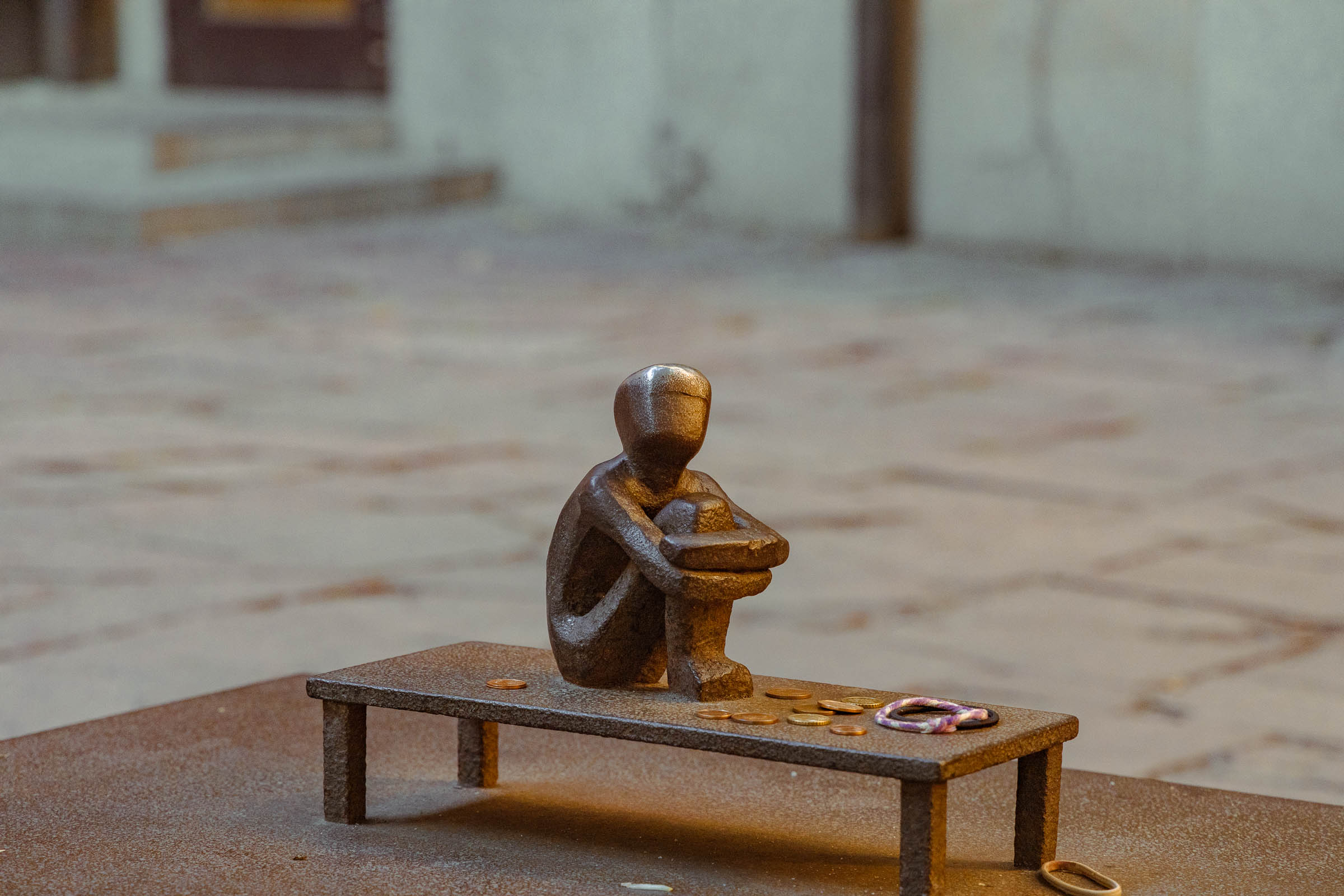
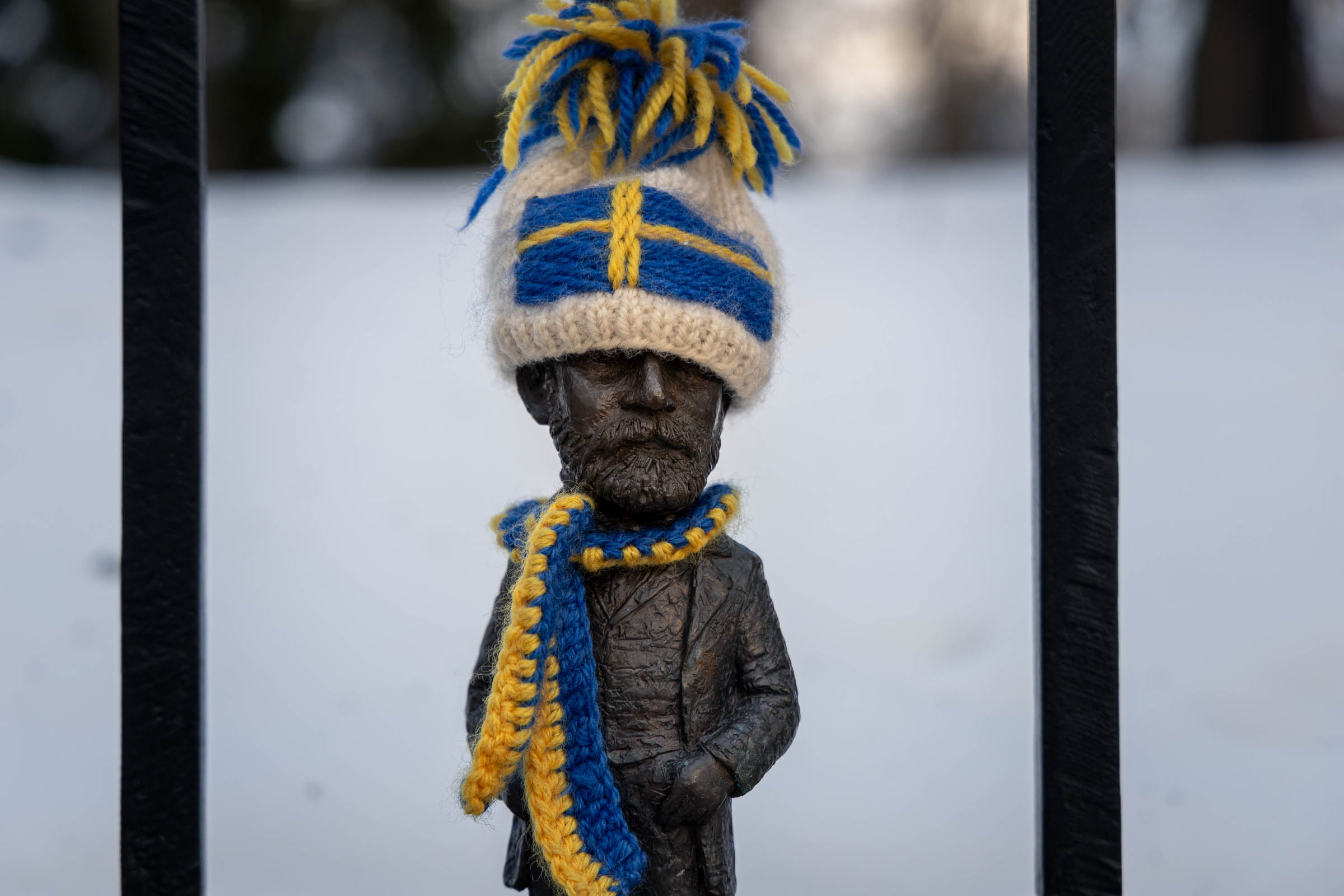
At just 15 cm tall, Iron Boy is Stockholm’s smallest public monument. It’s a sculpture by the Swedish artist Liss Eriksson and was installed in 1967. There’s something endearing about this small, stylised figure. He tends to evoke sympathy, hope, and curiosity and, in winter, locals sometimes dress him in tiny scarves and hats.
The statue’s official name is “Boy looking at the moon” (Swedish: Pojke som tittar på månen), but most people simply call him simply “Järnpojken”, which is Swedish for “Iron Boy”. You’ll find him in Gamla Stan, on Bollhustäppan, in the courtyard behind the Finnish Church, just a short walk from the Royal Palace.
Address: Trädgårdsgatan 2
Getting there: Take the metro to Gamla Stan. Walk to the Royal Palace and the sloping square outside it (Slottsbacken). From there, enter the small alley Bollhustäppan (you should have the Palace behind you, with the Finnish Church on your left). Step into the courtyard and look to the left-hand side, at the far end, to find Iron Boy.
2. Little Lion
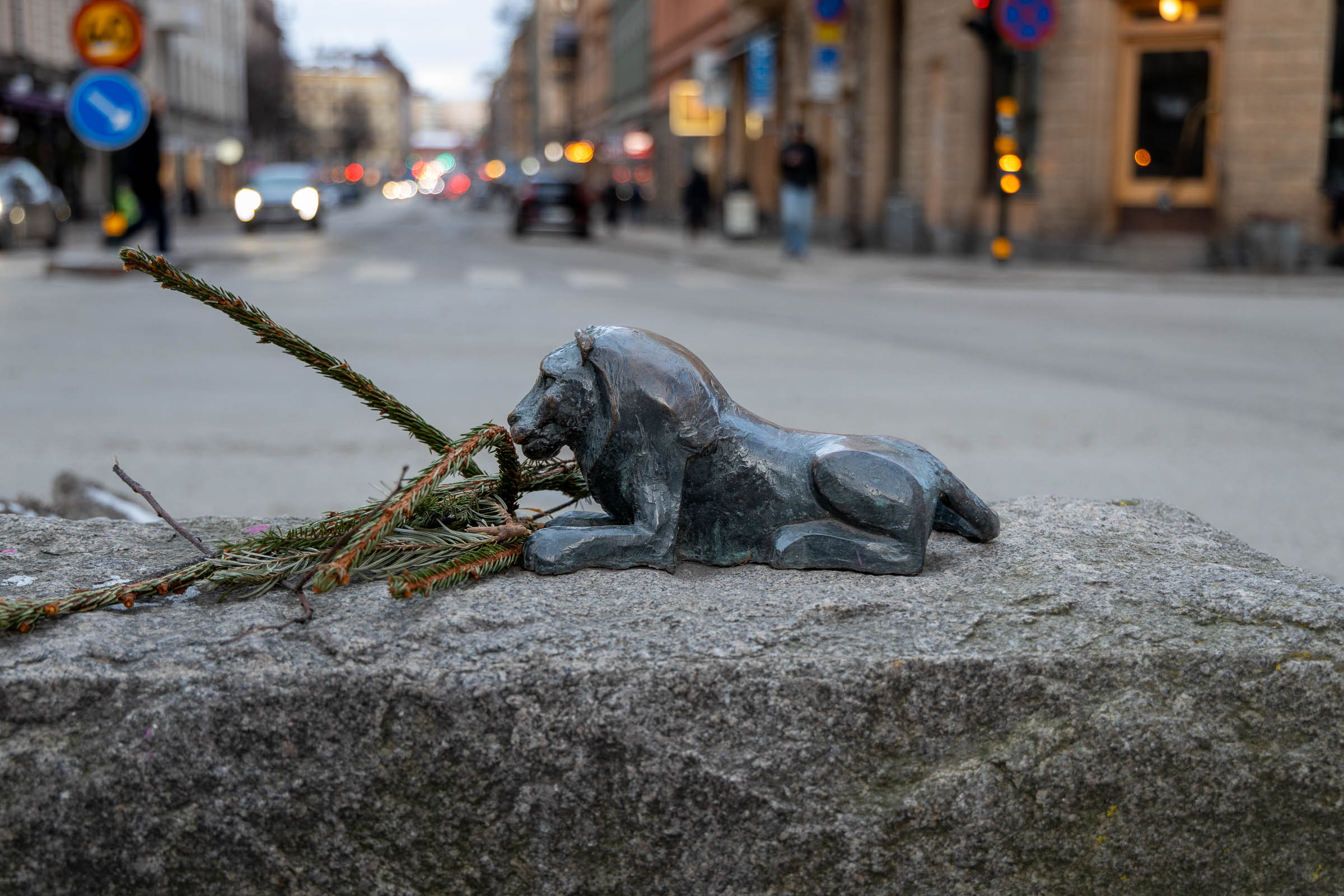
This tiny lion looks almost like a forgotten toy wedged into the urban fabric, which makes many people stumble upon it by accident rather than seeking it out.
You’ll find it on Kungsholmen, perched on a low stone wall at Kungsholmstorg, close to the intersection with Hantverkargatan and Scheelegatan. It’s a bronze sculpture by Monika Masser, installed in 2008.
Address: Kungsholmstorg
Getting there: Take the metro to Rådhuset. Exit toward Hantverkargatan and turn right as you come up. Walk straight to the large four-way intersection at Kungsholmstorg. The Little Lion sits on the stone wall in the small median between the lanes, on your left.
3. Karlsson on the Roof
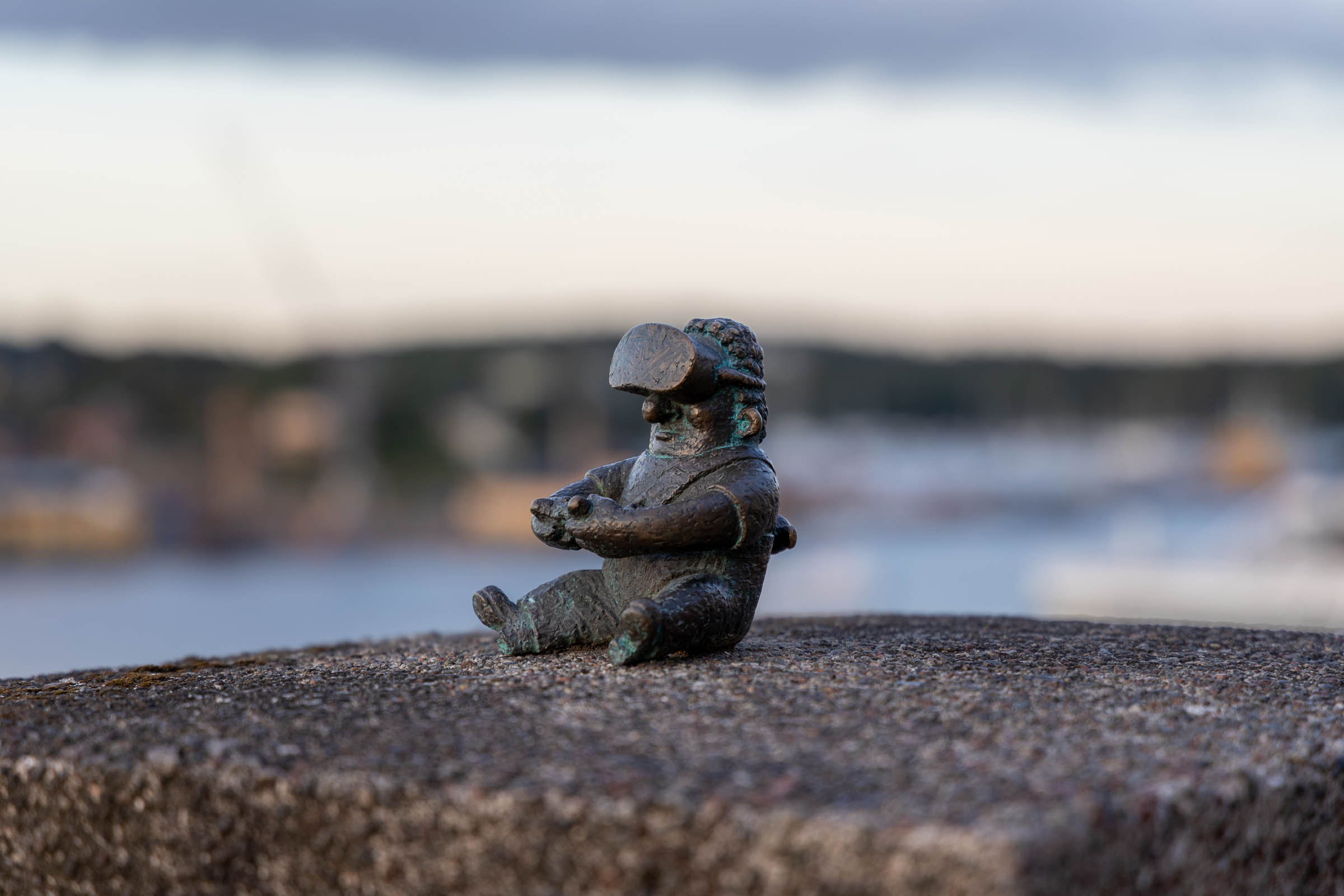
This little sculpture, by Mihály Kolodko, is a fun, modern take on Karlsson-on-the-Roof, the famous Astrid Lindgren character. Instead of zooming around with his propeller, this Karlsson looks like he’s absorbed in tech, wearing VR goggles and holding a controller.
You’ll find it on Södermalm, on a small wall ledge at Fjällgatan 44, near one of the viewpoints looking out toward the water and Gamla Stan. It’s easy to walk right past if you don’t know it’s there, which is probably why so many people discover it by accident.
Address: Fjällgatan 44
Getting there: Take the metro to Slussen and use the exit toward Ryssgården square. Once outside, turn right and cross the street, then follow Katarinavägen east. Keep walking as the road continues onto Fjällgatan.
As you near the end of Fjällgatan, the street bends right and becomes Erstagatan. Look on the left-hand side just before the bend, the Karlsson miniature is mounted on a stone pillar. It’s about a 15-minute walk.
4. Alfred Nobel miniature
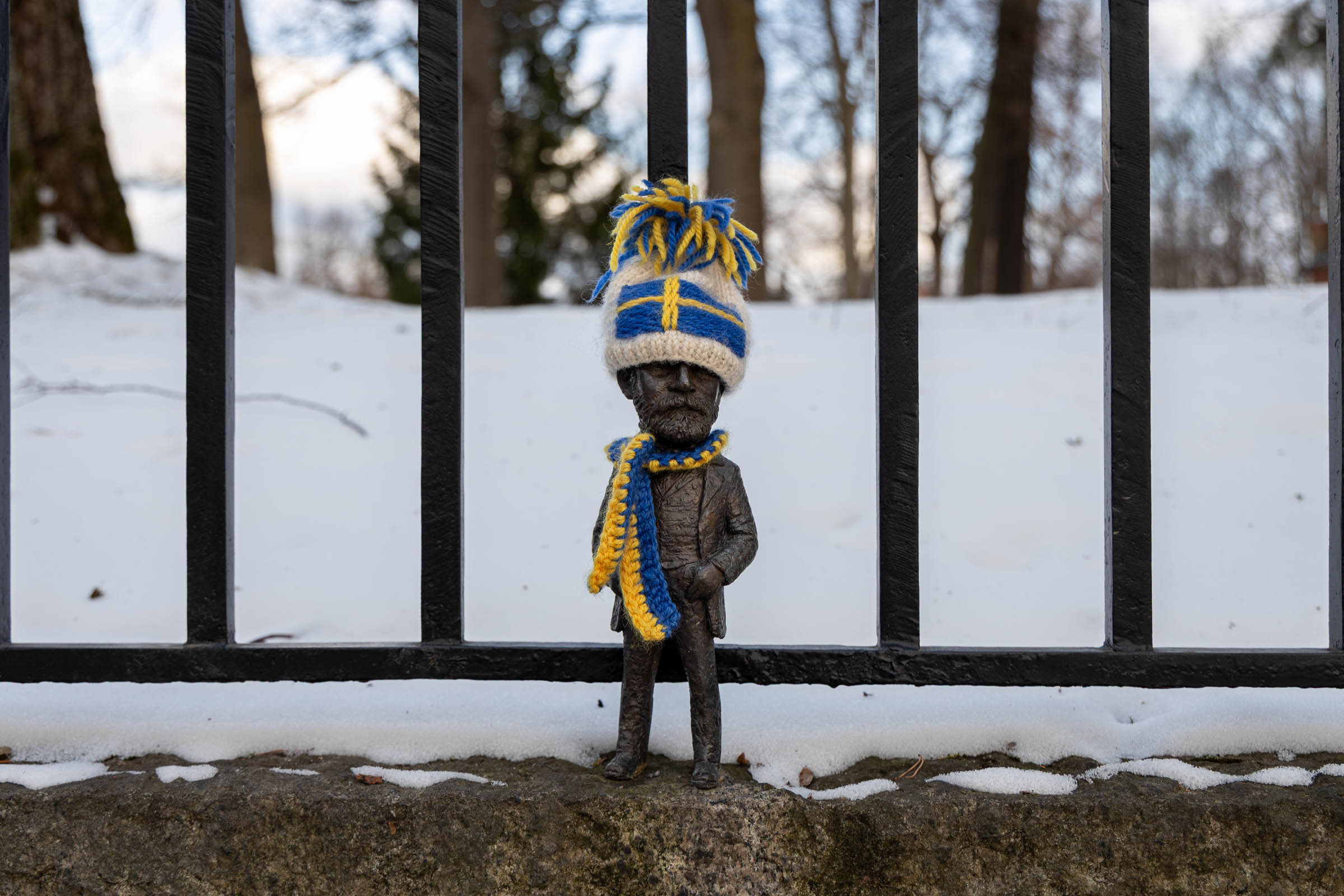
Mihály Kolodko’s small Alfred Nobel perches on a façade detail, is another easy to miss unless you know where to look, echoing his hidden mini‑sculpture tradition from Budapest and Uzhhorod. You’ll find the sculpture on Djurgården, mounted on the wall of the Hungarian Embassy on Nobelgatan, facing Nobelparken on Östermalm.
Address: Nobelgatan
Getting there: Take tram 7 from T-Centralen to Djurgårdsbron. When you get off, continue in the same direction as you were travelling, but don’t cross the bridge with the tram. Instead, keep going straight along Strandvägen (you will pass the bridge on your right side).
Walk until Berwaldhallen is on your left, then continue to the corner where Strandvägen meets Dag Hammarskjölds väg. From there, you’re basically at Nobelgatan by the Hungarian Embassy. The miniature Alfred Nobel sits by the embassy fence/wall on Nobelgatan, facing Nobelparken.
Less walking: Take bus 69 from T-Centralen (stop: Centralen / Sergels torg) in the direction of Blockhusudden. Get off at Berwaldhallen. From there, walk a few minutes to Nobelgatan, next to the Hungarian Embassy, and look along the fence facing Nobelparken.
5. Homeless Fox (“Rag and Bone”)
At first glance, this looks like a bundled-up pile of old blankets on the pavement. Then you notice the face: it’s a fox, curled up with a small cub, and it’s hard not to pause for a second. The piece is part of Laura Ford’s Rag and Bone series, which puts animals into the vulnerable situation of homelessness. 
You’ll find it right in the city centre, at the corner of Drottninggatan and Strömgatan, close to Rosenbad and the Swedish Parliament. It’s a busy spot, which is exactly why the fox can still be easy to miss if you’re not looking down.
Address: Strömgatan
Getting there: Take the metro to T-Centralen and exit toward Sergels torg. Walk south on Drottninggatan (toward Gamla Stan). At the corner where Drottninggatan meets Strömgatan, look down on the left-hand side. The fox sits on the pavement just before Riksbron, with the Parliament (Riksdagshuset) nearby.
6. Margaretha Krook statue
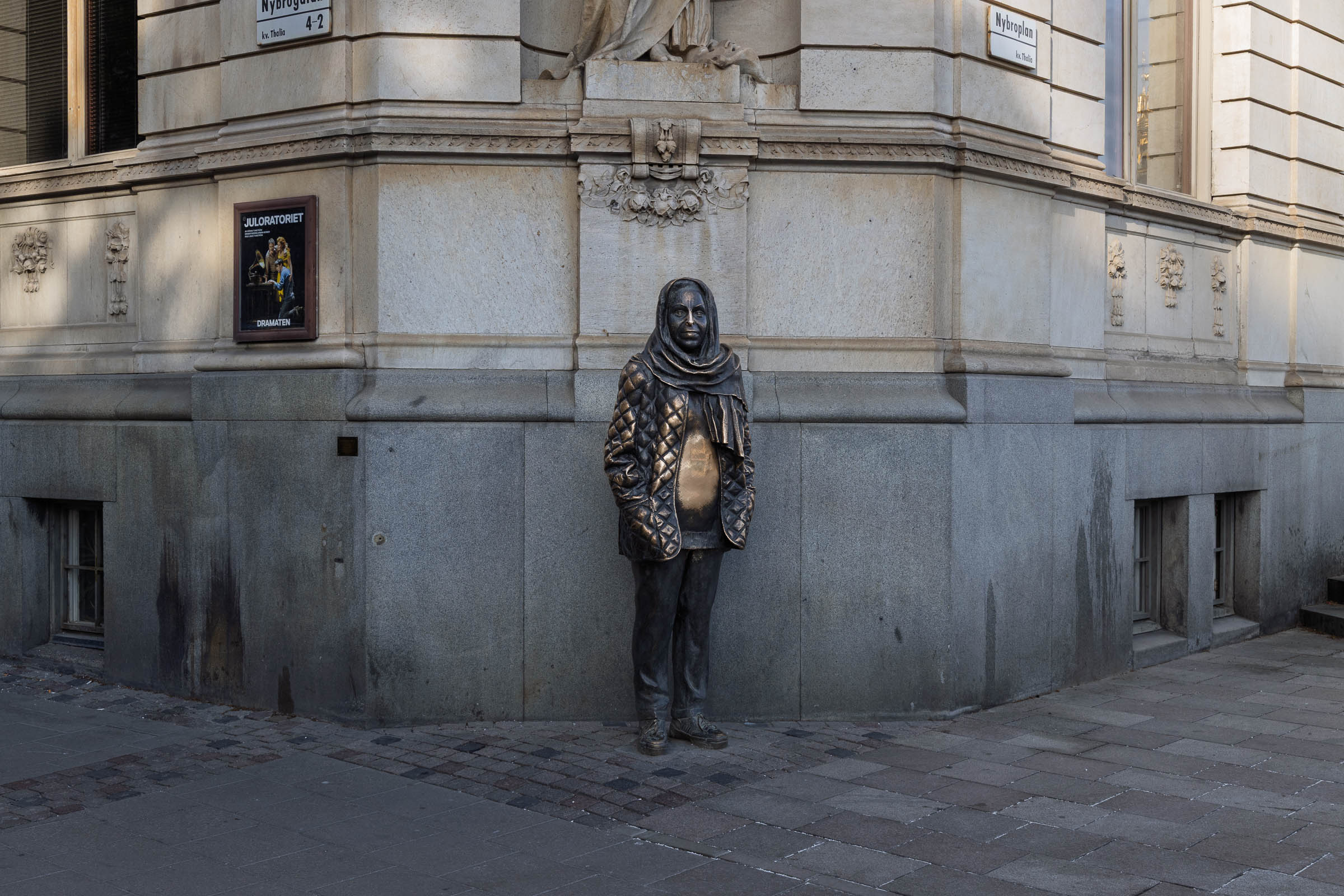
Margaretha Krook was a much-loved Swedish actress, closely associated with Dramaten. The statue stands where she used to linger before performances, watching people arrive and having a quick smoke.
What makes it special is that the statue’s belly is heated to body temperature, around 37°C, year-round. The idea was to honor her famous complaint that statues usually feel cold and uninviting. If you look closely, you’ll notice the belly is shinier than the rest, simply because so many people stop to touch it for warmth.
You’ll find the statue right outside the Royal Dramatic Theatre at Nybroplan, close to the entrance.
Address: Dramaten
Getting there: Take the metro to Östermalmstorg and exit toward Nybrogatan. Walk south down Nybrogatan to Nybroplan (about 5 minutes). The Royal Dramatic Theatre (Dramaten) will be on your left. The statue is right outside the entrance, pressed against the theatre wall.
7. The Cuckold of Skeppsbron
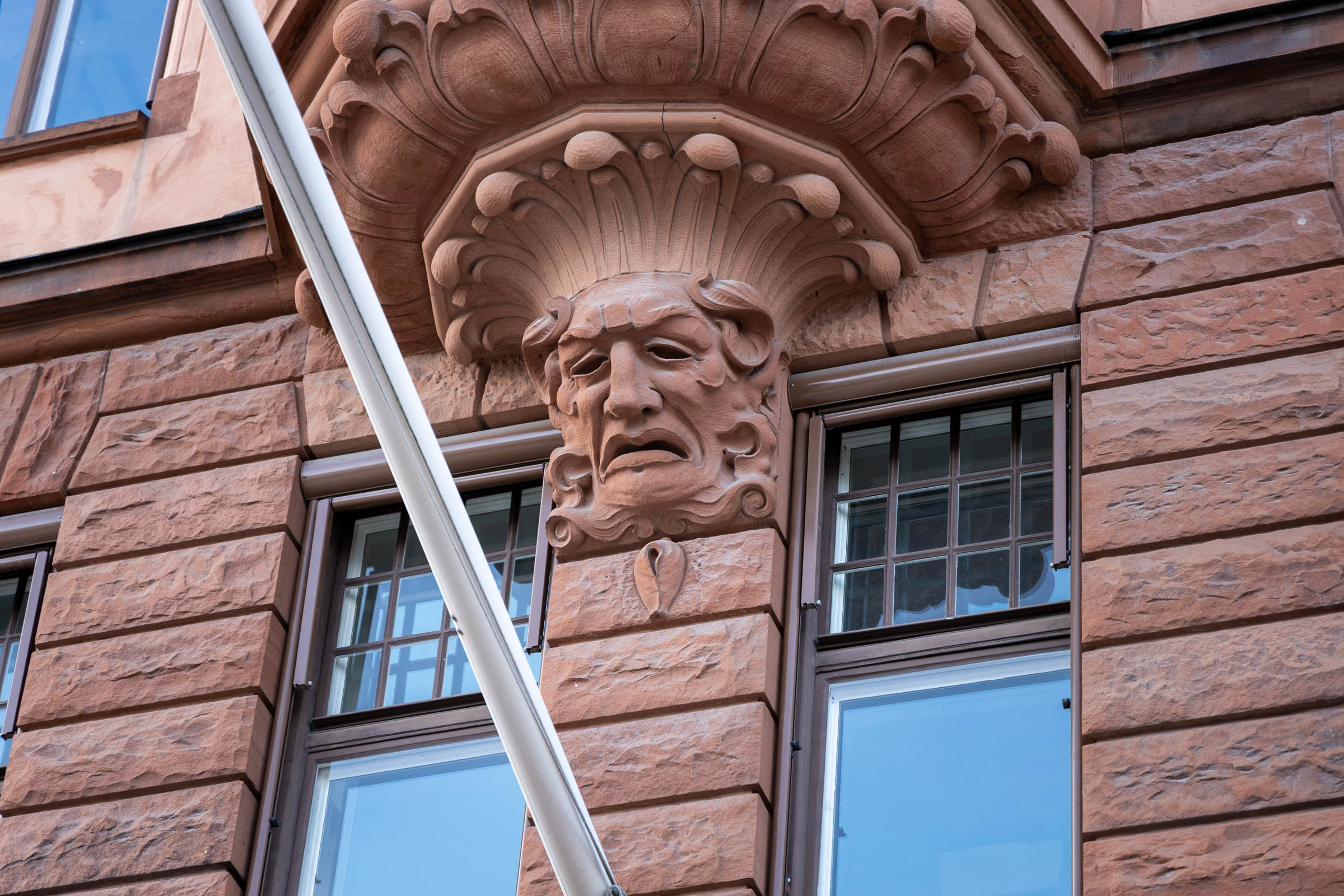
High up on a house façade along Skeppsbron, a small maskaron clings to the wall. It’s easy to walk past without noticing, but when you stop and look up close, the face is startlingly expressive. The face is crying, with small horns on either side of the head, a traditional symbol of a cuckold. Beneath it is a carved motif that many interpret as a crude reference to female anatomy.
According to local lore, the sculpture is a pointed act of revenge. Carl Smitt commissioned the building, and the story goes that he ordered the carving after rumours spread about his wife having an affair. Instead of denying the gossip, he supposedly had it immortalised as architectural detail.
You’ll find it on the façade of Skeppsbron 44, facing the waterfront along the eastern edge of the Old Town. On rainy days, water runs down the wall in a way that makes the face appear to be crying, which only adds to its reputation.
Address: Skeppsbron 44
Getting there: Take the metro to Slussen and exit toward Ryssgården. Walk north over Slussbron (the “Gold Bridge”) toward Gamla Stan. Keep going straight as the road becomes Skeppsbron. At Skeppsbron 44, next to Zum Franziskaner, stop and look high up on the façade to spot the maskaron.
8. Limpan Lindström sculpture
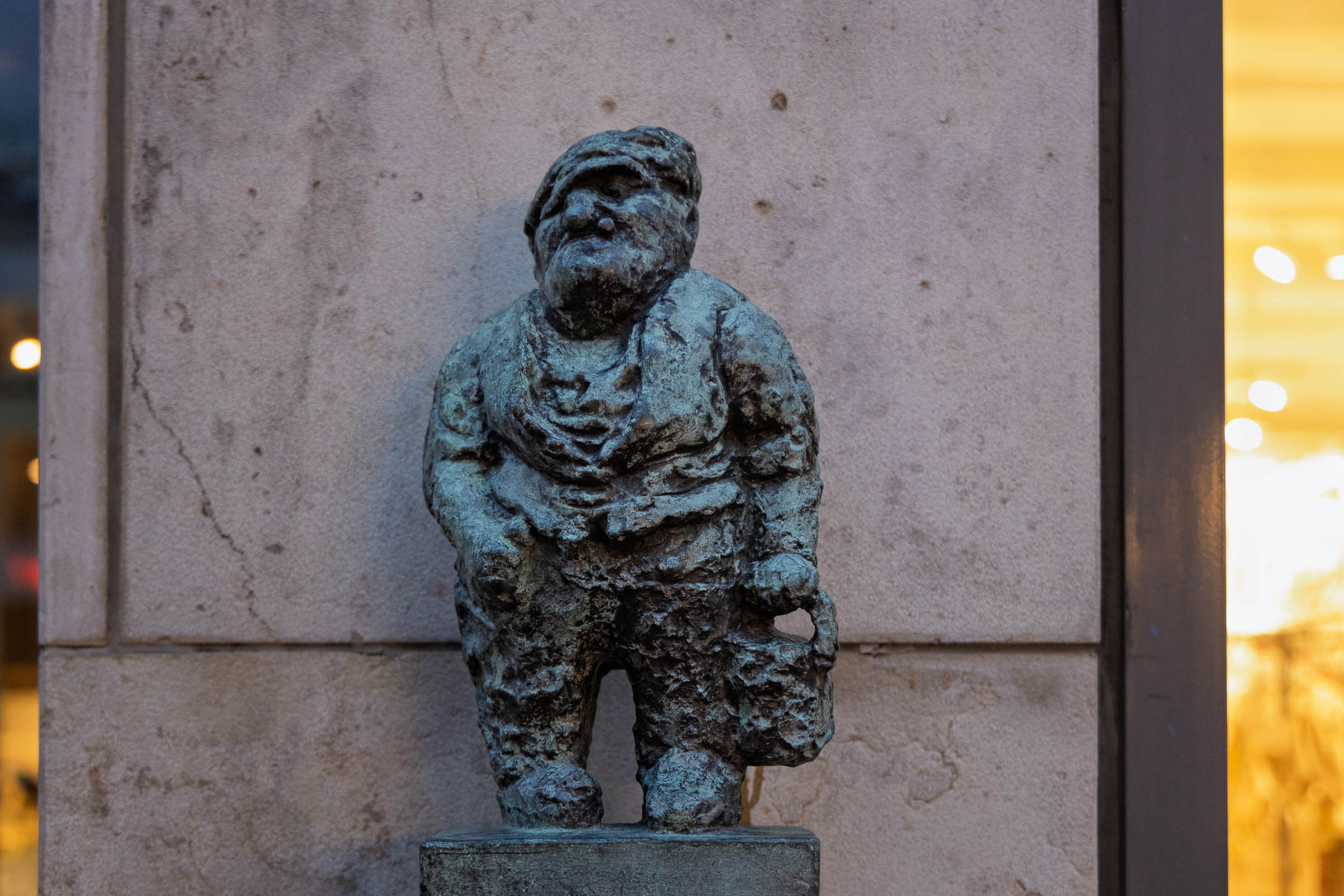
This small sculpture shows “Limpan” Lindström, standing casually close to the house wall. It’s a quiet little tribute, and it feels very human up close.
You’ll find it tucked right against the wall at Sergelgatan 27 in Norrmalm, just a short walk from Hötorget. The figure is a bronze sculpture by Göran Strååt, made in 1982. Limpan was a well-known teacher at the Royal Academy of Fine Arts’ sculpture school, which used to be located in this area in the 1930s.
Address: Sergelsgatan 27
Getting there: Take the metro to Hötorget and use the exit to Sergelgatan. Once you’re outside, cross to the opposite side of Sergelgatan and look along the building wall on your left. The Limpan Lindström figure is tucked right against the wall at Sergelgatan 27, just a minute from the station.
9. Two hands
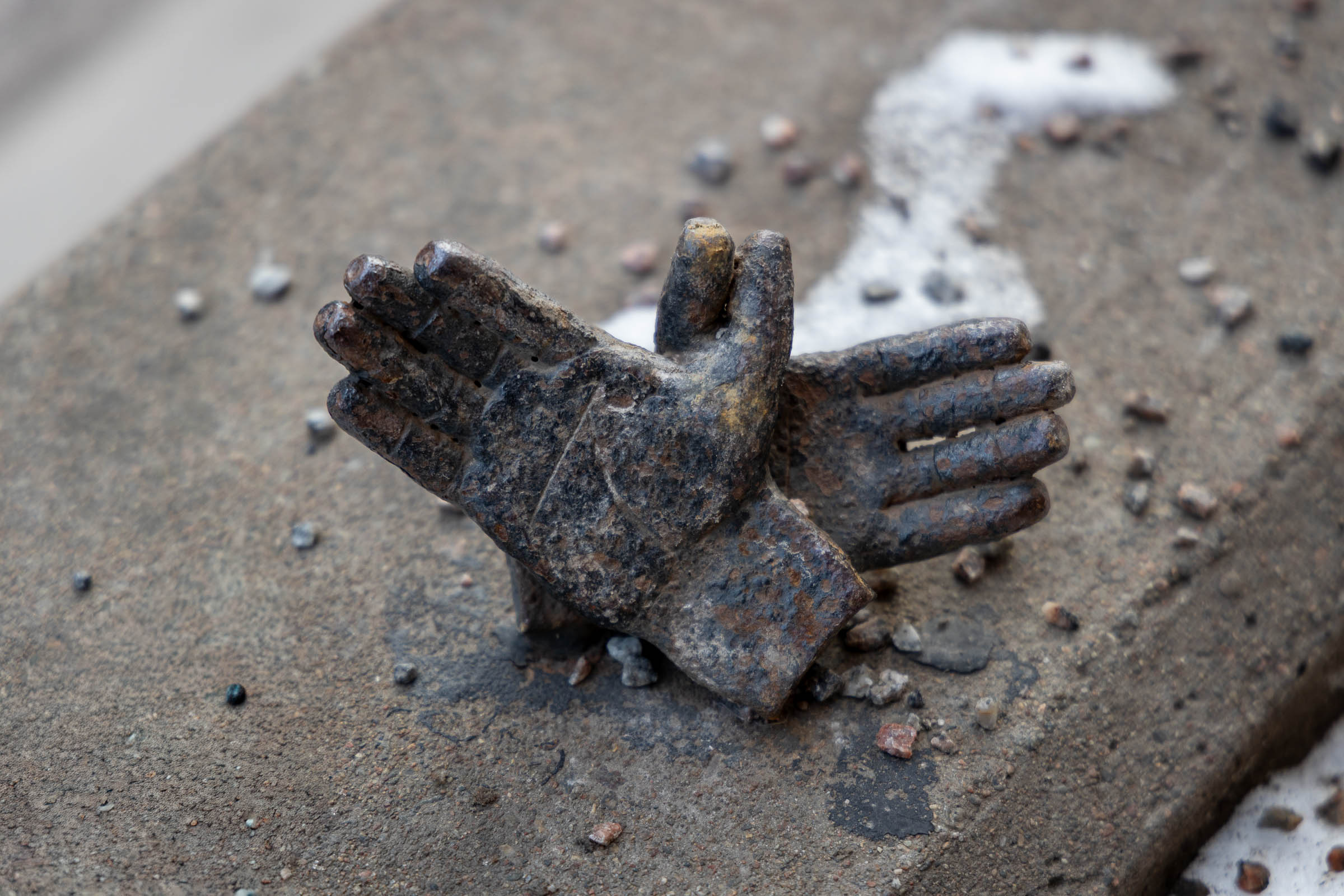
This tiny bronze sculpture shows a pair of hands with open palms, the thumbs linked together. It’s small enough that most people walk past without ever noticing it, even though the area is busy.
It originally belonged to an unofficial series of mini street-art sculptures along Hornsgatan and Hornsgatspuckeln on Södermalm. The hands sit near the stairs that lead up from Hornsgatan toward the short stretch of galleries on the hill. The artist isn’t credited, and today it seems to be the only one left, the others were likely removed or stolen over the years.
Address: Hornsgatan 16
Getting there: Take the metro to Slussen and exit toward Ryssgården. Turn left and walk up Peter Myndes backe, then turn right onto Götgatan. Follow Götgatan north to the big intersection with Hornsgatan.
Cross Hornsgatan and turn left. A few steps from here the street slopes uphill, with a metal railing on your left. Look down by the base of the railing, near the stairs. The tiny hands are on the ground there. It’s about a two-minute walk.
10. Midgard Serpent II
This small Norse serpent is sometimes called Stockholm’s most stolen sculpture. The original Midgårdsormen was stolen, Mats Lodén (the grandson of the original artist, Karl Lodén) created this newer version.
Address: Glasgränd
Getting there: Take the metro to Slussen. Walk east along Katarinavägen, then take the stairs Dihlströms trappor up to Nytorgsgatan. Continue south on Nytorgsgatan, turn left onto Mäster Mikaels gata, then right onto Glasgränd. Keep going to Glasbrukstäppan. The serpent is in one of the fountains in the park. It’s about a 10-minute walk.
11. Sanctuary
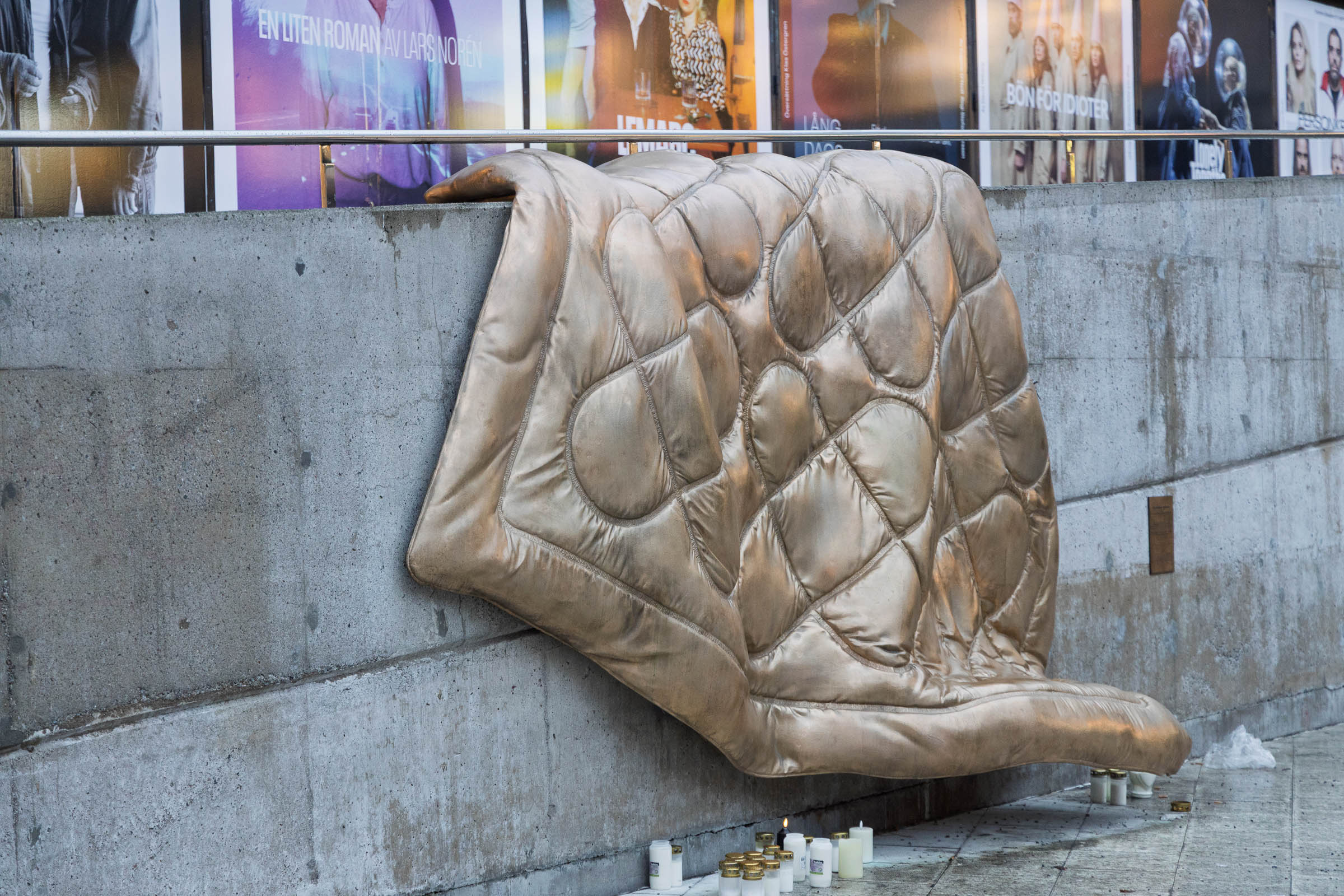
This artwork looks like a golden blanket draped over the concrete ramp by Kulturhuset Stadsteatern, right by Sergels torg. It’s made of bronze, and it’s gently warmed (around 20°C / 68°F) so you can lean against it or sit nearby.
It was created as a memorial to the Drottninggatan terror attack on April 7, 2017, and to the sea of flowers and messages that appeared here afterwards.
Address: Sergel’s Square
Getting there: Take the metro to T-Centralen and follow signs to Sergels torg. Walk down Drottninggatan toward the square. At the big staircase that leads down to Sergels torg, go to the bottom and look along the concrete ramp beside Kulturhuset Stadsteatern. The golden bronze “blanket” is mounted there.
12. JAS Memorial
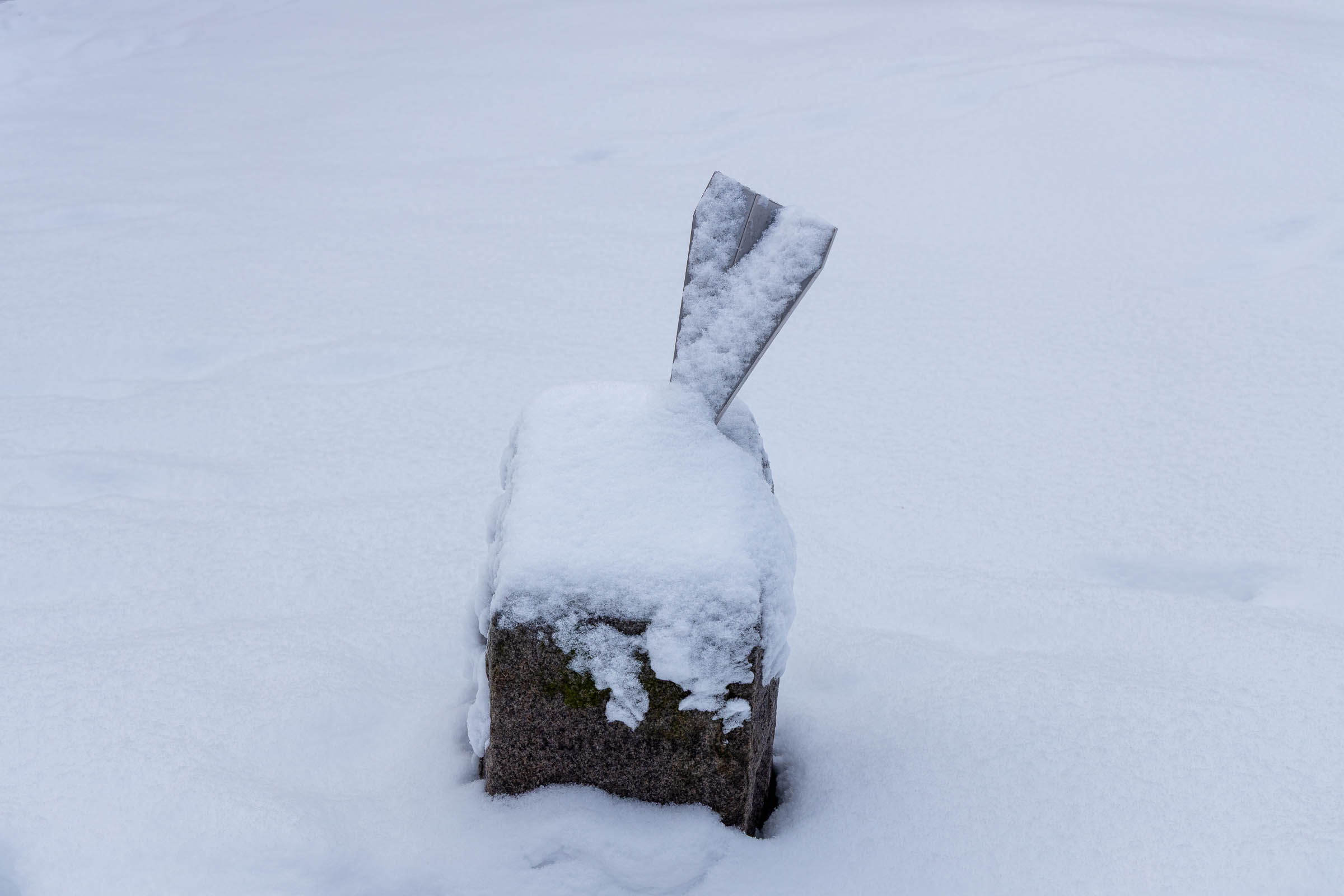
This memorial marks the spot where a JAS 39 Gripen crashed during an air display at the Stockholm Water Festival on 8 August 1993 (luckily nobody was killed). The sculpture looks like a paper plane, nose-first into the ground, a simple way of capturing the shock of the impact. 
You’ll find it on Långholmen, just below the southern end of Västerbron, near the crash site.
Address: Långholmen Park
Getting there: Take the metro to Hornstull and walk north on Långholmsgatan toward Västerbron. Go up onto the bridge and stay on the right-hand (west) side.
A few minutes onto Västerbron, look for the turn-off down to Långholmen on your right (a ramp/stairs leading off the bridge). Take it down, then turn back underneath the bridge. The JAS Memorial is right there on the grass, close to the bridge. It’s about a 15-minute walk.