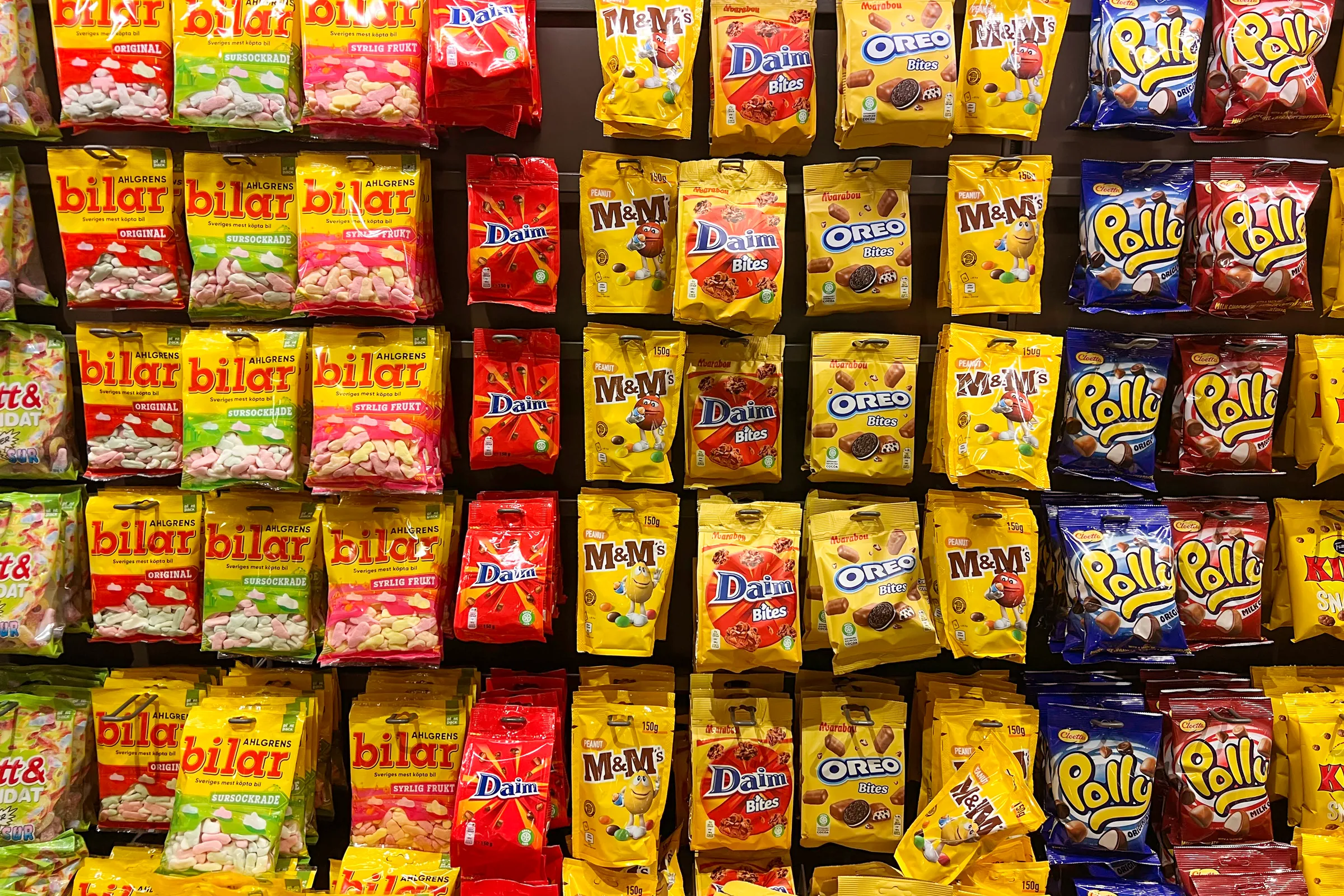
Swedes eat around 17 to 18 kilos of candy per person each year, and it shows. Walk into almost any supermarket and you will likely find an entire wall of pick-and-mix candy, with everything from chocolate and sour gummies to foam sweets and intensely salty licorice. Some of it will look familiar. Some of it probably won’t.
If you are visiting Stockholm and want to try Swedish candy, the sheer amount of choice can make it difficult to know where to start. What is actually Swedish? What do people here commonly eat? And which candies are worth trying if you only want to sample the local candy culture?
In this guide, we explain a few Swedish candy traditions, introduce the names you will see on every shelf, and suggest a handful of candies that cover the range, from easy crowd-pleasers to the more divisive world of salty licorice.
If you are more interested in where to shop, see our separate guide to where to find the best candy in Stockholm, which focuses on candy stores rather than the candy itself.
What is special about Swedish candy?
Swedish candy is less about one particular flavor and more about the range. A typical candy selection can move from milk chocolate and caramel to sour gummies, soft foam candy and very salty licorice without anyone finding the combination unusual.
One of the biggest parts of Swedish candy culture is lösgodis, or pick-and-mix candy. Instead of choosing one bag, you fill your own with exactly what you want, usually paying by weight. This makes it easy to mix sweet, sour, chocolate and licorice in the same bag, and it is still a very normal way to buy candy in Sweden.
Another well-known tradition is lördagsgodis, literally “Saturday candy.” The idea became established in Sweden during the 1950s, when parents were encouraged to limit children’s candy eating to one day a week for dental-health reasons. Today it is more of a cultural habit than a strict rule, but Saturday is still strongly associated with candy for many Swedish families.
Visitors also tend to notice how much shelf space goes to licorice, especially the salty kind flavored with salmiak. We cover that further down.
Start with lösgodis: Swedish pick-and-mix candy
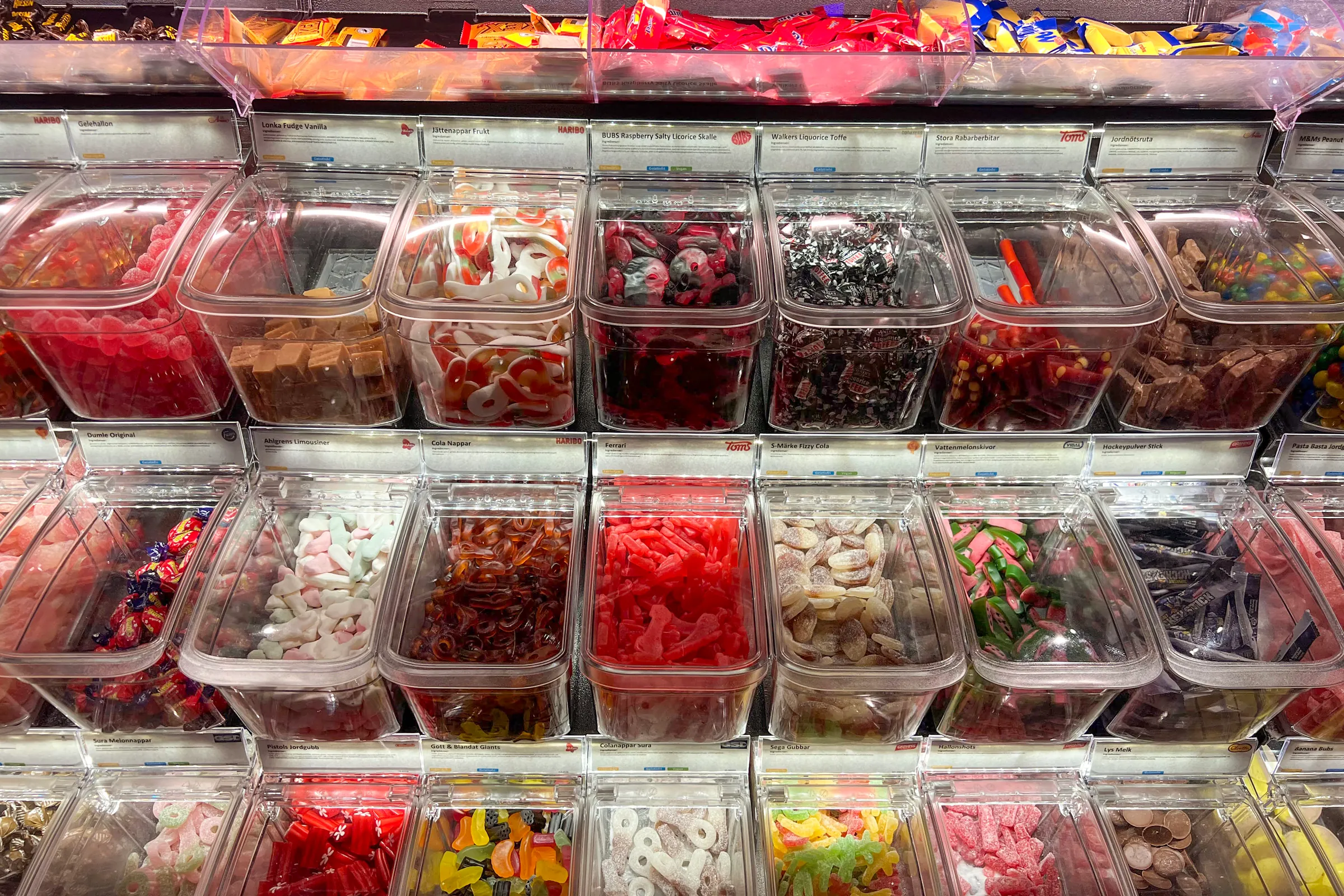
If you only try one part of Swedish candy culture, lösgodis is a good place to start. The word simply means “loose candy,” and refers to the large pick-and-mix selections found in supermarkets, convenience stores and dedicated candy shops across Sweden.
It works like this: take a bag, scoop as much or as little as you want from the containers, and pay by weight at the checkout. Prices are shown per hekto (kr/hg), which is 100 grams. Expect roughly 10 to 17 SEK per hekto, so a small tasting bag of 150 to 200 grams usually costs 15 to 35 SEK. A single wall can include chocolate, gummies, foam candy, sour pieces, licorice, caramel and plenty of things that are difficult to place into any neat category.
For a visitor, that is the main advantage. You do not have to commit to a full bag of something you may not like. Instead, you can take one or two pieces of several different candies and build your own tasting selection.
For a first bag, we would pick something foamy, something sour, a fruity gummy, a piece of chocolate and one sweet licorice. If you are curious about the more extreme end, add a single piece of salty licorice.
You will find lösgodis almost everywhere, but the selection varies a lot between shops.
Swedish candy names worth knowing
Once you move beyond lösgodis, there are a handful of packaged candies that come up again and again in Sweden. Some are distinctly Swedish, while others are simply so established here that they have become part of the local candy landscape.
Ahlgrens bilar is one of the most recognizable. These small pastel-colored foam cars have been sold since the 1950s and have a mild fruity flavor and soft, slightly chewy texture. They are mild rather than exciting, and that is the appeal: easy to like, easy to share, and familiar to almost anyone who grew up in Sweden.
Kexchoklad is another long-running favorite. It is a crisp wafer bar covered in milk chocolate, lighter than a solid chocolate bar and strongly associated with outings, skiing and quick snack stops. Our own association is very much with that everyday, nostalgic side of Swedish candy rather than with anything fancy.
If you want something more chocolate-heavy, Marabou is one of the best-known names in Sweden. The plain milk chocolate, Mjölkchoklad, is still the reference point, but you will also find plenty of variations with nuts, caramel, Daim and other fillings. Daim itself is worth knowing too: a crunchy almond caramel center covered in milk chocolate, with a texture that is quite different from most standard chocolate bars.
Polly sits somewhere between chocolate and foam candy. The pieces have a soft, chewy center coated in chocolate and usually come in mixed flavors. They are easy to share, but also have a texture that can be slightly unexpected if you have never tried them before.
For something that feels more like a ready-made version of lösgodis, Gott & Blandat is the easiest shortcut. The name means roughly “good and mixed,” and the bags combine different gummies and licorice pieces. There are several versions, including sour and salty ones, so check the bag before buying if licorice is not your thing.
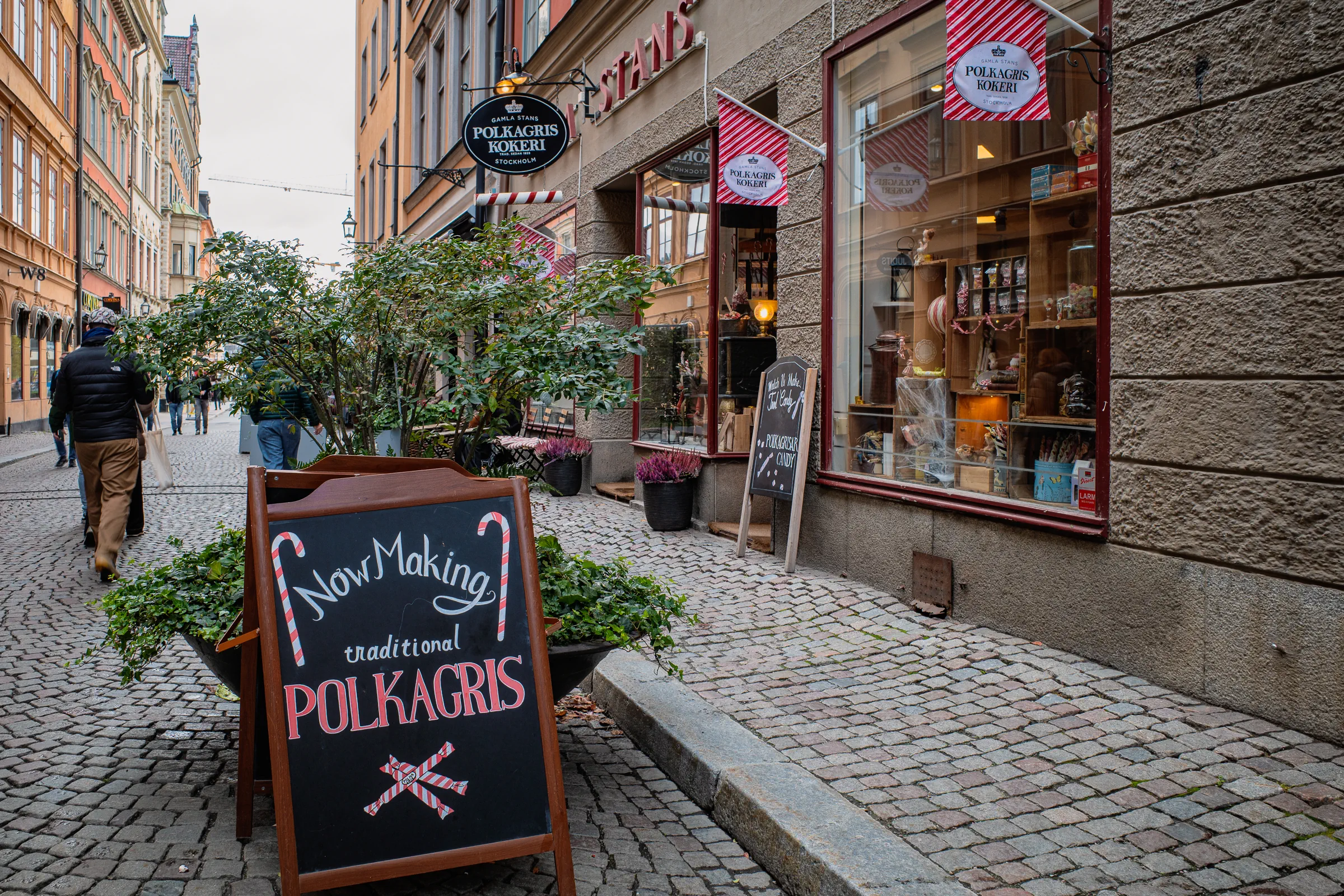
Then there is polkagris, the traditional red-and-white peppermint candy from Gränna. The striped sticks date back to 1859, when Amalia Eriksson began making them in Gränna, and today they come in many flavors beyond peppermint. In Stockholm, you can watch polkagris being pulled and twisted by hand through the kitchen windows at Gamla Stans Polkagriskokeri on Stora Nygatan. It also makes a particularly easy souvenir: recognizable, portable and tied to a specific Swedish tradition.
Other names you will see often include Plopp, Center, Zoo, Tutti Frutti and Bubs. But if you are new to Swedish candy, the examples above already cover a good spread of chocolate, foam, gummies and traditional sweets without turning your visit into a full-scale candy research project.
Ready for Swedish licorice?
Licorice is where Swedish candy can start to feel a little less familiar.
You will find ordinary sweet licorice, but also salty licorice, often flavored with salmiak. Salmiak is ammonium chloride, and it gives a sharp, almost tingling saltiness that is common in Sweden and elsewhere in the Nordic countries, but it can be a surprise if you did not grow up with it.
If you are curious but unsure, start gently. A mixed bag with a few licorice pieces is probably a better introduction than buying the strongest thing you can find. If you already like licorice, there is a good chance you will enjoy exploring the saltier side as well.
Two names worth knowing are Djungelvrål and Tyrkisk Peber. Djungelvrål is a soft, very salty licorice candy covered in salmiak powder. Tyrkisk Peber has a hard, salty licorice shell around a peppery salmiak powder center. Neither is especially subtle, and both can be something of an acquired taste.
We would not call them essential, since plenty of people, Swedes included, cannot stand them. But one piece of each tells you more about Nordic candy culture than a whole bag of gummies. If you enjoy strong flavors, they may end up being one of the most memorable things you try. If you do not, one piece is usually enough to make up your mind.
It is also worth noting that not everything you see in a Swedish candy aisle is Swedish in origin. Tyrkisk Peber, for example, was created in Denmark in the 1970s and is now made by the Finnish company Fazer. But products like this are so common in Sweden that they are still part of the candy culture visitors encounter here.
Candy for holidays, gifts and special occasions
Not all Swedish candy is something you grab from a supermarket shelf on the way home. Some sweets are more strongly tied to holidays, family gatherings and giving something to share.
A good example is Aladdin, a boxed assortment of chocolates that has been sold in Sweden since 1939. It is especially associated with Christmas, and for many Swedes the box is as much about tradition as it is about the chocolates themselves.
For us, Aladdin is the box someone brings when visiting over Christmas. It gets passed around the table rather than eaten alone.
Part of the charm is the assortment itself. Everyone seems to have favorites, and there is an unwritten rule that you should finish the top layer before starting on the one underneath. The selection has also changed over the years, which has led to the usual debates whenever a popular praline disappears or a new one takes its place.
As a souvenir, Aladdin is a little bulkier than a chocolate bar or a bag of candy, but it makes sense if you want to bring home something that feels more connected to Swedish holiday traditions than to everyday snacking.
What Swedish candy should you bring home?
If you want to bring Swedish candy home as a gift or souvenir, the best choice depends on who you are buying for.
For something easy and broadly appealing, Ahlgrens bilar works well. The pastel foam cars are light, easy to pack and distinctly Swedish without being too unusual. Daim is another safe option, especially for someone who likes chocolate and caramel.
If you want something that gives a broader introduction, a carefully chosen bag of lösgodis can be more fun than a single packaged product. You can mix gummies, foam candy, chocolate, sour pieces and licorice in one bag. The downside is that pick-and-mix candy is less tidy to travel with, especially if it will sit in your luggage for a long time.
Polkagris suits someone who prefers tradition over novelty. The striped sticks are light to pack and read as a souvenir rather than an everyday snack.
For someone who already likes licorice, Djungelvrål or another salty licorice can make a memorable gift. We would probably avoid making this the only candy you bring home for someone who has never tried Nordic licorice before.
If you are buying for a group, Aladdin is more generous and has more of a gift-box feel, although it takes up considerably more room in a suitcase.
In other words, there is no single best Swedish candy to bring home. A small mix usually works best: something familiar, something distinctly Swedish and, if the recipient is adventurous, something they probably would not have picked for themselves.
If you only try five things…
If you do not want to work your way through an entire candy aisle, these five cover the main sides of Swedish candy culture.
Lösgodis is the obvious starting point because it lets you try several styles at once. Build a small bag with a mix of foam candy, gummies, sour pieces, chocolate and perhaps one piece of licorice. It is less about one specific candy and more about experiencing the way candy is commonly bought in Sweden.
Ahlgrens bilar represents the softer and more playful side. The small foam cars are mild, fruity and quite different in texture from most standard gummies. They are also one of those products that feel immediately recognizable to many Swedes.
Daim covers the chocolate side. The combination of milk chocolate and crisp almond caramel gives it a distinctive texture, while still being approachable if you prefer familiar flavors.
Polkagris adds something more traditional. The red-and-white peppermint stick comes from Gränna and has a very different history and character from everyday supermarket candy.
Finally, try one salty licorice, even if you are not sure you will like it. Djungelvrål is a suitably bold choice, but there are milder options if you would rather ease your way in. You may love it, dislike it, or simply wonder why anyone thought candy needed this much salmiak. Either way, you will have sampled one of the most distinctive parts of Swedish and Nordic candy culture.
This is not meant as a definitive top five. Taste is far too personal for that. Think of it instead as a small tasting menu that covers several different corners of the Swedish candy landscape.
Where to buy Swedish candy in Stockholm
You do not need to seek out a specialty shop to find Swedish candy. Supermarkets such as ICA, Coop and Hemköp usually stock both the packaged favorites and a lösgodis wall, so they are the easiest place to start.
Convenience stores such as Pressbyrån and 7-Eleven work if you only want a few bars or bags, though prices are higher, while dedicated candy stores usually offer a much larger pick-and-mix selection. Those are the better choice if browsing the candy itself is part of the fun.
For polkagris, go to Gamla Stans Polkagriskokeri in Gamla stan, where most of what is on the shelves is made on site.
If you want specific recommendations, see our separate guide to where to find the best candy in Stockholm. That article focuses on the shops themselves, including where to go for large lösgodis selections, Swedish classics and more unusual candy.
Start with what sounds good to you
There is no right way to explore Swedish candy. If salty licorice sounds terrible, you do not need to force yourself through a whole bag of it just because it is considered typically Nordic. Likewise, there is nothing wrong with deciding that a simple chocolate bar or a handful of sour gummies is more your thing.
Part of the fun is simply seeing how broad the selection is. Start with a few things that sound appealing, add something unfamiliar, and see where your taste takes you. Lösgodis makes that particularly easy, since you can try a single piece rather than committing to an entire package.
And if one piece of Djungelvrål turns out to be more than enough, at least you will know for next time.
A quick note on ingredients
If you have dietary restrictions, it is worth checking the package or label before filling your candy bag. Swedish candy covers a huge range of ingredients, and similar-looking gummies or foam candies can have very different recipes.
Some gummies and foam candies contain gelatin, while others are vegan or vegetarian. Licorice can also contain ingredients such as wheat flour, and chocolate or pralines may contain milk, nuts or traces of allergens. Labels are usually in Swedish, so it helps to know a few words: mjölk (milk), nötter (nuts), mandel (almond), vete (wheat) and gelatin.
With packaged candy, the ingredient and allergen information is printed on the wrapper. Lösgodis shops and supermarkets normally provide ingredient information for the individual candies as well, although you may need to check the label on the container or ask a member of staff.
If you have a serious allergy, packaged candy is generally easier to assess than pick-and-mix, where different candies are stored next to each other and shared scoops or tongs can increase the risk of cross-contact.