Riksidrottsmuseum sits in the Gärdet area, tucked near the Maritime Museum (Sjöhistoriska museet), the Museum of Technology (Tekniska museet), the Museum of Ethnography (Etnografiska museet), and the Police Museum (Polismuseet). It doesn’t have the same profile as the Vasa Museum or ABBA The Museum, but it has something those museums don’t: free entry, and a genuinely thoughtful approach to telling the story of sport.
Who is it for?
This museum suits people who are curious about sports history more than fans of a specific team or sport. If you’re looking for match memorabilia or hero worship, you’ll leave a little flat. But if you’re interested in how sports developed, how they shaped society, and the more complicated sides of competitive sport, including doping and cheating, there’s more here than the modest exterior suggests.
It’s also a fantastic choice for families. The museum manages a thoughtful balance between observation and physical activity, making it engaging for children. Beyond the coat room’s hockey-stick hangers, the exhibition area allows kids to move, not just watch. Featuring a hobbyhorse track, a table tennis area, and a zone for ball-throwing games. It turns the visit into a ‘seeing and doing’ experience that helps children connect with sports history through play rather than just theory.
What to see
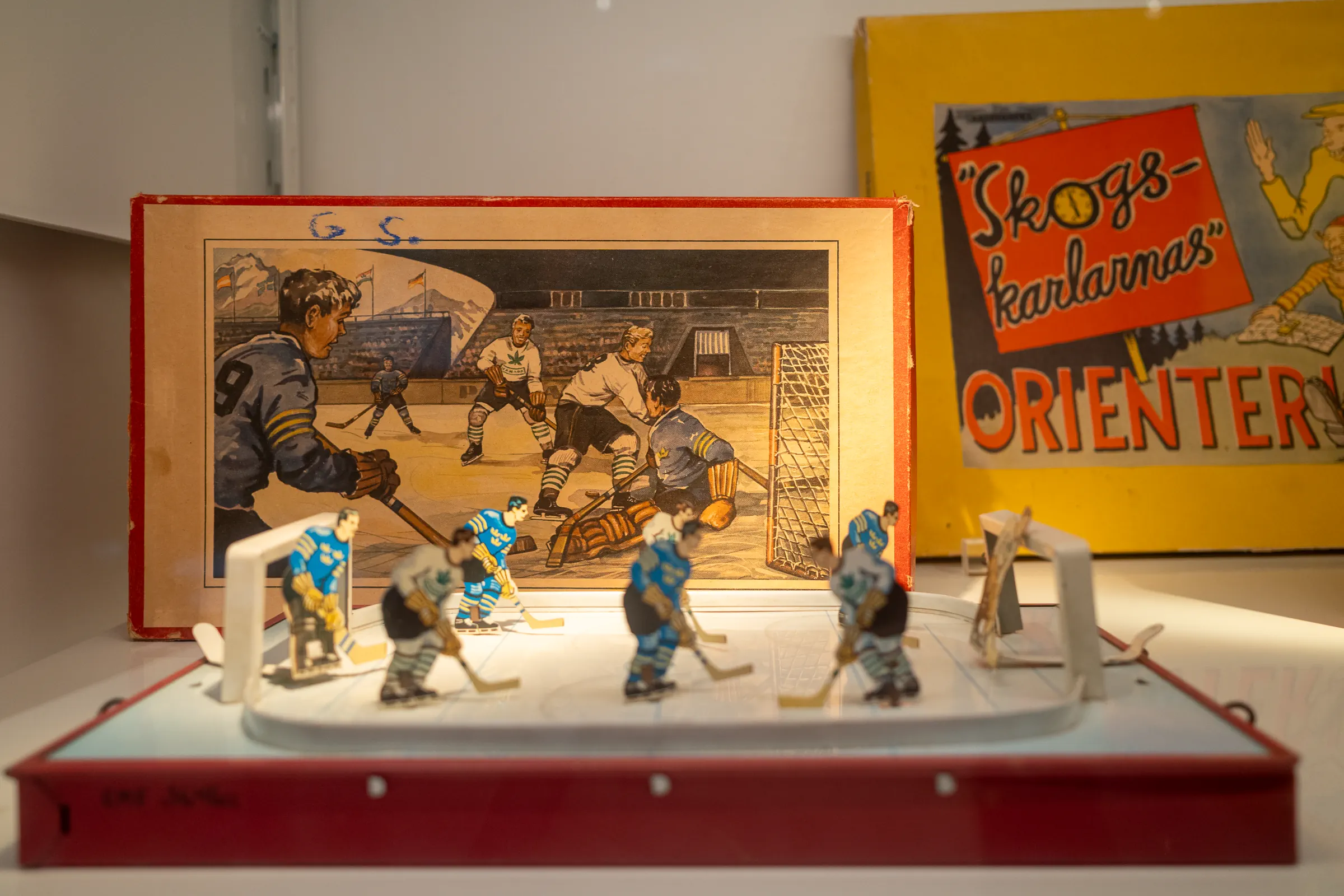
The permanent exhibition is the heart of the museum. It traces the history of Swedish sports from an era when the word “idrott” referred to everyday chores, not athletics, through to the present. That small linguistic detail sets the tone for an exhibition interested in context, not just trophies.
One of the most effective moments requires no reading at all. The world record long jump distance, Mike Powell’s 8.95 metres from 1991, is marked out on the floor. Standing at the start of it and looking to where the jump ends is a more convincing illustration of athletic ability than any photograph or statistic on a wall.
There is also a section on cheating and doping in sport, with specific examples of athletes caught and the consequences they faced. It handles the subject without moralising, which makes it more interesting than it might sound.
During our visit, a temporary exhibition was running about Shiso Kanakuri, the Japanese marathon runner whose story is connected to the 1912 Stockholm Olympics. The exhibition included film footage and was worth the time to go through.
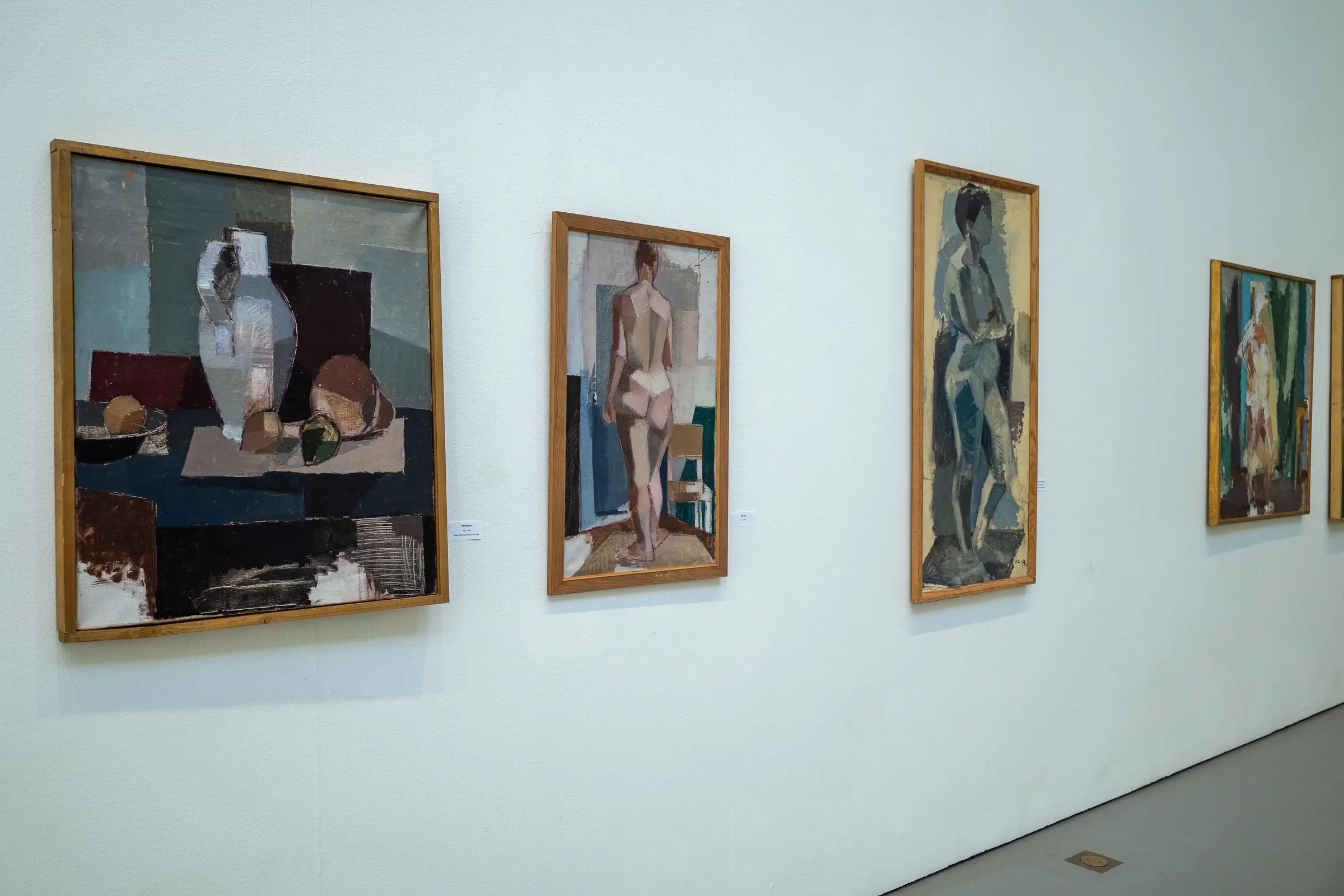
Unexpectedly, the museum also houses ‘Konsthall 16,’ Sweden’s first art gallery exploring the intersection of sport and art. This permanent space hosts rotating exhibitions, such as the evocative work we saw by Jockum Nordström, offering a creative, conceptual perspective on the athletic world that is quite unique for a sports museum.
The museum is impressively spacious, with the full scope of the collection, including the ground floor, offering a deep dive into the sporting world.
Is it worth it?
For a free museum, yes, without hesitation. An hour is about the right amount of time. The staff were welcoming and gave a brief introduction on arrival, which helped with orientation. Signage is in both Swedish and English throughout.
The bus from T-centralen to Djurgården was packed on a Saturday morning, so factor that in if you’re visiting on a weekend.
Practical information
- Address: Djurgårdsbrunnsvägen 26
- Entry: Free
- Opening hours: 11 am–4 pm, Tuesday–Sunday, Closed on Mondays
- Getting there: Take the bus 69 from T-centralen toward Djurgårdsbrunn. The journey takes around 15 minutes.
- Time needed: Around one hour
- Nearby: Tekniska museet, Sjöhistoriska museet, Etnografiska museet, and Polismuseet are all within walking distance, making it easy to combine visits.