Bonniers Konsthall sits on Torsgatan in Vasastan, a short walk from St Eriksplan. It doesn’t draw the same crowds as Moderna Museet or Fotografiska, but that’s part of the appeal. The program focuses on contemporary art, usually one major exhibition at a time, and the scale of the space allows artists to work in a way that smaller galleries can’t accommodate.
Who is it for?
This is a good choice for visitors with some interest in contemporary art, even if you don’t follow the art world closely. You don’t need to arrive with prior knowledge of the artist to get something out of the visit.
It also suits visitors who want a quieter alternative to Stockholm’s busier museums. The atmosphere is calm, the exhibitions tend to be thoughtful rather than overtly designed for mass appeal.
Families with children are in fact one of their target audiences, and we noticed several during our visit, and the large large-scale installations seemed to hold their attention well.
What to expect
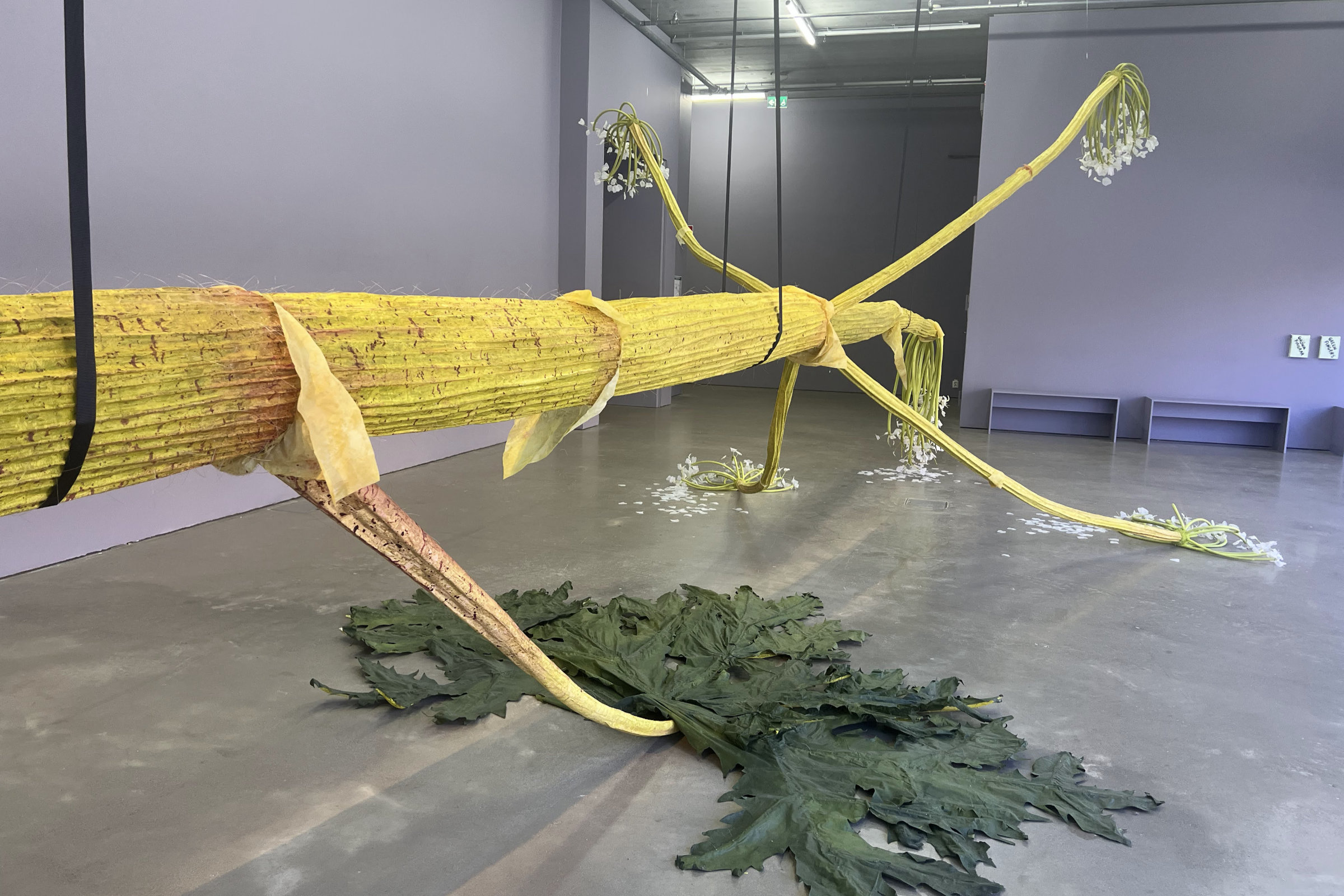
During our visit, the exhibition was Ingela Ihrman’s Nocturnal Games a show built around large sculptural installations and video works. The subject matter moves through the natural world, with recurring themes of desire, transformation, and physical encounters between humans and nature.
The first room stops you in your tracks. A huge, textured sculpture dominates the darkened space, while a video shows Swedish naturalist Jan Lindblad being wrapped in the coils of an anaconda in the Amazon river. We were not sure whether what we were watching was real or staged. Knowing that the material draws on archival footage only makes it feel stranger.
Further in, a large moth sculpture moves slowly in a circular path through one of the rooms, lit by a focused spotlight in an otherwise dim space. The scale is striking, especially with a second moth lying upside down on the floor nearby.
One of the video works, The Fertile Crescent, shows the artist carrying an oversized wheat stalk from a field into the sea, in a kind of absurdist ceremony around sowing and fertilisation. The piece is inspired by a Swedish comedy sketch that many international visitors won’t recognise, so some of the context may be lost. Even so, its deadpan humor still comes through, and the large physical version of the work on the gallery floor gives you something to orient yourself around as you watch.
Is it worth it?
Yes. Even without reading up in advance, we ended up staying far longer than planned. Bonniers Konsthall feels substantial without being overwhelming, and the combination of a focused exhibition, generous space, and calm atmosphere makes it easy to settle in for an afternoon.
Entry costs 130 SEK, which feels fair for the experience. Admission is free on Fridays.
The café adds to the visit rather than feeling like an afterthought. The space is light and open, with large windows facing Torsgatan, oak benches and tables, and marble-topped bistro tables near the glass front. The food is simple and well-made. The pizza with roe, pickled red onion, and salad onion had a properly blistered base and enough going on that it didn’t feel like a concession-stand afterthought. The double espresso was worth staying for.
Practical information
Address: Torsgatan 19
Entry: 130 SEK. Free entry on Fridays.
Opening hours: Check the Bonniers Konsthall website before visiting, as hours vary by day and season.
Language: Signage throughout the exhibition is in both Swedish and English.
Getting there: Take the metro to St. Eriksplan (green line). The gallery is a short walk from the station, on Torsgatan.
Time needed: 1 to 2 hours, longer if you visit the café.
Nearby: Vasaparken is a short walk away. Odenplan, with several good restaurants and cafés, is around 10 minutes on foot.