During September, Stockholm slowly pivots from summer to autumn. The air turns crisp, the trees begin to turn, and the summer crowds are finally dwindling. The archipelago boats shift to a less frequent autumn timetable, the light goldens earlier in the evening, and the city’s parks and gardens begin to yield their final harvest.
If you happen to be in town, an autumn market is a wonderful way to experience this change. It isn’t the grand spectacle of a Christmas market, but rather a more intimate affair: crates of apples, trestle tables sagging under jars of local preserves, and the scent of woodsmoke and fresh bread. Unlike the city’s bustling shopping streets, these markets usually take place in historic farmsteads or quiet gardens.
You’ll find a few different types of autumn markets in Stockholm, ranging from food-focused skördemarknad (harvest markets) to larger historical fairs at places like Skansen. Most are one-off events that last a single day or weekend, so it’s worth checking the dates to see if they align with your trip – it’s a perfect excuse to slow down and see a different side of the city.
Central Stockholm
These are the most accessible markets. All are within a short walk, tram, or bus ride of the city center.
Skansens Höstmarknad
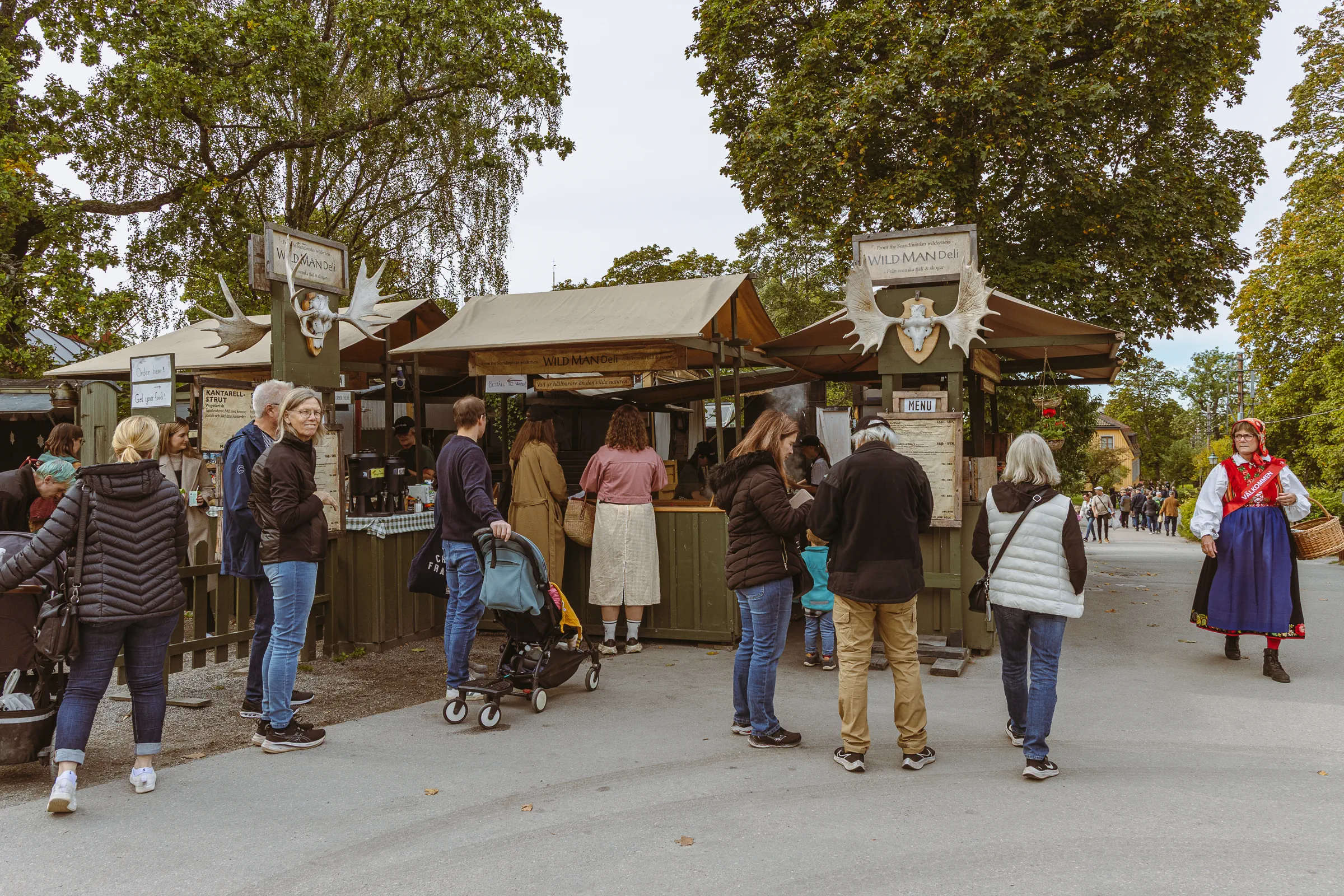
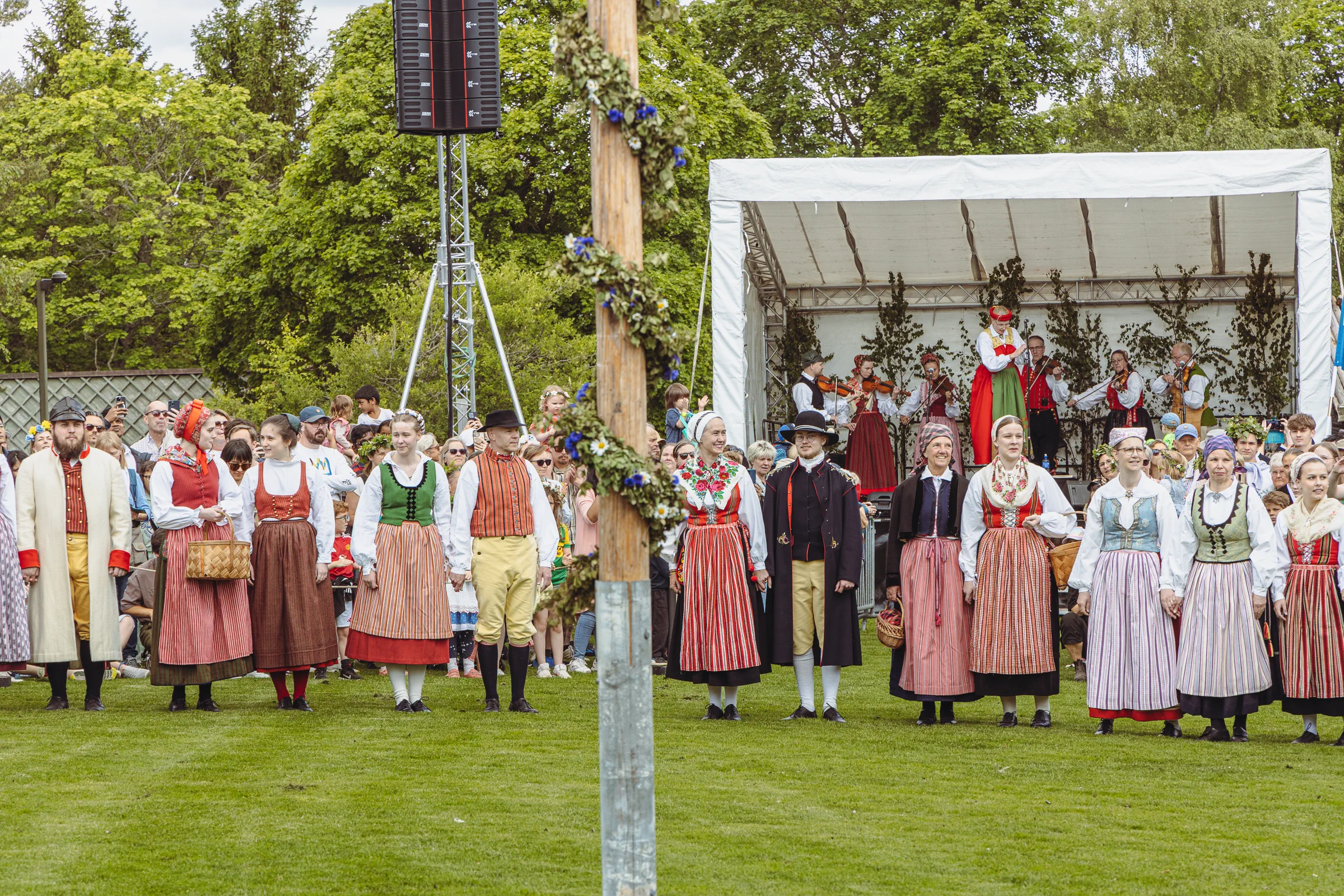
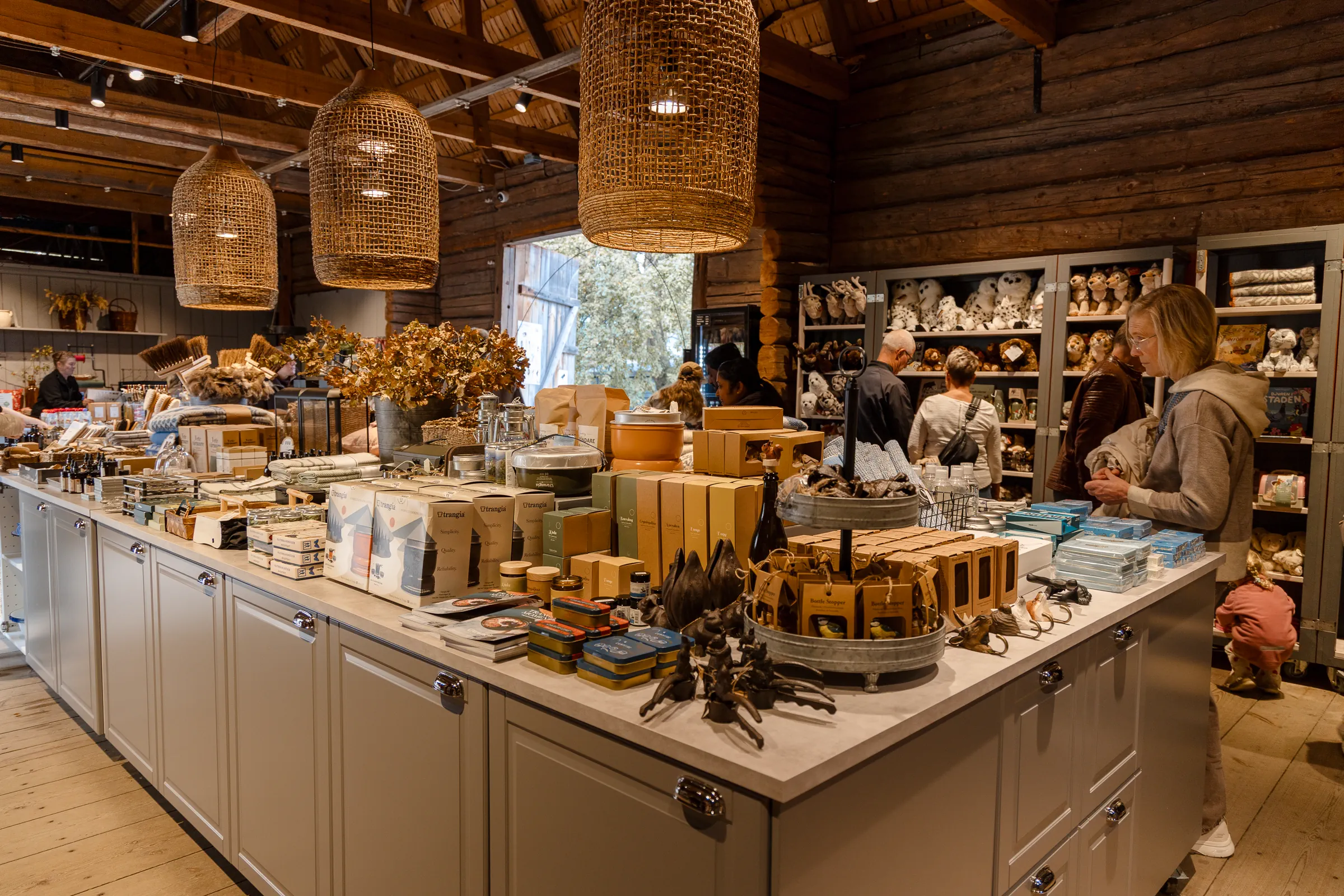
Skansen throws the biggest and most theatrical of Stockholm’s autumn markets, and it’s the one to pick if you want atmosphere as much as shopping. For one weekend, the open-air museum turns back the clock to the early 1900s. Staff, dressed in period costume, run old-fashioned games like tug-of-war, wrestling, and a greased pole. Musicians and dancers animate the main square, while nearby stalls sell honey, jam, cheese, and handmade crafts from the same kind of small producers you would have found in Sweden a century ago. This is simply Skansen doing what Skansen does best.
When: September 26–27, 2026, 11 am–4 pm both days.
Price: Included in standard Skansen admission (roughly 160–220 kr for adults depending on season and whether you book online in advance; children aged 0–15 go free).
Getting there: Take tram line 7 or bus 67 to Skansen, or the Djurgården ferry from Slussen. All three drop you within a few minutes’ walk of the entrance.
Pairs well with: the rest of Djurgården, including Skansen’s zoo section, the Vasa Museum, or a walk out to Rosendals Trädgård.
Address: Djurgårdsslätten 49–51
Website: skansen.se
Rosendals Trädgård Skördefest
This biodynamic garden on the quieter side of Djurgården marks its harvest festival (Skördefest) by selling its own produce, showcasing it on their seasonal menus, and inviting visitors to pick their own harvest. Expect a market under the apple trees, self-pick flowers for the kids, and garden-grown vegetables on your plate. On Friday evening, there is a proper harvest dinner at Herbarium, the garden’s restaurant, built entirely around the week’s bounty. Rosendal rewards a slow pace – give yourself a few hours here to wander the greenhouses and linger over a coffee in the café.
When: September 11–13, 2026, at 11 am–4 pm. Garden and market open through the weekend; the harvest dinner runs Friday evening (book ahead).
Price: Free to walk the garden and market; the harvest dinner is a separate, ticketed booking
Getting there: Tram line 7 or bus 67 to Bellevue or Liljevalchs/Gröna Lund, then a short walk through the park. Also reachable by the Djurgården ferry from Slussen.
Pairs well with: Skansen, a short walk away, or the quieter Djurgården nature trails toward the canal.
Address: Rosendalsterrassen 12
Website: rosendalstradgard.se
Bondens egen marknad
Bondens egen marknad is a weekly Saturday tradition that runs from August through October. Local farmers and small producers from across the region set up shop in two main locations: Katarina Bangata on Södermalm (the larger and more bustling of the two) and Tessinparken on Östermalm.
Unlike the one-off harvest festivals, this isn’t a curated “event” – it’s the city’s pantry. You’ll find fresh produce, artisan breads, and cheeses sold directly by the farmers who grew or made them. It lacks the theatrical polish of Skansen or the garden-party atmosphere of Rosendal, but it trades that for pure, unpretentious authenticity. It’s a nice, low-key way to shop like a local on a Saturday morning.
When: Saturdays from August through October 2026, 10 am–3 pm.
Price: Free
Getting there: Katarina Bangata is close to Skanstull or Medborgarplatsen T-bana (green line); Tessinparken is a short walk from Karlaplan T-bana (red line)
Pairs well with: a wander through Södermalm’s cafés (Katarina Bangata) or the Karlaplan/Östermalm district (Tessinparken).
Address: Katarina Bangata (Södermalm) & Tessinparken (Östermalm)
Website: bondensegen.com
Outside the city center
More locations in the greater Stockholm area are coming during the autumn.
Frequently asked questions
Almost all of them, yes. There are a few exceptions, such as Skansen, where entrance fee is included in general admission to the park.
An autumn market (höstmarknad) is the broader term: crafts, food, and atmosphere. A harvest market (skördemarknad) is more specifically built around what’s just been picked: produce, preserves, and flowers. Rosendal, Näsby Slott, Vinterviken, and Tungelsta are the closest to true harvest markets; the rest lean more toward general autumn fairs.
Mid-to-late September is the busiest stretch, with major events like Skansen and Rosendal running back-to-back. If you prefer a more low-key, authentic atmosphere, look for the smaller county markets in October; they’re community-focused and offer a much more relaxed way to chat with local producers.
Yes, there’s no separate ticket for the market itself, just Skansen’s standard entry fee. The fee varies by season and whether you book online in advance.
Most markets are easily reached by public transport, but a few outlying locations – like Zetas, Johannesbergs Slott, Rimbo, and Säbyholmsmarknaden – are significantly easier to access by car. Everything inside the city and most of the Greater Stockholm area is well-served by the T-bana, commuter trains, and buses.