During the weeks around the summer solstice, Stockholm never really gets dark at night. This period is known as white nights, when the sun dips below the horizon but the sky never turns fully black. For about six weeks each summer, the city stays in a long, soft twilight, even in the middle of the night.
If you’re visiting Stockholm in summer, white nights are simply part of the experience. This guide explains why they happen, when to expect them, and what they’re actually like once you’re here. It also touches on practical things visitors often wonder about, such as sleeping in the brightness or being out late when it still feels like evening.
What are white nights?
White nights occur during summer in Stockholm, when the sun sets, but never drops far enough below the horizon for complete darkness. Instead of a clear transition from day to night, the city stays in an extended twilight. The sky remains a soft blue-gray, and even around midnight there is enough light to see clearly without streetlights.
This happens because of Stockholm’s northern location at 59°N latitude. For comparison, the Arctic Circle, where the sun does not set at all during parts of summer, lies at 66°N. Stockholm sits in between: far enough north to experience dramatic summer light, but not so far north that the sun stays above the horizon all night. Cities further south in Europe still experience normal summer nights with several hours of darkness.
During this period, the sun never dips more than six degrees below the horizon, a phase known as civil twilight. Because it never goes deeper than that, true darkness never arrives.
White nights typically last from mid-May to early August, with the brightest period centered around the summer solstice in late-June. At this peak, there is no real night, just a continuous shift from daylight into twilight and back into day.
When do white nights occur in Stockholm?
For visitors, the experience of white nights changes gradually over the summer rather than switching on and off. Here’s what to expect month by month
Quick month-by-month breakdown:
- May: Nights become noticeably shorter, and long twilight stretches late into the evening. It still gets dark, but not for long.
- June: This is the peak period. Around the summer solstice in late June, the sun sets close to 10 pm and rises again around 3 am. Even at the darkest point of night, the sky never turns fully dark.
- July: Nights slowly begin to darken again, but the light lingers well into the night, especially in early July.
- August: The last traces of white nights fade during the first half of the month, and evenings start to feel more like a typical summer night.
What does it actually look like?
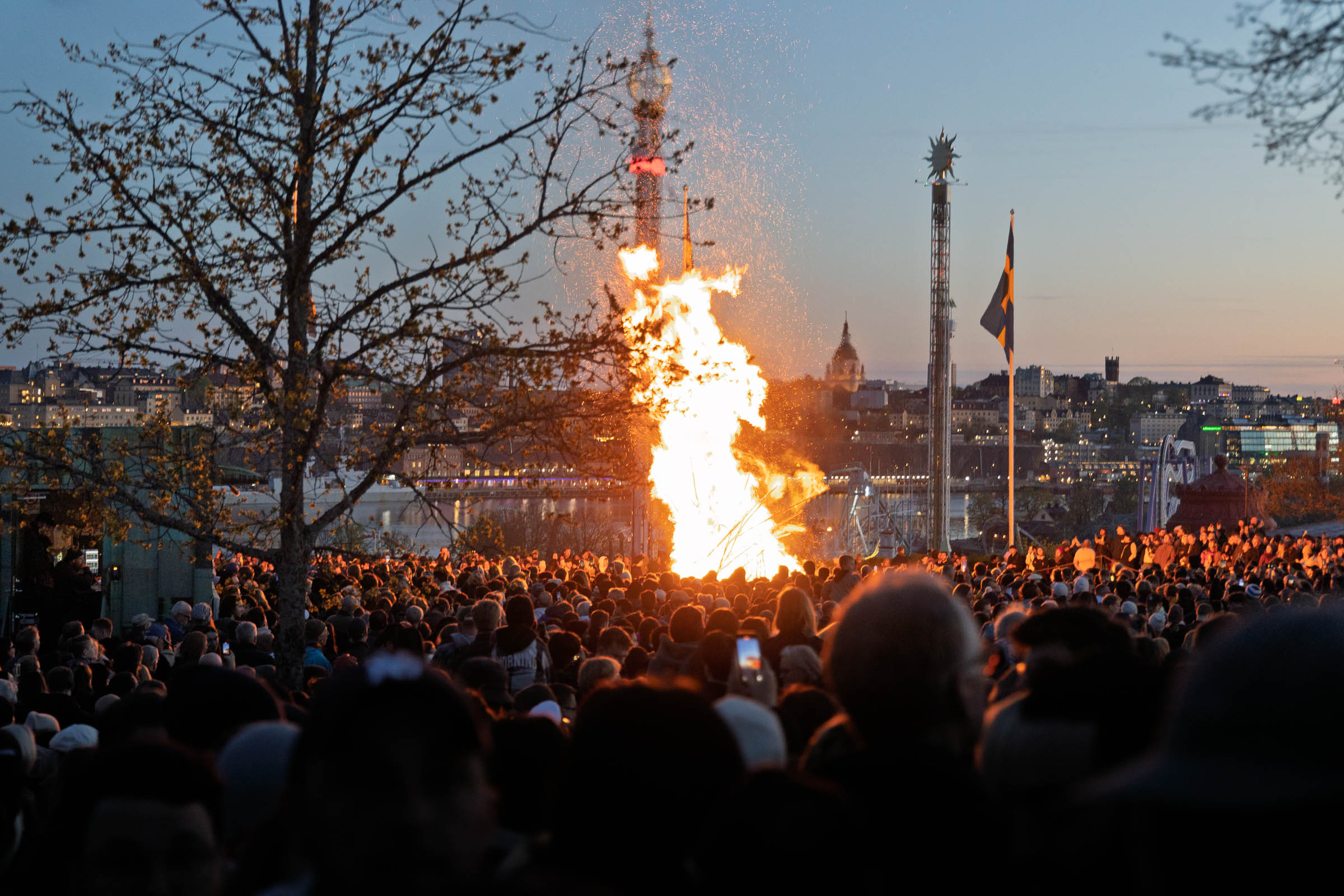
White nights don’t feel like night in the usual sense. After sunset, the light fades slowly into a long twilight, then begins to lift again toward dawn without ever fully disappearing. If you’re outside, there’s enough light to walk around comfortably, even in parks or wooded areas, without relying on streetlights.
The sky stays in motion. It shifts between pale blue and deeper shades of indigo, often with a soft band of yellow or pink along the horizon where the sun rests just out of sight. Shadows are gentle rather than sharp, and time can feel slightly out of focus.
Late at night, the city grows calmer but not silent. Traffic thins out, voices carry further, and birdsong can still be heard well past midnight. It doesn’t quite feel like daytime, but it doesn’t feel like night either, which is what makes the experience so distinctive.
Practical tips for visitors
Sleep tips
During white nights, the main adjustment for visitors is sleeping when it still feels like daytime outside. Most hotels in Stockholm have good blackout curtains, but if you’re staying in an Airbnb or hostel, it’s worth checking reviews or asking your host about window coverings. A simple sleep mask can also help, especially if your room lets in a lot of light.
Even once the room is dark, the extended daylight can feel a bit disorienting. Streets often stay active later than you might expect, and if you’re a light sleeper, earplugs can be useful. Many visitors find that falling asleep isn’t the hardest part, but waking up can be. Without the usual contrast between night and day, it’s easy to momentarily lose track of whether it’s late, early, or already morning.
Sticking to your usual bedtime routine helps, and most people adjust within a day or two. After that, the light tends to fade into the background, even if the sky outside still looks more like afternoon than night.
Activity planning
The long daylight hours give your days in Stockholm a different rhythm. Sightseeing doesn’t have to stop in the early evening, and it’s easy to visit museums, walk between neighborhoods, or explore waterfront areas well into the evening without feeling rushed. This can also make it easier to plan popular sights later in the day, when crowds are often thinner.
Outdoor dining can be enjoyable in the evening during white nights, especially on warm, clear days, but it’s very weather-dependent. Summer evenings in Stockholm can be anything from mild to quite chilly, and many restaurants offer blankets rather than relying on heat. Eating earlier in the evening is often more comfortable, while later hours tend to blend more naturally into bars and nightlife rather than long dinners.
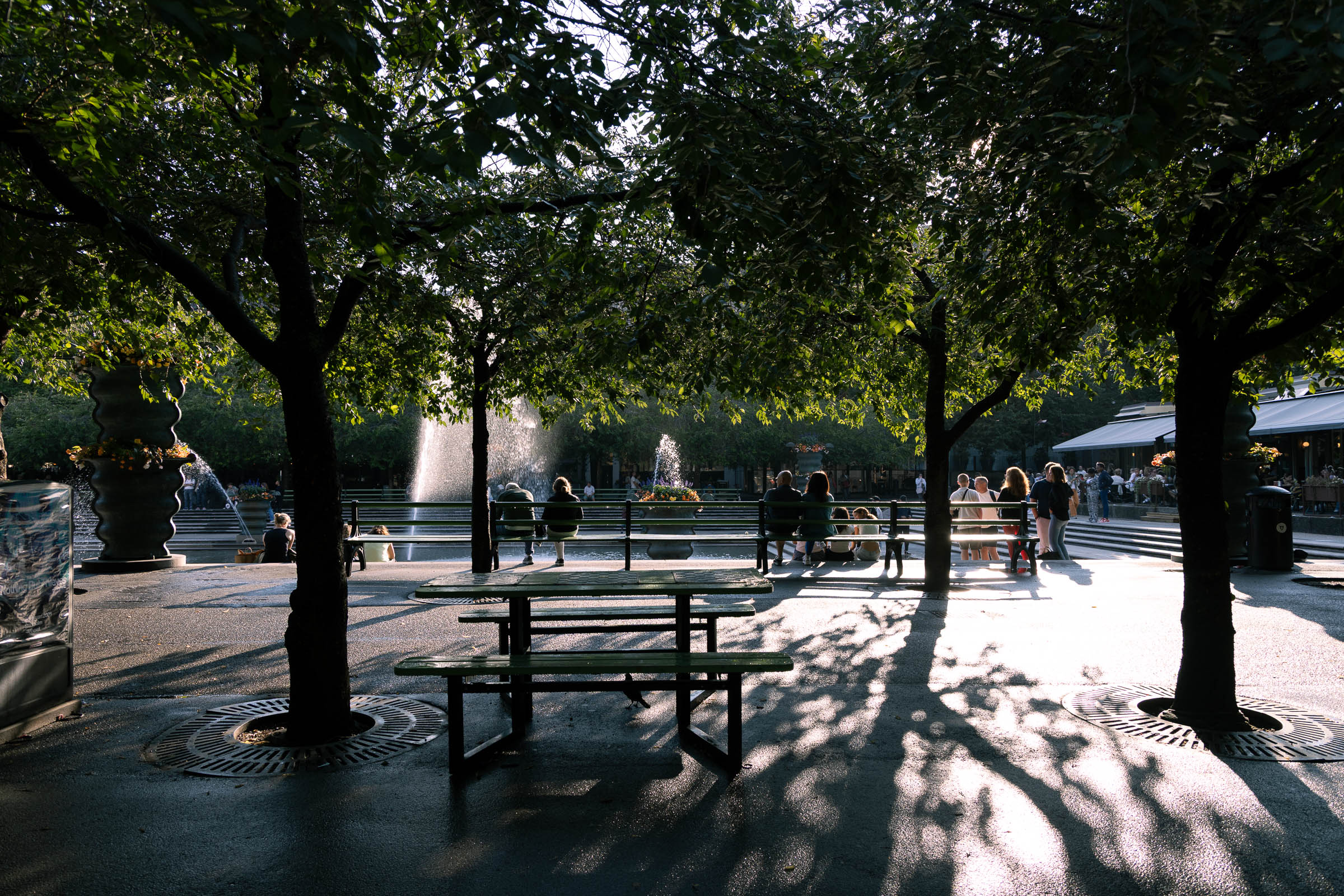
Parks and waterfront promenades are still active late into the evening, with people sitting, walking, talking, or watching the light linger over the water. The city feels calmer rather than busier, with a softer energy than during the day. Summer nightlife also benefits from the extended light, and venues like Under Bron are especially popular during this time. Larger outdoor events, such as the Stockholm Culture Festival in August, show how late summer evenings can stretch on, even as the white nights begin to fade.
What to pack
White nights don’t require a special packing list, but a few small adjustments can help. Because daylight stretches late into the evening, sunglasses can still be useful if you’re out during the later hours, especially on clear days. That said, the sun sits low, not overhead, and they’re often something you’ll use briefly rather than all evening.
Evening temperatures in Stockholm are variable, even in summer. Some nights stay warm, while others cool down quickly once the sun dips below the horizon. A light jacket or sweater is usually a good idea, particularly if you plan to be near the water or stay out late.
Long summer days also mean longer overall sun exposure. If you’re spending many hours outdoors, it’s worth being mindful of sunscreen later in the day as well, even if the light feels softer than midday sun.
Energy management
One subtle effect of white nights is that evenings don’t feel like evenings. Without a clear shift from light to dark, your sense of time can blur, and it’s easy to stay out later than planned simply because it never really feels like bedtime. It’s not so much extra energy as the absence of the usual signals that tell you the day is winding down.
This can make summer nights in Stockholm feel especially inviting, particularly when the weather is warm and the city is still active. You may glance at the clock and be surprised by how late it’s become, even though it still feels like early evening.
For some visitors, this extended daylight can add to the general feeling of adjustment during the first days of a trip, even if there’s little or no time difference from home. That sensation usually passes quickly, as your body adapts to the rhythm of long days and short nights.
Best ways to experience Stockholm’s bright nights
White nights are best experienced by simply being outside later than you normally would.
Late evening viewpoint visit
Head to one of Stockholm’s elevated viewpoints between 10 pm and midnight.
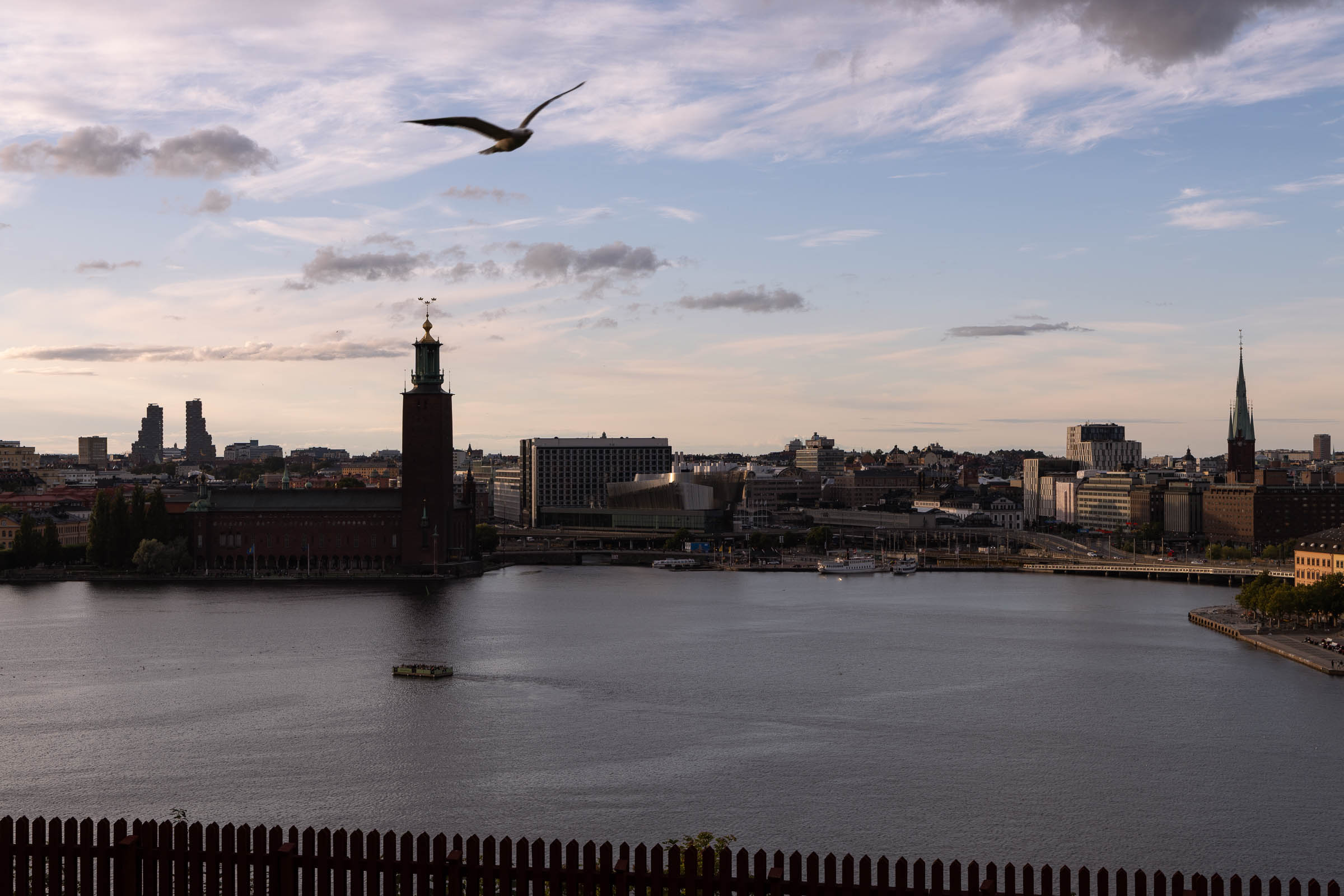
Skinnarviksberget in Södermalm is a popular local spot, where people gather on the rocky hillside with drinks and snacks to watch the sky slowly shift through shades of blue and gold. The view over Riddarfjärden and the city feels especially calm in the soft twilight.
Nearby, Monteliusvägen offers similar views along a clifftop path and is often quieter, making it a good option if you prefer a more peaceful experience. For more ideas, see our guide to Stockholm’s viewpoints.
Waterfront walk after 10 pm
Take a walk along Strandvägen, through Djurgården, or along Södermalm’s northern waterfront around 10–11 pm. The water reflects the lingering twilight, and the city takes on a quieter, more spacious feel.
Depending on the evening, you might pass a few joggers, couples out for a stroll, or people simply sitting by the water. Other nights, it can feel almost still. Either way, the combination of light, water, and reduced traffic makes these late walks one of the most understated ways to experience Stockholm’s summer nights.
Rooftop bar or restaurant
Watching the light linger from above is one of the easiest ways to experience Stockholm’s white nights. Rooftop venues like SUS (Stockholm under Stjärnorna) and Mosebacke Terrass let you follow the slow shift of colors in the sky as evening blends into night.
Arrive around 9 pm, order a drink, and settle in. Around the summer solstice, the soft evening light can last late into the night, stretching what feels like the golden hour far beyond the usual timeframe. For more ideas, see our guide to Stockholm’s rooftop bars.
Midsummer celebration
If you’re visiting in late June, Midsummer coincides with the peak of Stockholm’s white nights. Traditional celebrations at Skansen or in parks like Tantolunden often stretch late into the evening, with the lingering light setting the mood.
Locals gather to dance around the maypole, eat strawberries, and socialize outdoors long past what would normally feel like night. It’s one of the few times when the extended summer light is not just a backdrop, but part of the celebration itself.
Archipelago evening experience
A simple way to experience white nights beyond the city is to take a late afternoon ferry to a nearby archipelago island, such as Fjäderholmarna or Vaxholm, and return in the evening. Ferries running around 9 or 10 pm are late enough to feel unusual, but still easy to fit into a day.
On the way back, the city feels distant while the light remains steady, and the journey itself becomes the highlight. Being on the water at that hour, moving slowly between islands while most places would already feel dark, gives a clear sense of how different Stockholm’s summer nights can be.
For practical details, see our guide to travelling with the archipelago ferries.
Outdoor park at night
Sitting in a park late in the evening can be one of the simplest ways to notice the effect of white nights. Places like Tantolunden or Rålambshovsparken are often calm around 10–11 pm, with the light still lingering and the city feeling temporarily paused.
There may be a few people around, or there may be very few at all. That quiet, unremarkable normalcy is part of the experience. Nothing is happening, and yet it doesn’t feel like night. You’re not there for an activity so much as for the contrast between the hour and the light, which is where white nights tend to reveal themselves most clearly.
Photography walk
For photographers, white nights offer unusually long periods of soft, workable light. Instead of a short rush around sunset, the transition from day to night unfolds slowly, with gentle contrast and subtle shifts in color over several hours.
Walking through Gamla Stan’s narrow streets or along the waterfront between early evening and late night can be especially rewarding. The light stays low and directional for longer than usual, shadows remain manageable, and the city feels calmer, making it easier to slow down and observe rather than rush to catch a single moment.
What locals do during white nights
During white nights, evenings in Stockholm tend to stretch rather than shift completely. People don’t stop sleeping, but they often stay out a bit longer, simply because it still feels like day. The biggest difference is not what people do, but when they do it.
After-work plans often run later than usual, especially on warm days. Meeting for a drink at 7 pm and still being outside a few hours later doesn’t feel particularly late when the light hasn’t changed much. Along places like Norr Mälarstrand or Djurgården, you may notice more evening walkers, runners, and cyclists than during other parts of the year.
The city doesn’t become nonstop or sleepless. It simply loosens its edges. When darkness arrives later, there’s less pressure to hurry home, and evenings feel more open-ended. That subtle shift, rather than any dramatic change in habits, is what most visitors end up noticing.