Konstakademien (The Royal Swedish Academy of Fine Arts) sits on Fredsgatan 12, a short walk from Kungsträdgården, behind one of the most recognisable facades in central Stockholm. If you’ve spent a summer in the city, you may already know the building from the outside. For years, the broad stone staircase and front terrace hosted F12 Terassen, one of Stockholm’s most popular outdoor summer clubs. It closed permanently in autumn 2025. What most people who crowded those steps never knew was that there was a gallery inside worth visiting. The gallery is still open.
Who is it for?
Konstakademien suits visitors who are genuinely interested in art, but it’s accessible enough that you don’t need a strong background to get something from it. The exhibitions rotate, so what’s on will vary, but the mix during our visit ranged from figurative painting to abstract sculpture to a display examining the history of art criticism itself. That last one is interesting from an art history perspective.
With free entry, it’s a quieter, less tourist-heavy alternative to Nationalmuseum or Moderna museet. If you want to see contemporary Swedish art without the crowds and without spending anything, this is a reasonable place to start.
It is less suited to young children, and anyone expecting a permanent collection in the traditional sense will need to adjust expectations. The programme here is largely temporary exhibitions.
What to see
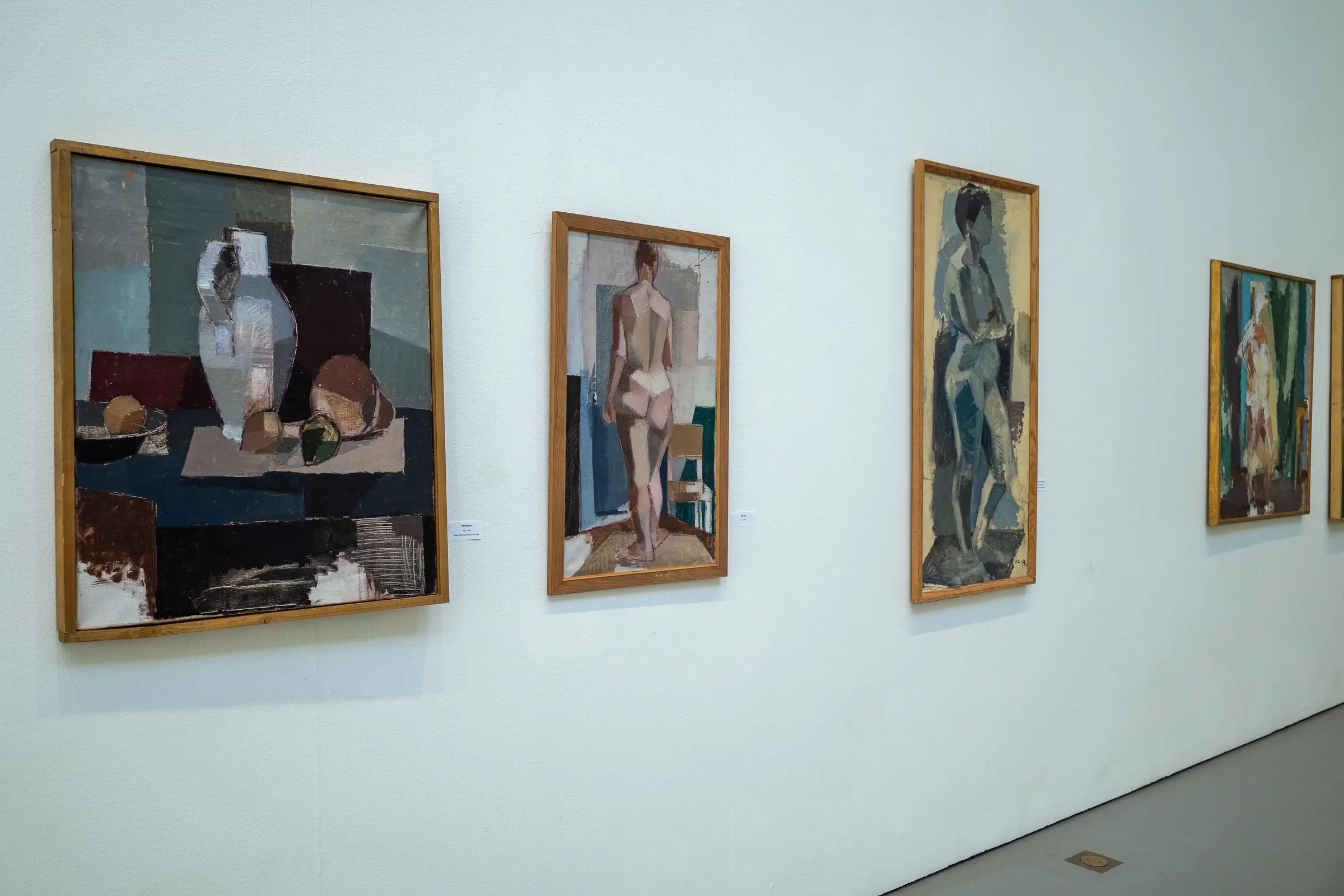
The main draw during our visit was a large exhibition of paintings by Kajsa Zetterquist, a Swedish artist turning 90 in 2026. The exhibition is a tribute to her career, and the work spans both abstract and figurative painting. The scale of some canvases is striking in a room that has the high ceilings and proportions of a 19th-century institution.
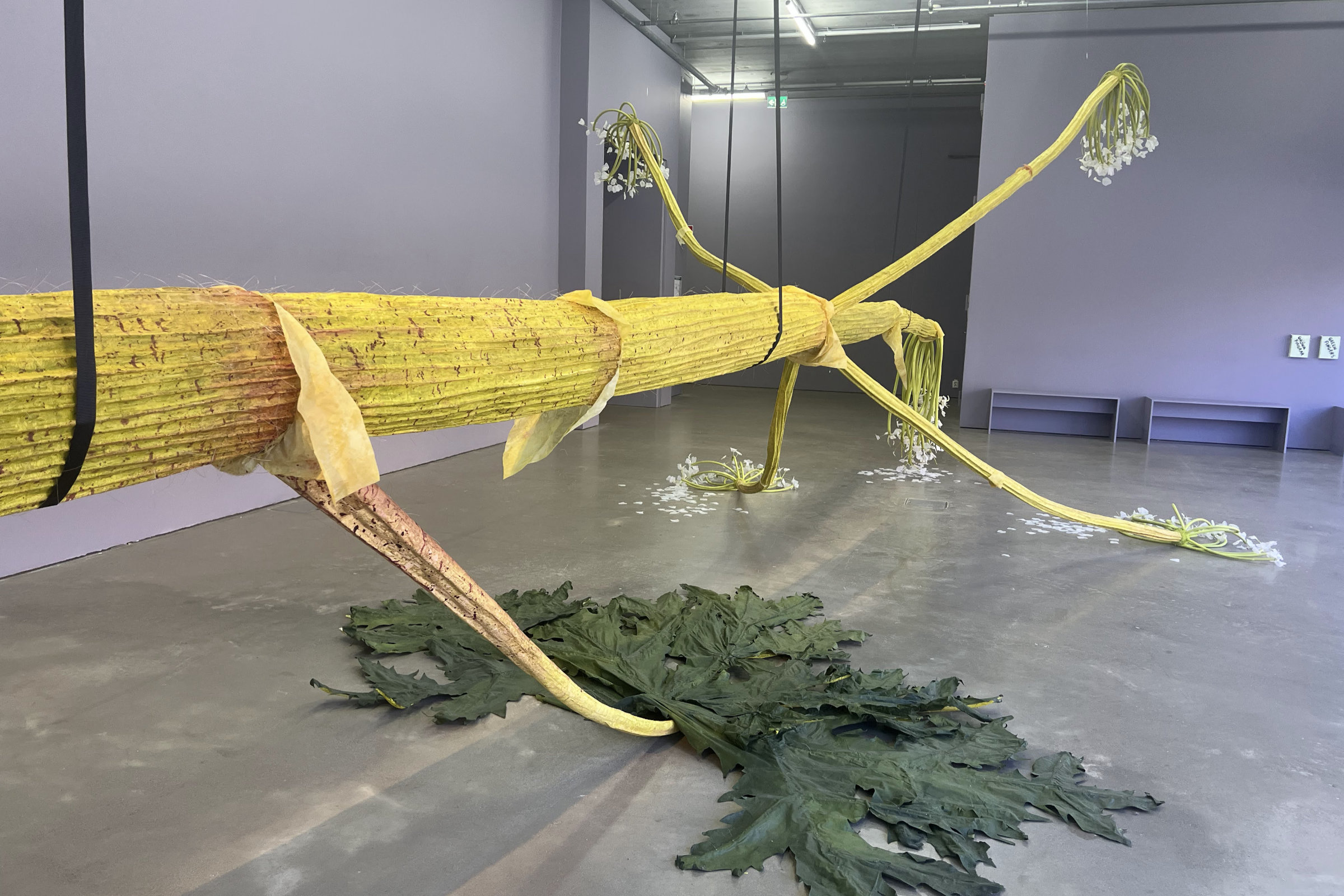
The surprise was a separate exhibition by artist Liva Isakson Lundin, featuring large abstract sculptures made from styrofoam. The works looked more at home in Moderna museet than here, which was part of what made them interesting. The gallery space itself reinforced the contrast: pale walls, polished floors, classical doorframes, and large irregular forms cut from industrial packaging material.
The building also rewards some attention in its own right. The café on the second floor occupies a long room with dark wood panelling, blue walls, and paintings hung alongside wrapped sculptures waiting for the next installation. It’s an odd, atmospheric combination that’s worth visiting, even if you’re only stopping for a coffee.
A note on language: not all exhibition texts are available in English and Swedish. During our visit a few rooms were Swedish only.
Is it worth it?
For a free gallery in a central location, yes. An hour is about right. Staff were present in every room and approachable when asked for help. There were no queues on a Saturday midday, and the building felt calm throughout.
The programme changes regularly, so it’s worth checking what’s on before you visit. The permanent aspects of the place, the building, the café, the general atmosphere, hold up regardless.
Practical information
- Address: Fredsgatan 12
- Entry: Free
- Opening hours: Tuesday–Saturday: 11 am–4 pm, Wednesdays: 11 am–8 pm
- Getting there: Around 10 minutes on foot from T-centralen, or a short walk from Kungsträdgården T-bana station
- Time needed: Around one hour
- Nearby: Kungsträdgården, Nationalmuseum, and the Royal Palace are all within easy walking distance