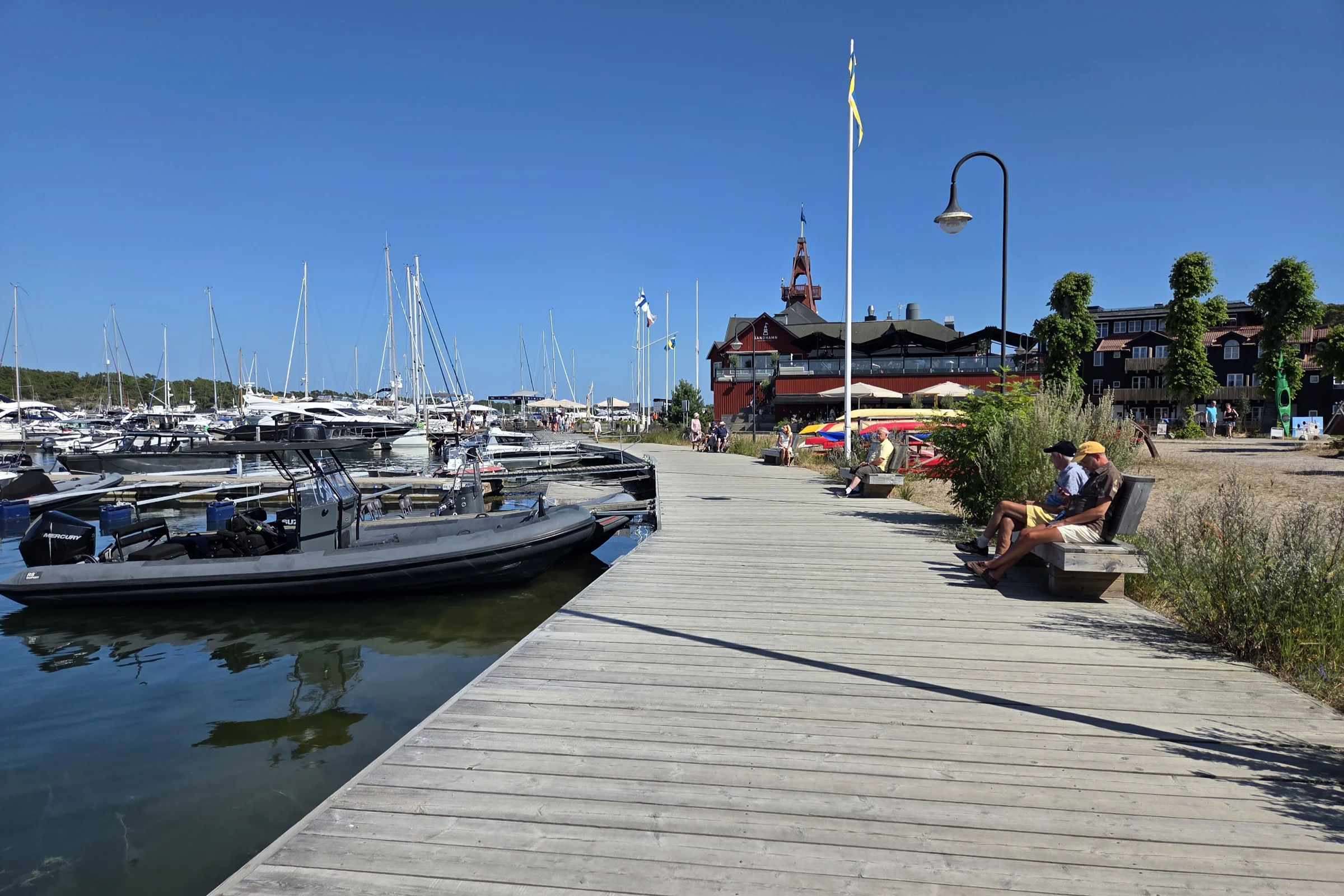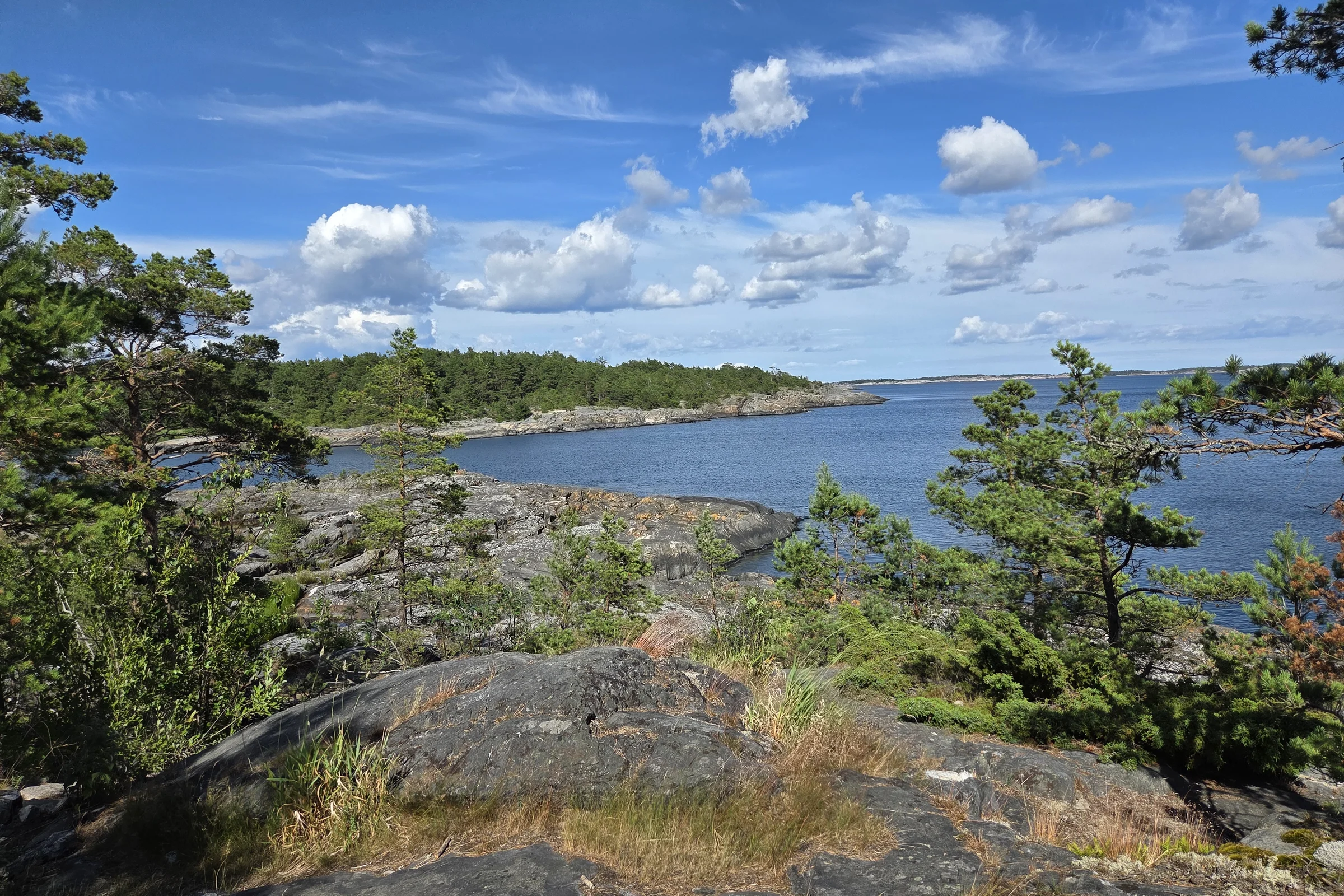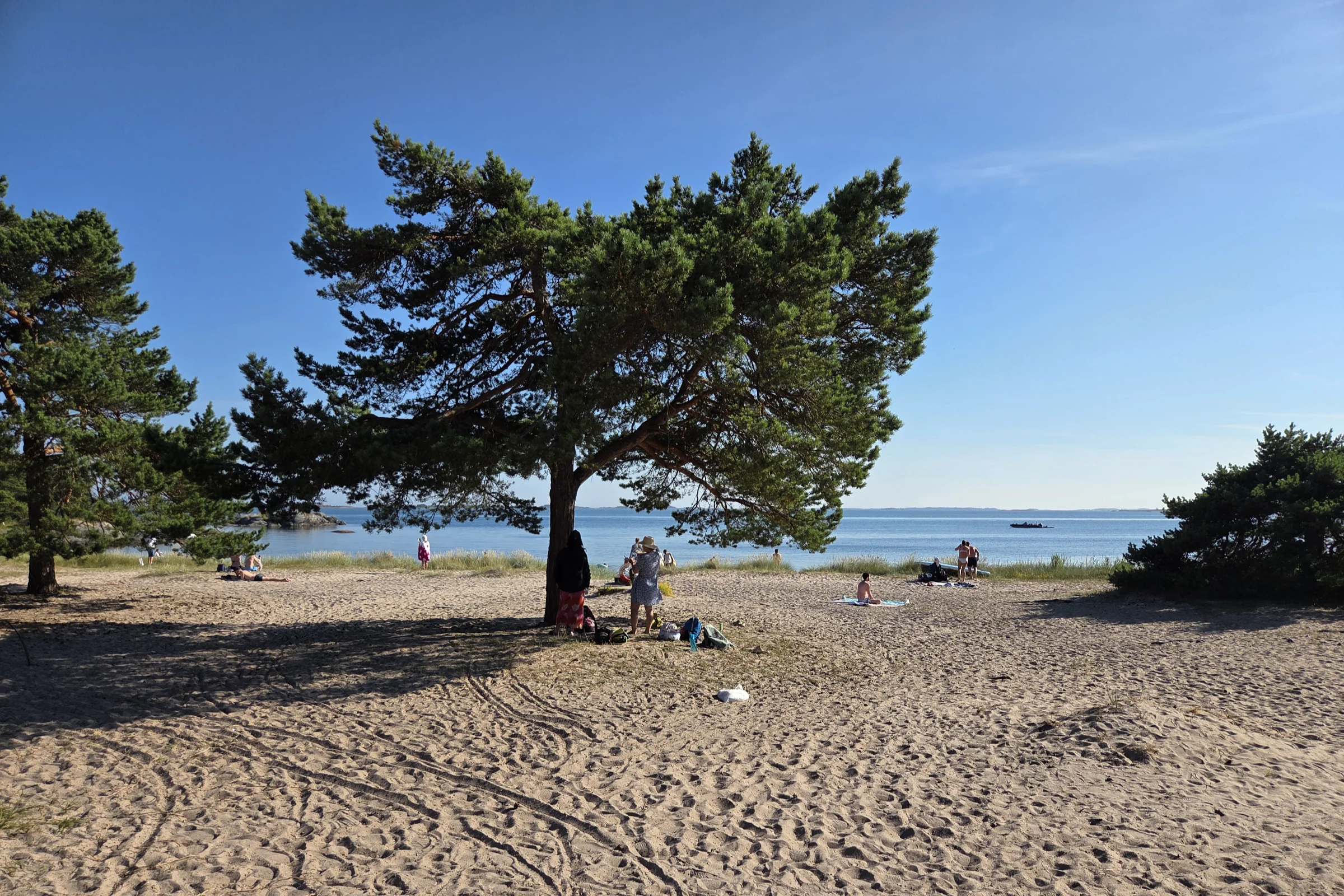

Möja is the kind of island that makes you realize you’ve truly left Stockholm behind and have finally arrived in the archipelago for real.
- Authentic archipelago: A lived-in island community (200 residents) rather than a polished tourist resort.
- Slow down: Perfect for cycling, quiet walks, and enjoying long, peaceful evenings by the water.
- Local flavors: Notable for its summer seafood spots and cozy village atmosphere.
- Best for: Those who want to truly leave Stockholm behind and embrace a remote, rhythm-based lifestyle.
Part of a massive maritime landscape of 30,000 islands, Möja is located in the outer part of the central Stockholm archipelago. It is not the place for nightlife or a packed sightseeing itinerary; instead, it captures the essence of the Swedish archipelago lifestyle, where the pace is dictated by the ferry schedule and the rhythm of the sea rather than a tourist itinerary.
For international visitors, it offers a window into the real island community where locals spend their summers. If you want quiet roads, small villages, and the feeling of being truly remote, Möja is one of the most rewarding islands to choose. The journey by boat is, in itself, the true start of the island experience.
This is an island for slowing down. You come here to walk or cycle, eat seafood, swim if the weather is right, sit by the water, and enjoy the fact that there is not too much to do. That is part of the appeal.
Möja works especially well as an overnight trip. You can visit for the day if the ferry times line up, but because the journey takes some planning, the island is easier to appreciate if you stay the night.
Is Möja worth visiting?
Yes, if you are looking for a calm and scenic island where the archipelago feels lived-in rather than polished for tourists. Möja has around 200 permanent residents, and while it receives plenty of visitors in summer, it still feels more like a real island community than a resort.

Möja suits you if you’re looking for nature, swimming, easy cycling, unhurried meals, and a slower pace. It also makes sense as a next step if you have already explored easier archipelago destinations like Vaxholm and Fjäderholmarna, and want to travel farther out.
You’ll find plenty of spots to swim. While Möja lacks long sandy beaches, you can dive off smooth granite rocks or find quiet, sheltered coves around the island. The wide gravel roads make cycling easy, and on a summer day, you’ll pass plenty of other travelers doing the same. The pace is intentionally slow, inviting you to leave the city behind and match your rhythm to the island’s gentle, unhurried nature.
Möja is less ideal if your main goal is serious hiking. There are beautiful parts to walk, and the island is part of the Stockholm Archipelago Trail, but if you are expecting a challenging wilderness hike, you may find this route a little monotonous. If you are happy with easy walking, cycling, and a few more natural trail sections, it works much better.
The official route primarily follows broad gravel roads rather than the narrow forest paths some hikers might expect. If you are looking for a true forest hike, we recommend venturing off the official trail to explore the island’s smaller, unofficial paths. While not part of the official route, these are open to the public and offer a much more natural hiking experience.
It is also not a party island. If you want more buzz, late nights, and a livelier summer scene, Sandhamn or Finnhamn is probably a better fit. Möja is more about quiet evenings, dinner by the water, and waking up somewhere that feels far away from the city.
Where is Möja?
Möja is in the outer part of the central Stockholm archipelago. It lies far enough from the city that the journey feels like part of the experience, especially if you arrive by boat through the islands.
The most commonly used piers on the southern part of the island are Berg and Möjaström. Berg is a practical starting point if you plan to stay near the guest harbor, eat at Möja Värdshus, or walk parts of the island loop.
How to get to Möja
The simplest summer route involves taking a bus from Slussen (Stadsgården) to Sollenkroka brygga, then transferring to a Waxholmsbolaget ferry bound for Berg (Möja).
There are also some boat routes from central Stockholm, which can be a beautiful way to travel if the timing works. This is the more scenic option, but it is also slower. If you take a boat all the way from central Stockholm, treat the journey itself as part of the trip rather than just transportation.
If you are visiting Möja as a day trip, the important thing is to check the current timetable before you go. Ferry schedules change by season, and the return trip matters just as much as the journey out.
If you are staying overnight, the logistics become easier. You can arrive, settle in, have dinner, walk around, and enjoy the island without constantly watching the clock.
What to do on Möja
On Möja, the island itself is the main event. You walk or cycle between villages, stop by the water, swim in summer, eat without hurrying, and let the day set its own pace. There is more if you want it, from boats to rent to a seal safari and a sauna, but the appeal is the setting rather than any single sight.
In Berg, you will find the local heritage museum (Hembygdsmuseum), though check opening times beforehand as they can be limited. The Roland Svensson Museum is also well worth a visit; it showcases the artist’s work and features a recreation of his old studio, beautifully situated at Ramsmora brygga with views of the open sea. During the summer, the local dance hall occasionally screens films.
For more active pursuits, there is a new mini-golf course on the island. If you want to get out on the water, Möja Outdoor offers rentals for kayaks, rowboats, and SUPs, and they also organize seal safaris and sauna tours on nearby islands.
The island is well suited for cycling. The main roads are easy to follow, and cycling makes it easier to cover more ground without spending too much time walking along gravel roads. You will likely see cyclists, four-wheelers, mopeds, and the occasional car, but traffic is generally light compared with the mainland.
Walking is also possible, but it depends on what kind of walk you want. Some parts are lovely and peaceful, while others feel more like road walking through the forest.
A good simple plan is to start in Berg, follow the eastern side of the island northward, make a detour to Löka, continue toward Långvik, and then return south using the nature trail and the western side of the island. This gives you a mix of water views, roads, forest, and small village life.
Walking and the Stockholm Archipelago Trail on Möja
Möja is part of the Stockholm Archipelago Trail, a long-distance trail that connects different islands across the archipelago. The Möja section is easy rather than demanding, with a mix of roads and nature paths.
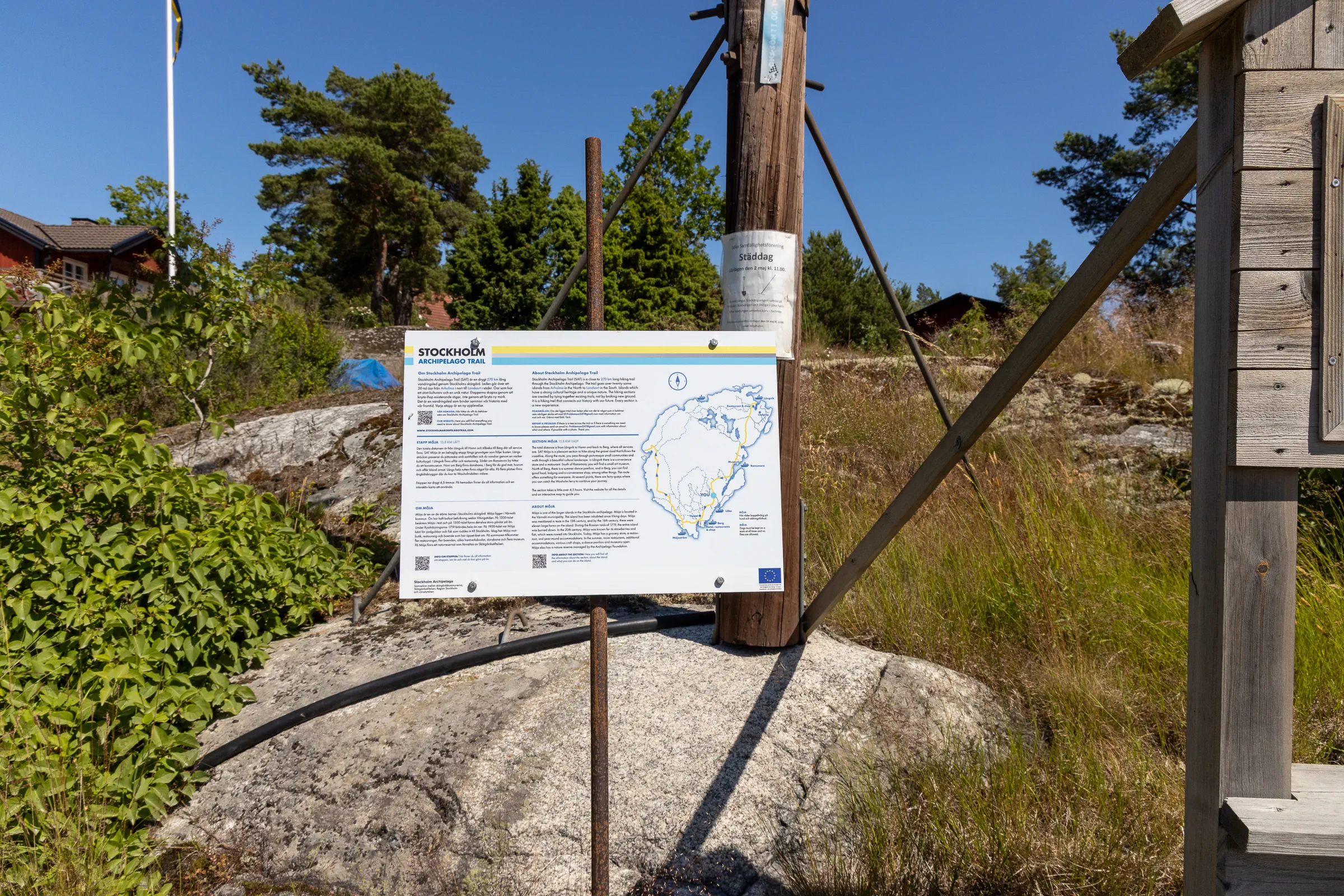
This is where expectations matter. If you imagine a narrow hiking trail through wild forest from start to finish, Möja may disappoint you. A large part of the walking is on broad gravel roads. These stretches are not difficult, but they can feel a bit repetitive if you are walking for several hours.
The best part, if you want something that feels more like a real hike, is the nature trail through the island. Look for signs marked “Naturstig” and follow the yellow markings. This section takes you through the forest and connects the eastern and western sides of the island in a way that makes the route feel more varied.
For us, this was the only section on Möja that felt like actual hiking. Although beware, in summer the forest does have a lot of mosquitoes. Especially forest areas where it is still and close to wet ground, there can be a lot of them. If you are visiting in July or August and plan to walk the nature trail, bring mosquito repellent. Long sleeves and pants are also a good idea if you are sensitive to bites.
A detour to Löka
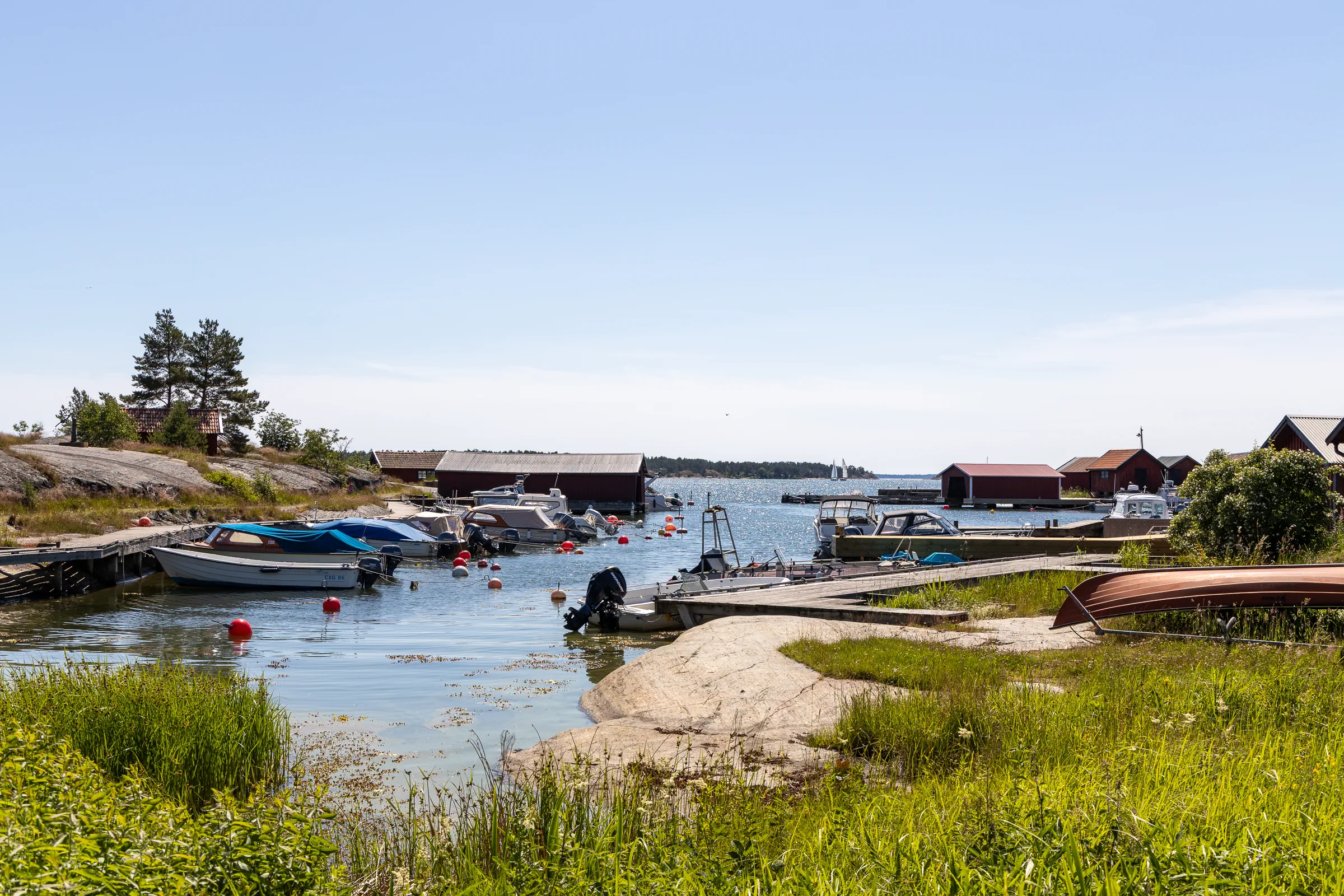
If you are walking or cycling the eastern side of the island, it is worth making a short detour to Löka. The village and harbor give you one of those simple archipelago moments that do not need much explanation: boats, water, open views, and a quieter feeling than the busier parts around Berg.
It is not a major sight, and that is partly why it works. It is just a nice place to pause, look out over the water, and feel where you are.
After visiting Löka, you can return to the main route and continue north.
Food and drink on Möja
By archipelago standards, Möja is well served for food. Many islands this far out have a single krog and little else; here you have the harbour kitchens, the inn, and the bakery, enough to eat across a day or two without repeating yourself.
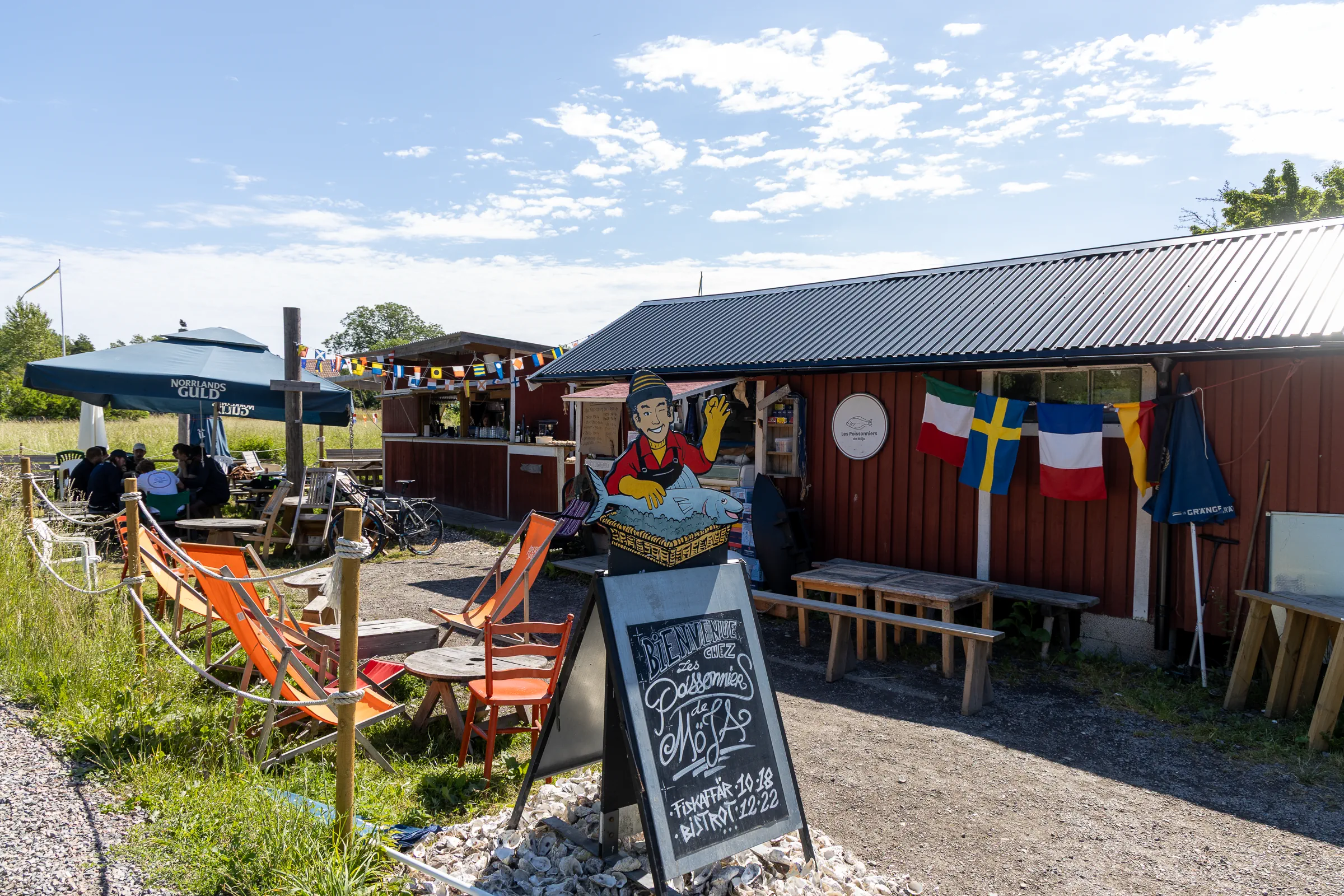
Les Poissonniers de Möja is probably the most distinctive place to eat on the island. It is a small outdoor seafood restaurant serving fish and shellfish, with a lively summer atmosphere. When we passed in the morning on our day of arrival, things had not really started yet, but later in the day it was full every time we walked by. It seemed to be the busiest and most festive spot on the island.
It is a very small place, and the seating is outdoors. From what we heard, it often fills up even when the weather is not ideal, with people sitting under umbrellas in the rain. If seafood is one of your reasons for visiting Möja, this is the place we would try first.
Möja Värdshus and Bageri is another useful base, especially if you are staying near Berg. The bakery is open in the morning, but the customer area is tiny. It gets crowded quickly if more than a few people step inside at once. There is no real space to sit and eat in the bakery itself, so it is better for takeaway.
When the bakery is closed, you may still be able to buy bread or pastries through the inn. The inn also serves lunch and dinner, with the kind of menu you might expect from a Swedish archipelago restaurant: fish, seafood, meat dishes, and drinks in a relaxed setting. There is indoor and outdoor seating.
When we ate there, the evening became quiet fairly early. By around 9:30 or 10 pm, we were almost alone outside. That matched the general impression of Möja as a calm island rather than a place that keeps going late into the night.
Möja Hamnbar is a more casual option. We had pizza there and thought it was good. It is the kind of place that makes sense when you want something easy rather than a full restaurant meal.
Jeppes Gästgiveri sits on the northern side of the island. That sounds far, but on a bike it is about 14 minutes from the southern villages on the same easy gravel roads, so it is a short ride rather than an expedition unless you are on foot. We did not eat here, but it rates highly on Google, if more unevenly on other sites, so it is worth a look when you plan where to eat.
There is also Coop Långvik, a branch of one of Sweden’s major supermarket chains. While it operates as a small, unmanned self-service store, it is very useful if you need to stock up on water, snacks, or basic supplies. When we visited, entry and payment were handled entirely through the Coop app. Access and payment normally requires Swedish BankID, which international visitors won’t have, but there is a workaround. Register a Coop account and download the Coop app before you travel. Then, contact Coop customer service and ask them to link your online account to a membership account. They can issue a personal code that works with your email address in place of BankID, allowing you to unlock the door and pay. Because this process requires some lead time, be sure to set it up well before you arrive on the island rather than trying to do it at the door.
Where to stay on Möja
Möja is easier to enjoy if you stay overnight. Accommodation is limited, so book early if you are visiting in high summer.
The two most obvious options are the inn (Möja Värdshus) and the hostel (Möja Vandrarhem).
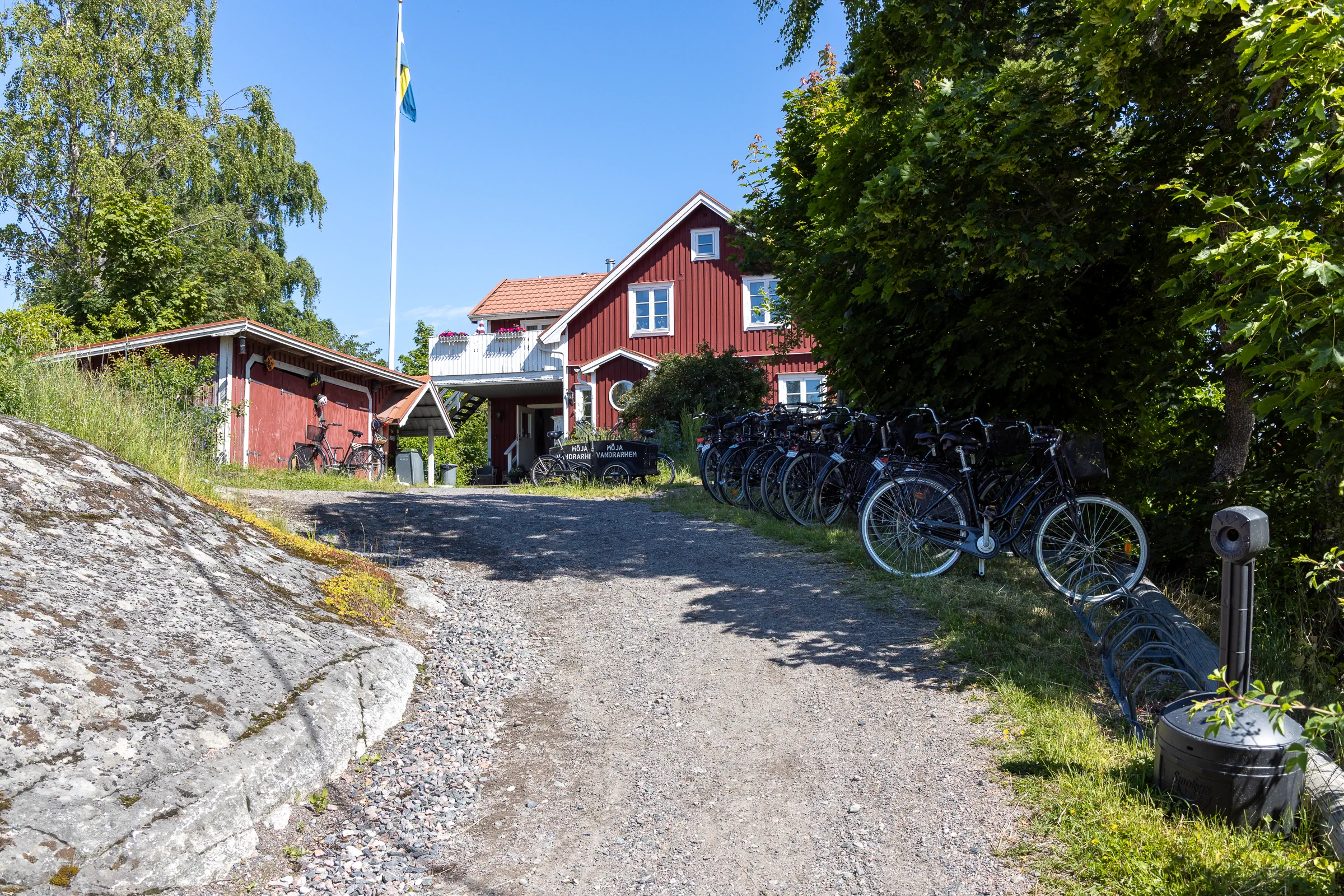
The hostel offers private rooms with shared kitchen and bathroom facilities, which are pleasant and cozy. The house is old, but the care shows. The shared rooms sit up under the roofline, with sloped panelled ceilings, skylights, and pine floors, furnished the way older Swedish summer houses tend to be: rattan chairs under sheepskins, botanical prints on the walls, a small balcony with a striped parasol looking out over red cottages and bare rock.
Note that the walls are thin, so you will hear neighbors at night. The hostel thoughtfully provides earplugs in the rooms and it’s also available to buy at the reception, so grab a pair if you’re a light sleeper.
The bathroom setup was basic but workable. There were two showers and one toilet, with sinks placed in a shared area outside the toilet room. We would have preferred at least two toilets, but because the sinks were separate, it worked better than it might sound.
The owners take great care of the place, most mornings we passed them out front cleaning the guest bikes or seeing to another chore, and the inside was kept to the same standard. And they are excellent sources for local tips on hidden swimming spots and hiking routes you might otherwise miss.
The hostel is a perfect fit for Möja: simple, friendly, practical, and refreshingly unpretentious.
Best time to visit Möja
Möja is at its best in summer, especially from July to mid-August. This is when the island feels most alive, the restaurants and cafés are most likely to be open, and swimming is most appealing.
Late August and early September can also be a good time if the weather is still pleasant. You may get a calmer version of the island, with fewer visitors, while still having a reasonable chance of enjoying the outdoors.
Spring and autumn can work if you want quiet and are careful with planning, but you should check accommodation, restaurant opening hours, and ferry schedules before committing. The archipelago does not shut down completely outside summer, but the visitor experience becomes more limited.
Winter is possible in theory, but for most international travelers, Möja is probably not the best winter island unless you specifically want a very quiet off-season stay.
Good to know before you go
Möja has a lot of private land, and you will see signs marking private roads and areas. Sweden’s right to roam gives you generous access to nature, including some privately owned land, but it does not mean you can walk through someone’s garden or close to their house. Use common sense, keep a respectful distance from homes, and follow marked paths where possible. Stay off areas and roads clearly marked as private.
Bring mosquito repellent if you plan to walk through the forest in summer. The mosquitoes can be intense in still, sheltered areas.
Bring water and snacks if you are walking or cycling for several hours. There are places to eat and buy supplies, but they are spread out, and opening hours can vary.
Consider renting or bringing a bike if you want to explore more of the island. Walking is pleasant in parts, but cycling may be the better way to experience Möja without spending too much time walking along gravel roads.
If you have your heart set on a seaside sauna, check the location carefully before you book; the public sauna we found was located inland rather than by the water. There is an option to rent a boat taxi to reach other spots, but this is most cost-effective if you are traveling with a larger group (around 8–10 people) to share the fare.
Is Möja for you?
Möja is exactly what we expect of a relaxing stay, away from the city’s hustle and bustle. It is not the most activity-packed, and that’s what we liked about it. Come here to relax, swim, eat good food, enjoy nature and the calm. This is what we loved about Möja.
In short, come here if you want a quieter archipelago experience, good summer food, easy cycling, swimming, forest paths, sea views, and the feeling of being far from the city. Do not come expecting nightlife, polished attractions, or dramatic hiking from start to finish.
If this speaks to you, then Möja is exactly what you hope the Stockholm archipelago will feel like: calm, spacious, a little weather-dependent, and very easy to settle into once you stop trying to rush it.