Vaxholm sits at one of the natural thresholds of the Stockholm archipelago. Coming from the city, this is where the sheltered inner waters begin to feel more open, with ferries, summer houses, wooded islands, and the fortress guarding the narrow sound into Stockholm.
But Vaxholm is not just a scenic stop on the way farther out. It is a small, lived-in town with year-round residents, cafés, shops, waterside walks, and one of the most recognizable fortress settings in the archipelago. That mix is what makes it useful for visitors: you get a clear sense of the archipelago without needing to plan a full-day expedition to a more remote island.
It is especially good for a first archipelago trip from Stockholm. You can come by ferry for the classic approach from the water, or by bus and car if you want something simpler and more flexible. In summer, Vaxholm can feel lively and polished around the harbor. Outside the main season, it is quieter, but still feels like a functioning town rather than a place that exists only for visitors.
What is Vaxholm?
Vaxholm is both a small town and the name of the municipality around it, about 30 km (19 miles) northeast of central Stockholm. The town itself sits mainly on Vaxön, close to the narrow waterway that historically controlled access between Stockholm and the archipelago.
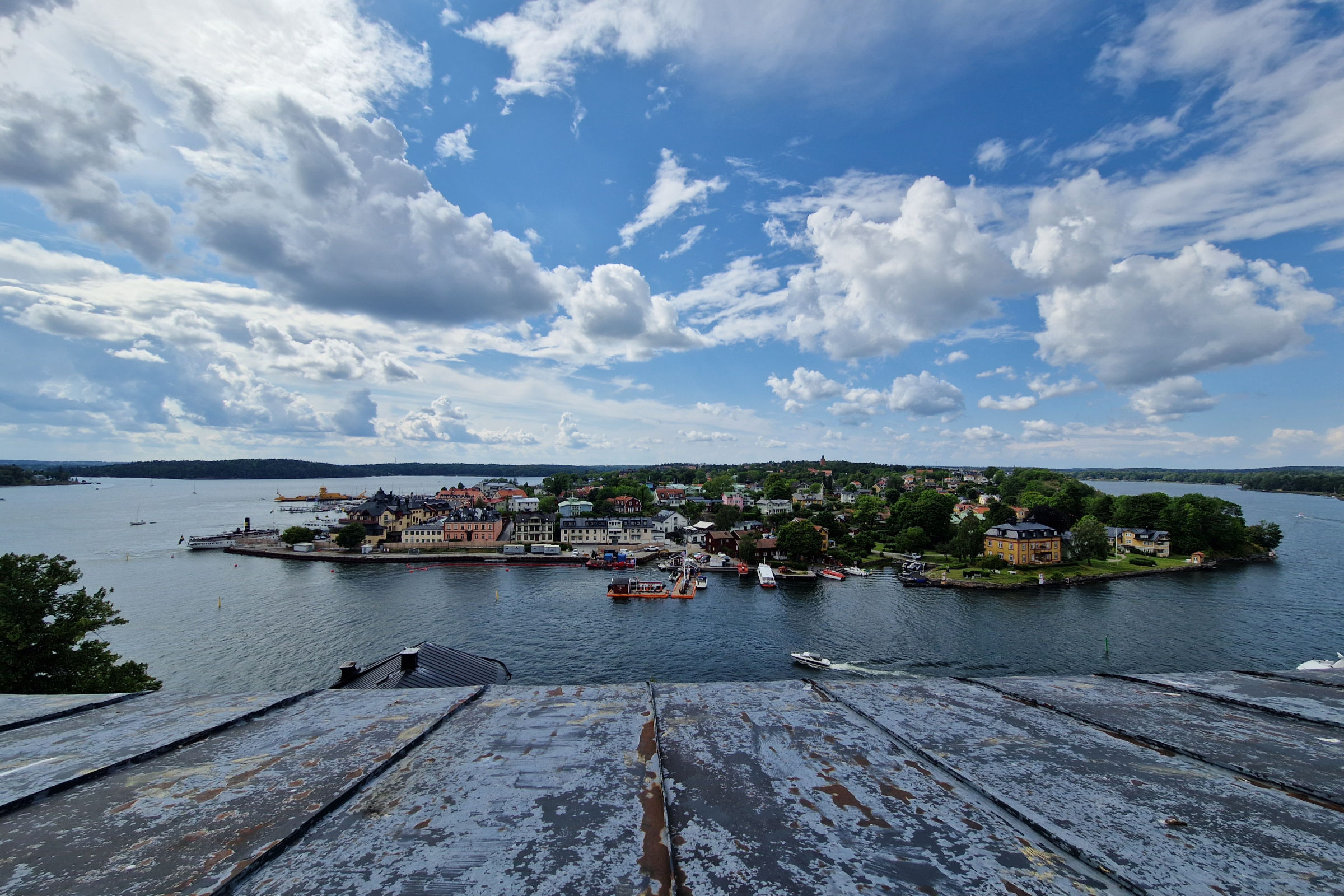
For visitors, Vaxholm works as one of the easiest archipelago trips from Stockholm. You can reach it by ferry, which is the most atmospheric option, but also by bus or car because Vaxön is connected to the mainland by road. That makes it more flexible than many island destinations, especially if you are visiting outside summer or traveling with children.
Vaxholm is active throughout the year, but it changes with the season. In summer, the harbor, cafés, boats, and waterfront walks give it a lively holiday feel. In the off-season, it is much quieter, and some attractions have limited opening hours. For example, the Vaxholm Fortress Museum is mainly a seasonal attraction, with 2026 opening hours concentrated from May to September rather than year-round.
Historically, Vaxholm mattered because of its position. The fortress was built to guard the main sea route into Stockholm, and the town grew around that strategic role. You still feel that connection today: the fortress is not tucked away as a separate museum stop, but sits right in the middle of the view across the harbor.
A quick orientation:
- Small archipelago town about 30 km (19 miles) northeast of Stockholm
- Easy to reach by ferry, bus, or car
- Best known for its harbor setting and Vaxholm Fortress
- A good first archipelago trip if you want scenery without complicated planning
- Lively in summer, much quieter outside the main season
- More town-like than many archipelago stops, with year-round residents and local services
The Fortress
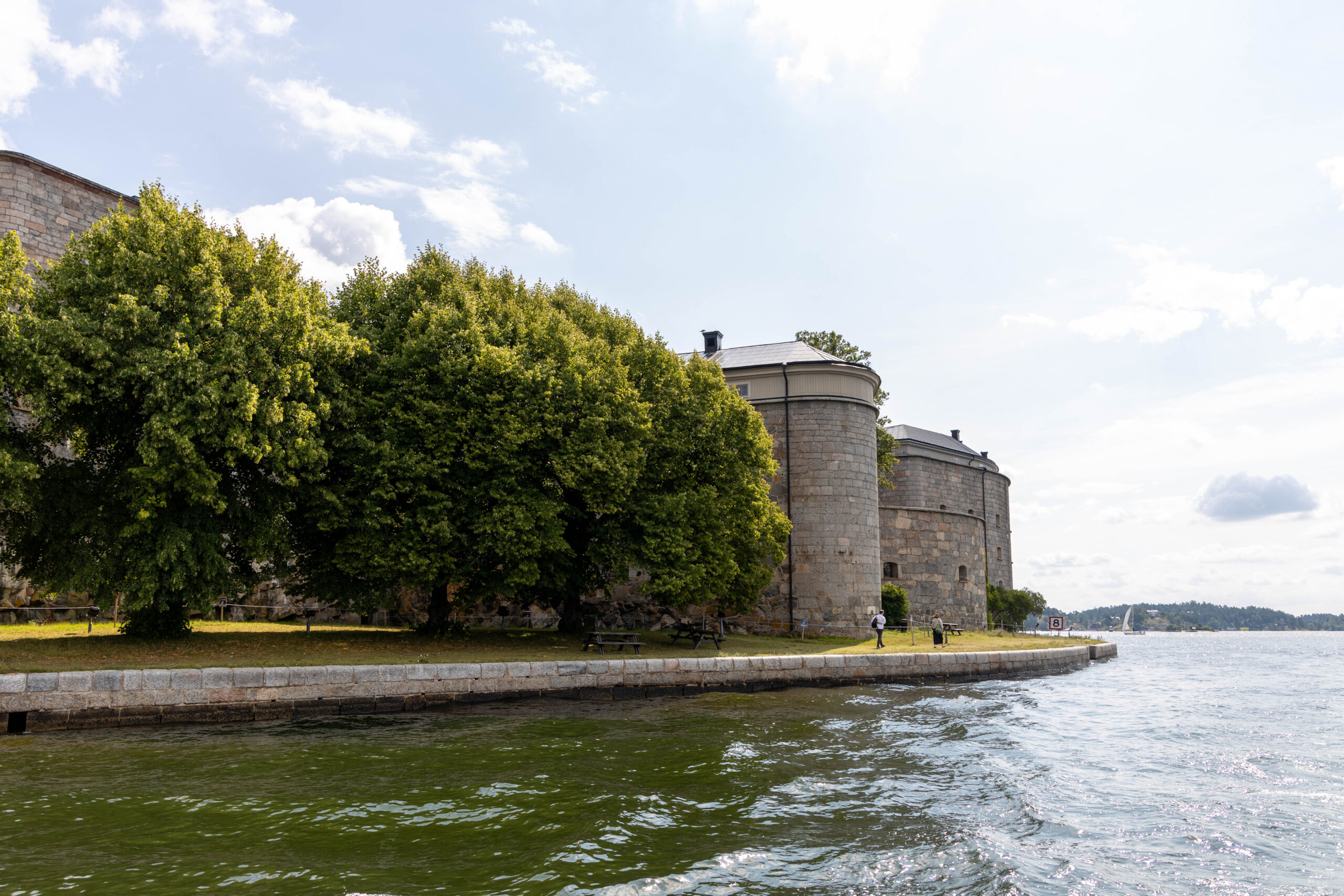
Vaxholm Fortress sits on its own small island just east of Vaxholm’s main harbor, separated from the town by a narrow sound. You can see it clearly from the waterfront, but it is worth crossing over if you have time, especially on a day when the weather is good enough to walk around outside.
The crossing itself is short. Depending on the boat and route, it is more like a few minutes than a proper ferry journey. There are several ways to get across from Vaxholm, including Waxholmsbolaget and seasonal local services from the harbor. In summer, there may also be smaller boats or shuttle-style services, but these can depend on the season, weather, and current operators. Check the day’s departures before you build your visit around a specific crossing.
Some boats may give you especially good angles of the fortress from the water, but I would treat that as a bonus rather than something guaranteed. The fortress is photogenic from almost every side, with its stone walls rising directly from the water, but the exact experience of the crossing can vary.
We took the Swedish-language guided tour, and for us it made the visit much more interesting. The guide clearly knew the place well and had more to say than the scheduled time really allowed. Because the weather was good, the whole tour took place outdoors around the fortress island, which suited the site well. In poor weather, the tour will be held indoors, so the experience can vary.
The Swedish tour is longer than the English version. In 2026, the museum lists daily summer guided tours from June 27 to August 16, with Swedish tours at 12 pm and 2 pm lasting about 45 minutes, and a shorter English historical introduction at 4 pm lasting about 15 minutes. If you understand Swedish well enough to follow historical explanations without constantly guessing, the longer Swedish tour is probably the better experience. If not, the shorter English version may be more useful, simply because you will understand more of it.
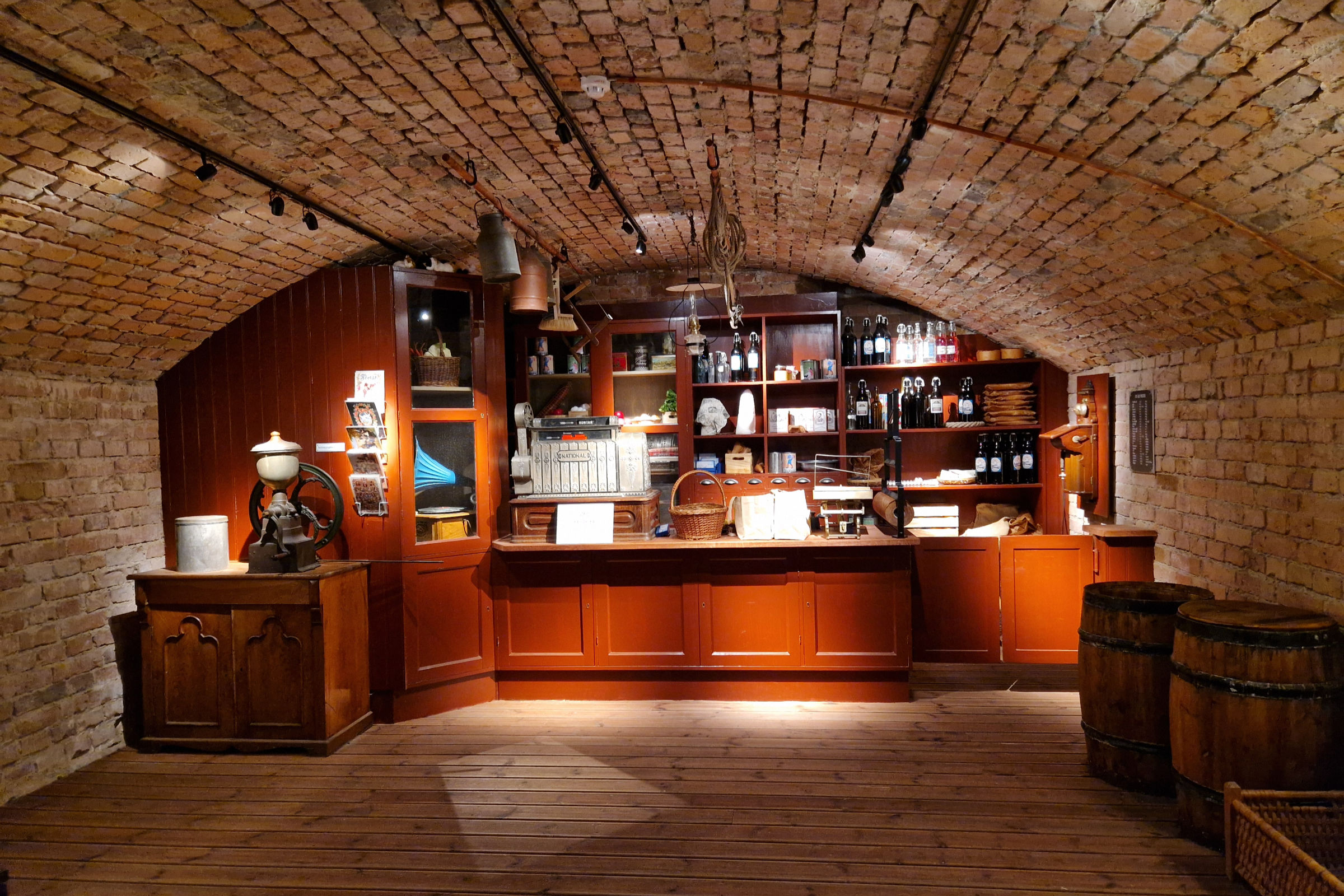
The museum itself is more substantial than a quick display room, with exhibitions over two floors about the fortress and the defense of Stockholm’s archipelago. We wouldn’t describe it as a major museum you travel for on its own, but paired with the fortress setting and a guided tour, it gives useful context. The best experience is probably not rushing straight through the rooms after a long tour. Leave a little energy for the museum, or visit it before the tour if the timing works better.
What makes the fortress memorable is the combination: the short crossing, the position in the water, the views back toward Vaxholm, the military history, and the scale of the walls when you are standing inside the island. It is not just a museum stop, but a place where the geography explains the history quite naturally.
Practical information for visiting Vaxholm Fortress
- Where it is: On a small island just across the sound from Vaxholm harbor
- Crossing time: Usually only a few minutes from Vaxholm
- How to get there: Waxholmsbolaget and seasonal/local boat services operate between Vaxholm and the fortress
- Best conditions: Dry weather is better, especially if you want to walk around the fortress island
- Museum season: Mainly May to September, with extra opening around some holidays
- Guided tours: Daily in the main summer season, usually from late June to mid-August
- Language note: The Swedish tour is longer; the English version is shorter but easier if you do not follow spoken Swedish comfortably
The harbor and town center
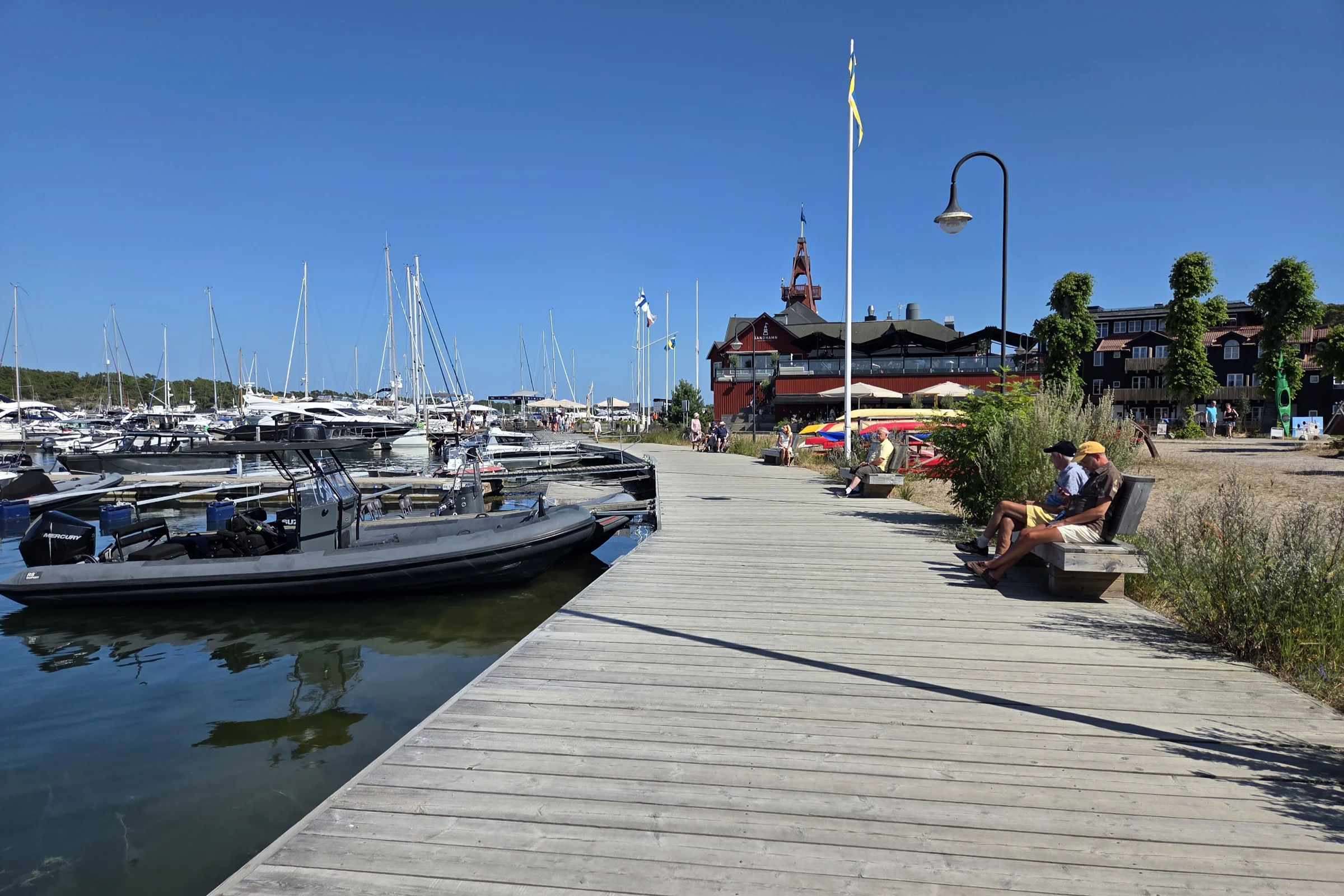
Vaxholm’s main street, Hamngatan, runs close to the water and takes about ten minutes to walk from one end to the other. Around the harbor and the streets behind it, you’ll see many of the wooden houses that give Vaxholm its small coastal-town character. Some are shops, cafés, and restaurants, but this is also a place where people live, work, and run everyday errands.
The most enjoyable part of the town is not one specific sight, but the combination of the harbor, the view of the fortress, the boats coming and going, and the older wooden buildings around the center. It is an easy place to wander for a while, especially if the weather is good.
Do note that Vaxholm’s central quays are being renovated in stages, which can affect parts of the waterfront, walking routes, boat traffic, and the overall harbor experience. Vaxholm Municipality says the quay renovation is being carried out in stages through 2028, with temporary changes for residents and visitors during the construction period.
How much time to spend here
For the town itself, one to two hours is usually enough for a walk around the center, a look at the harbor, and a coffee or ice cream stop. Add the fortress and lunch, and Vaxholm becomes a comfortable half-day trip from Stockholm.
If you want to take the ferry both ways, visit the fortress, have lunch, and move at a relaxed pace, it can easily fill most of a day without feeling rushed.
Eating and drinking
Vaxholm has a bit of an archipelago premium on prices. Expect cafés and restaurants to cost more than a simple stop in central Stockholm, though usually less than some of the more remote or reputation-heavy islands farther out in the archipelago.
The best food and drink experiences in Vaxholm are often as much about the setting as the food itself. Sitting outside with coffee, something sweet, and a view of the harbor or water is part of the appeal, especially in good weather.
Vaxholms Hembygdsgårds Café is one of the most popular café stops in town, partly because of its garden setting and partly because of the large display of cakes and pastries. Visually, it makes a strong first impression, and the location near the water is hard to argue with. Based on our visit, I would describe it more as a charming and scenic fika stop than as a bakery worth traveling for on quality alone. That said, it is very popular, expect it to be crowded.
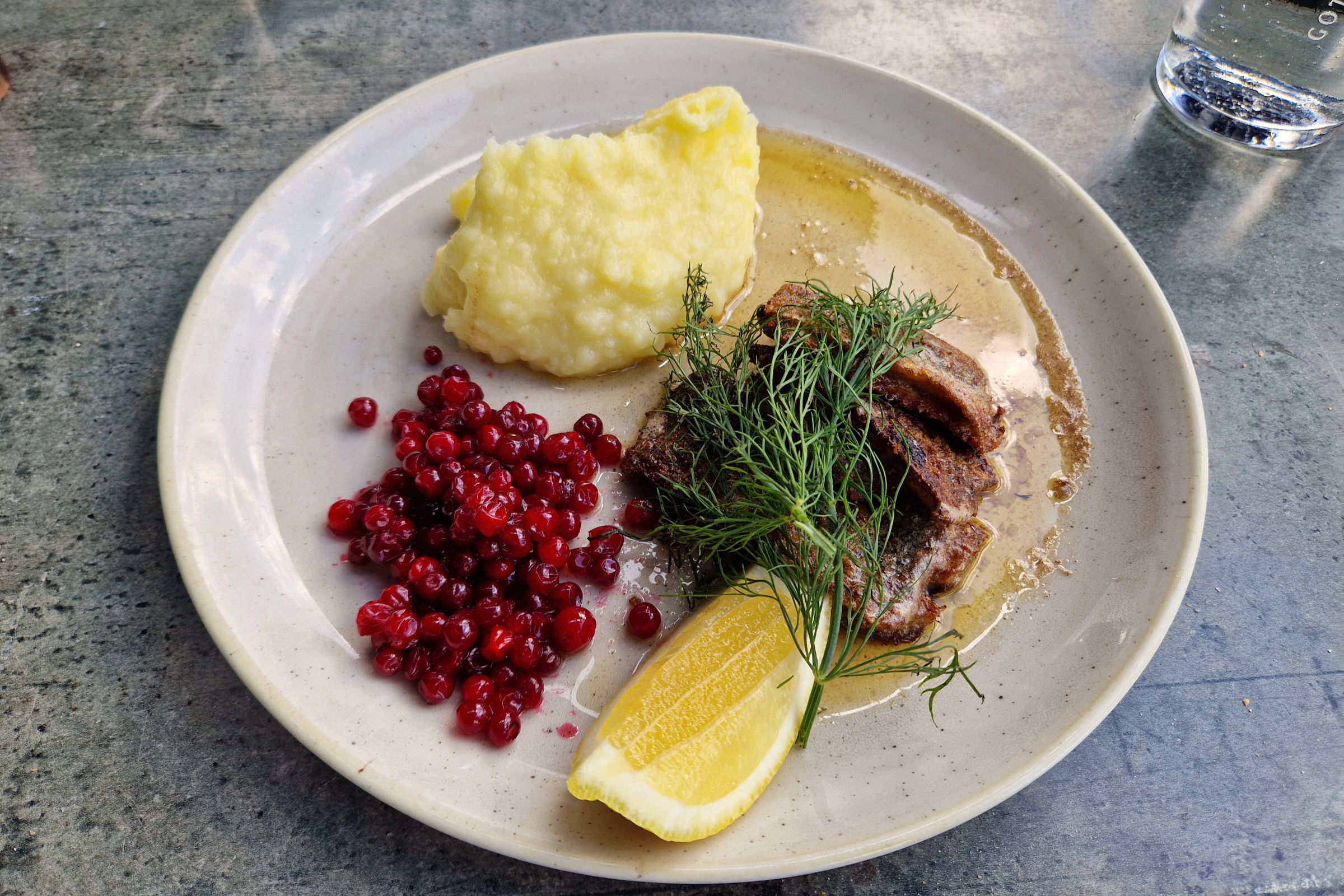
For a proper meal, the waterfront restaurants around the harbor serve seafood, Swedish classics, and casual summer dishes. Quality can vary, but the settings are generally strong, especially if you get outdoor seating with views toward the water or fortress. In summer, it is worth checking menus before you sit down, since prices can climb quickly in the most central harbor locations.
For budget travellers: For a cheaper option, the grocery store Coop Vaxholm on the main street has picnic supplies, drinks, or something simple before or after visiting the fortress. Pick up what you need and eat by the harbor or along the water. You may not get table service, but you still get the same Vaxholm view.
Getting there
Vaxholm is one of the easiest archipelago towns to reach from Stockholm. You can travel by ferry, bus, or car, and each option will be a slightly different experience.
By ferry
The ferry is the most atmospheric way to arrive in Vaxholm. Waxholmsbolaget runs boats from Strömkajen, near the Grand Hôtel in central Stockholm, and the journey gives you a proper archipelago approach with islands, waterfront houses, and the fortress appearing near the harbor.
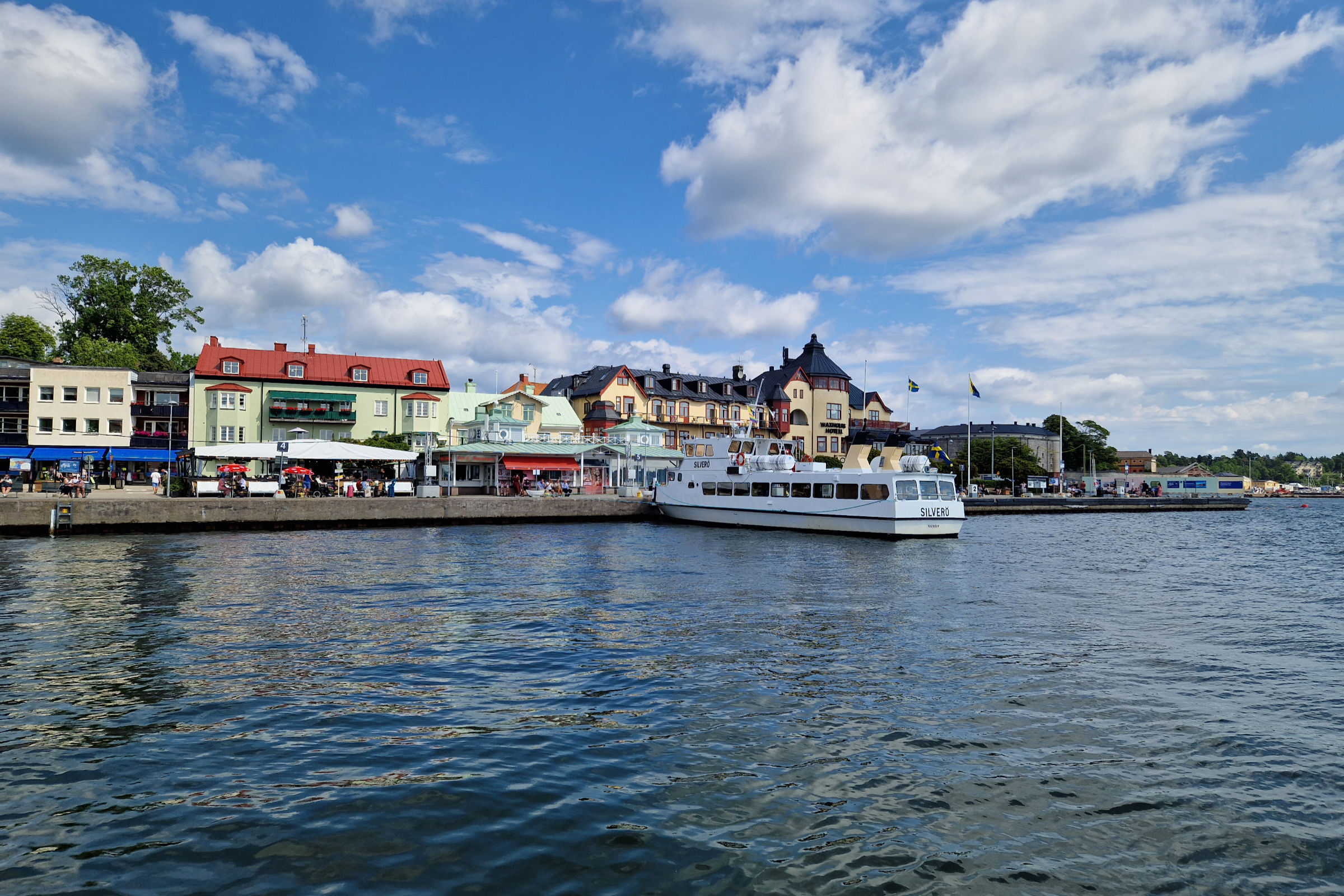
Travel time varies depending on the route and number of stops, so check the current timetable before you go. Waxholmsbolaget’s route between Stockholm and Vaxholm is part of the public transport system, and SL tickets are valid on the Strömkajen–Vaxholm route. This makes it one of the best-value ways to experience the archipelago from central Stockholm.
Cinderellabåtarna, run by Strömma, also serves Vaxholm during the warmer season. In 2026, Strömma lists the Cinderella season from April 30 to September 27, with departures from Strandvägen. These boats are often faster and more direct, but tickets cost more than regular public transport and it is a good idea to book ahead if you want a specific departure.
For either operator, check the timetable on the day before you go. Ferry schedules change by season, and departures are much more frequent in summer than in the quieter months.
Read our archipelago ferry guide for more detail on tickets, routes, and how to plan a ferry trip from Stockholm.
By bus
Bus 670 runs from Tekniska Högskolan to Vaxholm and is usually the most practical option. The journey takes around 45–60 minutes, depending on traffic and departure, and drops you close to the town center.
The bus is useful if you are short on time, visiting outside the main ferry season, or want a simpler return journey after spending the day in Vaxholm. It does not give you the same arrival-by-water feeling, but it is direct, regular, and easy to combine with the metro at Tekniska Högskolan.
A good compromise is to take the ferry one way and the bus the other. That way, you still get the archipelago approach from the water without depending on ferry times for both parts of the trip.
By car
You can also drive to Vaxholm, since the town is connected to the mainland by road. This can be convenient if you are traveling with children, visiting outside peak season, or combining Vaxholm with other places nearby.
The main drawback is parking, especially in summer. Vaxholm can get busy on warm days, and both Vaxholm’s visitor information and local parking guidance recommend using parking outside the inner town center when possible. From there, you can walk or use local transport into the center.
If your main goal is a relaxed day trip from Stockholm, public transport is usually easier than driving. But if you already have a car, Vaxholm is one of the more straightforward archipelago destinations to reach by road.
When to go
Vaxholm can be visited year-round, but the experience changes a lot with the season. Summer gives you the fullest version of the town, with more boats, longer opening hours, and outdoor seating. Outside the main season, Vaxholm is quieter and still pleasant, but you need to pay more attention to what is open.
Summer
Summer, from June to August, is when Vaxholm is at its most active. The fortress museum is open daily for much of the season, guided tours run during the main summer weeks, waterfront restaurants have outdoor seating, and boats arrive regularly from Stockholm before continuing farther out into the archipelago.
This is the best time to visit if you want the classic Vaxholm experience: ferries, harbor life, ice cream, outdoor cafés, and people moving between the town, the fortress, and the water. It can be busy, especially on sunny weekends, but that is also part of the summer atmosphere.
Shoulder season
May and September offer a quieter version of Vaxholm. Some services are reduced, but the town does not shut down completely. The fortress museum usually opens on selected dates in May and early September, rather than every day, so check the current opening hours before you go. In 2026, the museum lists weekend and holiday openings in May and early September, with daily openings mainly from June 22 to August 23.
September can be especially good if the weather holds. The town is calmer than in July, the water may still be warm enough for a swim, and the lower afternoon light can be beautiful around the harbor.
Winter
Winter is a different kind of visit. The fortress museum is closed during the winter season, although group visits can sometimes be arranged by booking ahead. Several restaurants and cafés may also reduce their hours, so it is worth checking opening times before you travel.
What remains is a quiet Swedish coastal town: less lively, more subdued, and sometimes a little stark. The ferry trip can still be scenic, especially on a clear day, and the town is pleasant for a short walk. But winter Vaxholm is not the best choice if you want the full archipelago day-trip experience.
Who is Vaxholm for?
A good fit if: Vaxholm is a good fit if you are making your first archipelago trip from Stockholm and want somewhere that rewards a half-day visit without requiring the full commitment of a long ferry crossing. If you want a town atmosphere by the water, a café stop, a waterfront walk, and some history, Vaxholm gives you all of that without needing much planning.
It works well for families, solo visitors, and couples who want an easy archipelago experience rather than a full-day island excursion.
Less suited to: Vaxholm is less suited to visitors looking for remote wilderness or serious hiking. There are walks and viewpoints, but not the same trail infrastructure you’ll find on islands like Grinda or Svartsö. If your main priority is swimming, there are also better islands for that. Vaxholm has water access, but not the same mix of beaches and natural swim spots you find farther out in the archipelago.
If you are on a very tight schedule, the ferry ride may also feel long compared with the time you actually spend in town. In that case, consider taking the ferry one way and the bus the other, or choosing the bus both ways if the experience of arriving by water is less important to you.
Practical information
Details can change by season, especially ferry schedules, guided tours, and museum opening hours. Use this as a planning overview, then check the current timetable before you go.
| Fortress museum season | Mainly mid-May to early September. In 2026, the museum is open on selected weekends and holidays in May and early September, and daily from June 22 to August 23. |
| Fortress museum entry | Adults 120 SEK, seniors 100 SEK, ages 13–18 60 SEK, children 0–12 free with an adult. |
| Guided tours | Daily during the main summer season. In 2026, tours run from June 27 to August 16. |
| Swedish guided tour | About 45 minutes. In 2026, listed at 12 pm and 2 pm. |
| English guided tour | About 15 minutes. In 2026, listed at 4 pm as a short historical introduction. |
| Crossing to the fortress | The crossing from Vaxholm harbor to Kastellet takes only a few minutes. Waxholmsbolaget serves Kastellet year-round, while seasonal local boats usually run more frequently in summer. |
| Kastellet ferry | In 2026, M/S Djurgården 4 runs between Vaxholm Pier 7 and Kastellet on selected weekends from May 14 to June 14, daily from June 22 to August 23, and selected weekends from August 29 to September 6. |
| Ferry from Stockholm | Waxholmsbolaget runs from Strömkajen in central Stockholm to Vaxholm. Travel time varies by departure, but is often around 60–75 minutes. |
| SL ticket validity | SL tickets are valid on the Waxholmsbolaget route between Strömkajen and Vaxholm. For other archipelago routes, check the current SL/Waxholmsbolaget rules. |
| Bus from Stockholm | Bus 670 from Tekniska Högskolan runs directly to Vaxholm. The trip usually takes around 45–60 minutes. |
| By car | Vaxholm is connected to the mainland by road, but parking can be limited in the town center during busy periods. |
The bottom line
Vaxholm is the right first archipelago trip for most Stockholm visitors. It’s close enough to be low-effort, coherent enough to feel like a real place rather than a tourist stop, and the fortress gives it a specific reason to visit that the nearer islands lack. You get the archipelago feeling – open water, wooden buildings, boats threading through the sound – without needing to clear a full day or navigate a complex ferry itinerary.
If Vaxholm gives you the appetite for more, the outer archipelago is exactly that: more open, more remote, quieter. Grinda is about 90 minutes out and earns a proper full day. Svartsö, at two and a half hours, is best as an overnight trip. But Vaxholm is a good place to start.