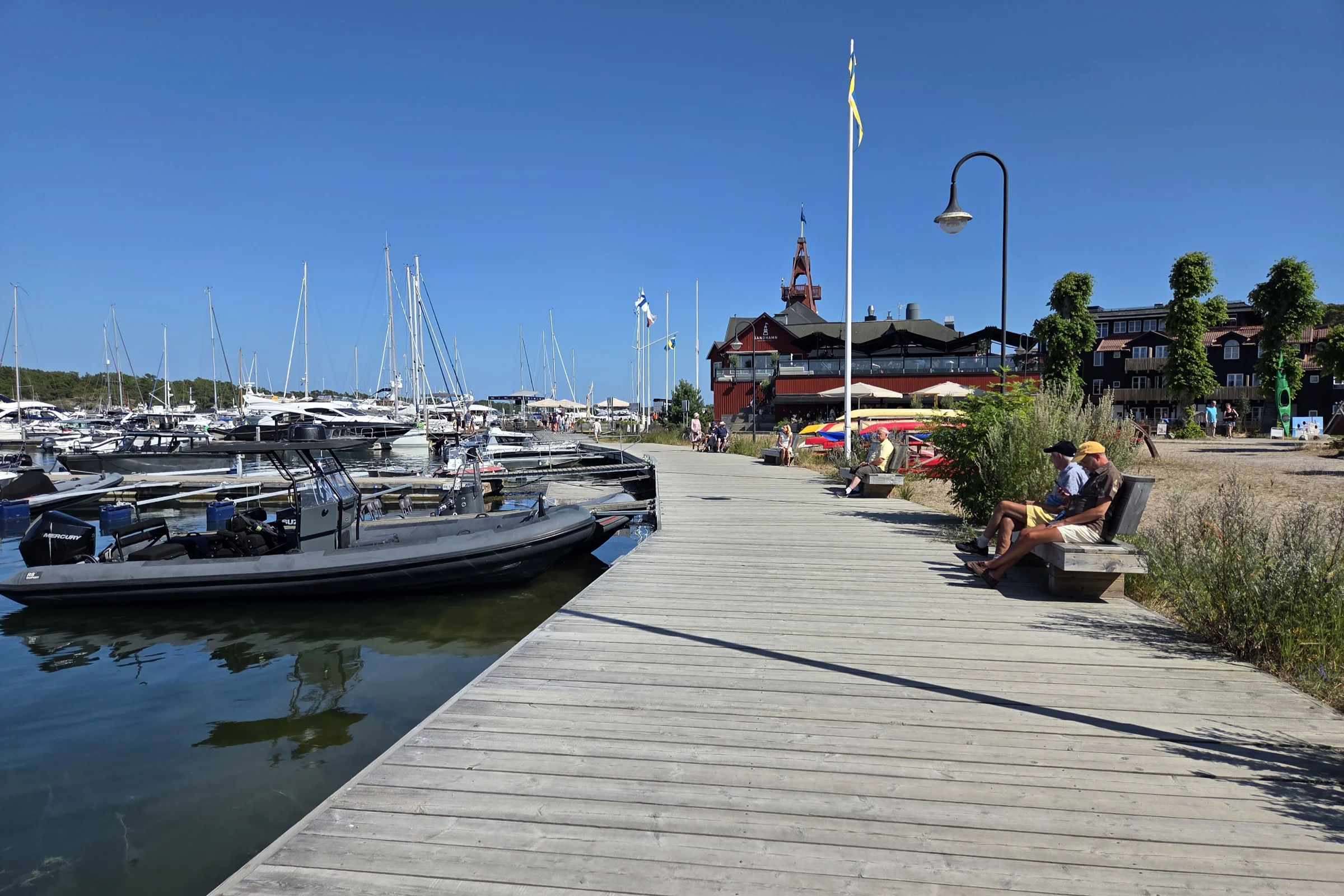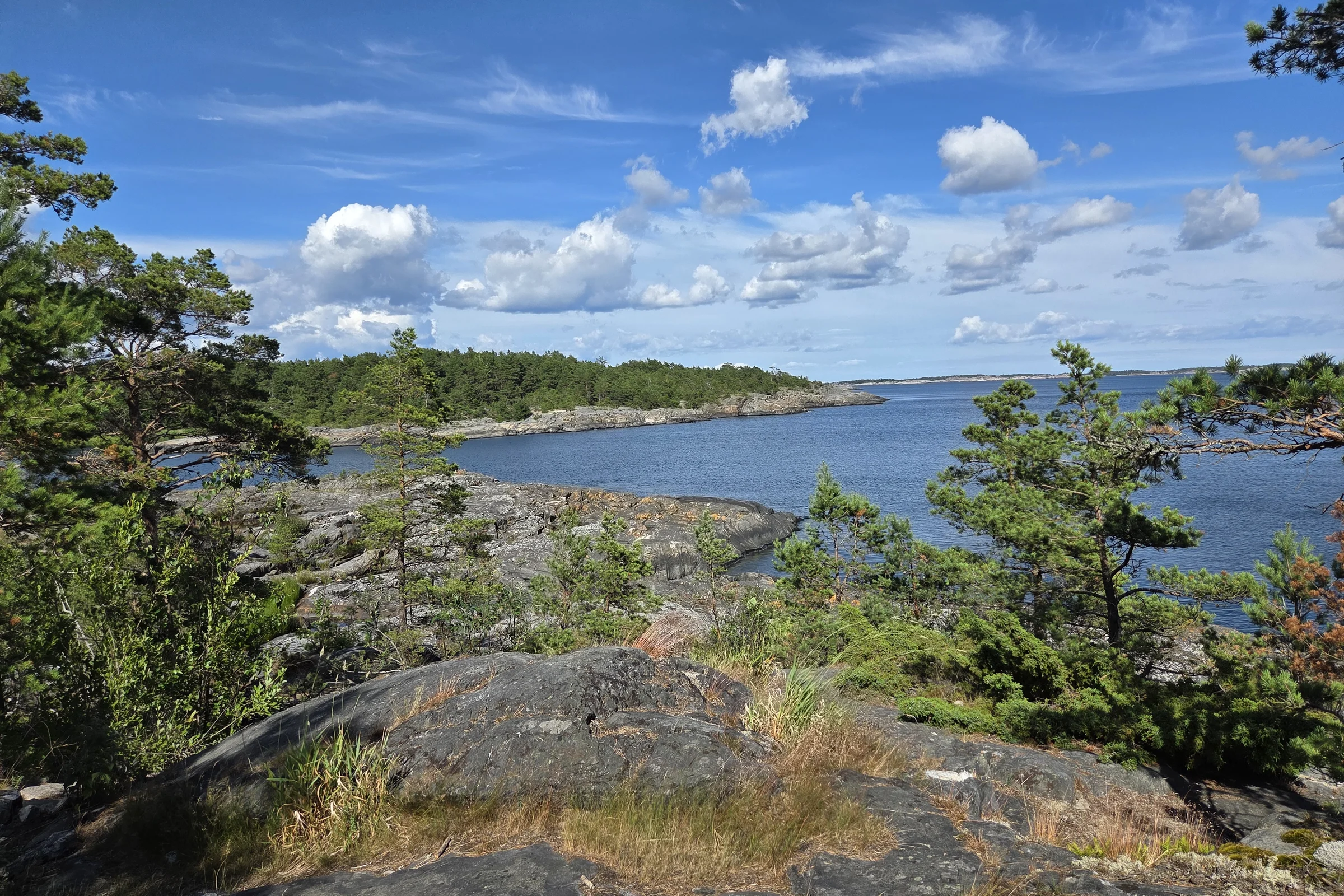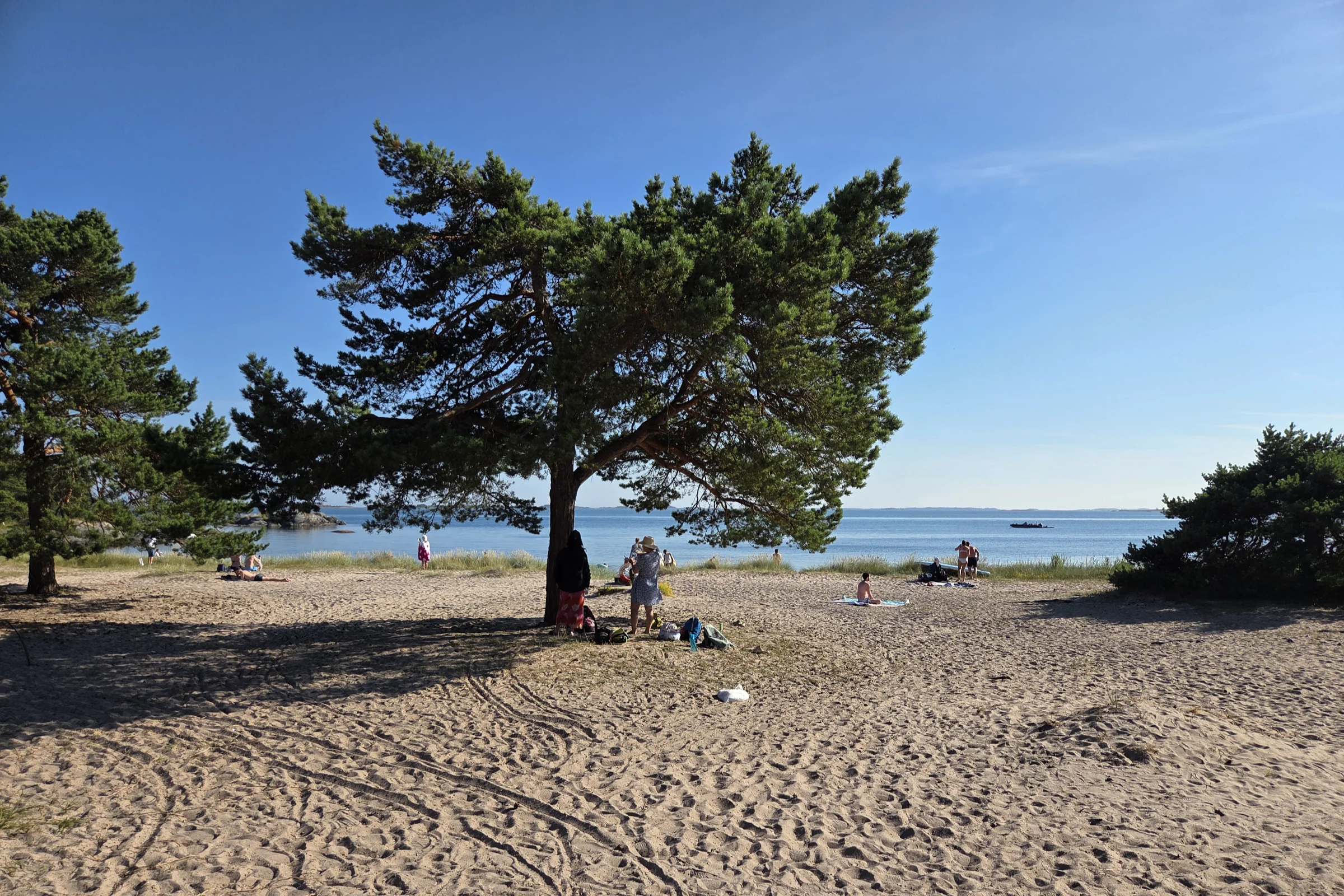
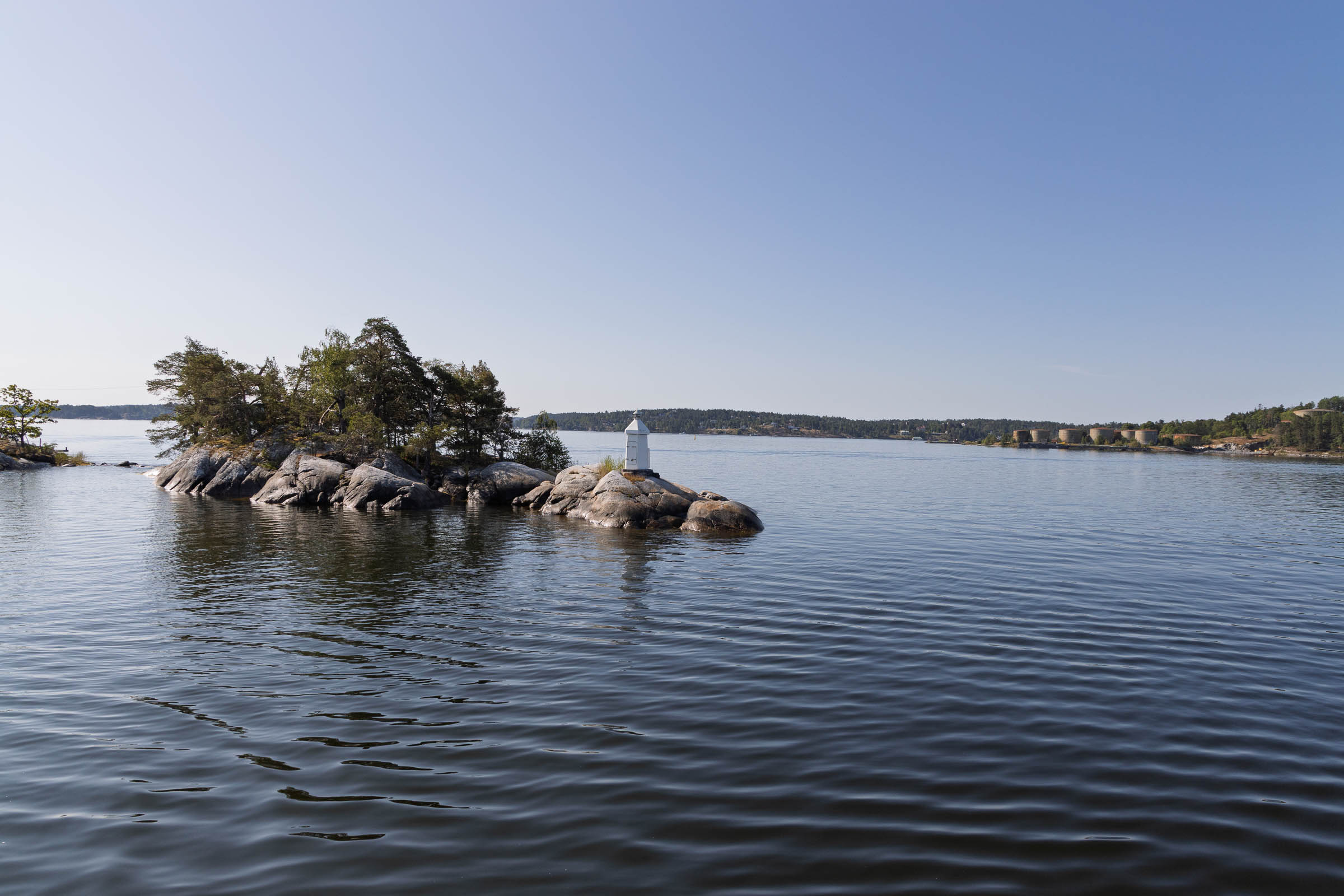
The archipelago in July and the archipelago in September share the same geography. Everything else differs. One runs on full timetables, with beaches covered in swimmers, ferries leaving every hour, and guesthouses booked out weeks in advance. The other is quiet, copper-lit, with water still warm enough for a swim and islands that feel like they belong to whoever is standing on them. Both are worth the trip. Which one suits you depends on what you want.
This is a guide to the tradeoffs by season. The aim is to help you choose your timing based on your own priorities, not a general ranking.
Season at a glance
| Season | Months | Air temp | Water temp | Crowds | Ferry frequency | What’s open |
|---|---|---|---|---|---|---|
| Spring | May – early June | 9–17°C | 10–13°C | Low | Partial | Limited; opening gradually |
| Early summer | Mid-June – July | 17–24°C | 16–21°C | High | Full | Almost everything |
| Peak summer | July – mid-August | 20–26°C | 18–22°C | Very high | Full | Everything |
| Late summer | Late Aug – September | 14–21°C | 15–19°C | Moderate to low | Mostly full, then reducing | Most things |
| Autumn | October | 7–13°C | 10–13°C | Very low | Reduced | Limited |
| Winter | November – March | -5–4°C | 0–5°C | Almost none | Waxholmsbolaget only | Very limited |
Summer (June – August)
Summer earns its reputation. From mid-June through August, the archipelago runs at full capacity. Waxholmsbolaget operates its dense summer timetables, Cinderellabåtarna serves Sandhamn and Grinda multiple times daily, and almost every guesthouse and island restaurant is open. Daylight in June and July holds past 10 pm, which means long, slow evenings on the water that feel as though they should never end.
Midsummer, which falls on the last Friday of June, deserves a specific mention. It is Sweden’s biggest summer celebration. On the islands, locals gather for their own festivities; most accommodation fills with Swedish families, and some restaurants run limited menus or close to outside guests entirely. If you happen to be in the archipelago during Midsummer, the atmosphere is festive and genuinely Swedish. Plan around it rather than expecting normal tourist services.
July is the busiest month, with Swedish school holidays running from late June through mid-August. Popular ferries fill quickly; guesthouses on Grinda and Sandhamn book out weeks or months ahead; and the quieter spots on the outer islands feel considerably less quiet. Prices for accommodation run at their highest. On a busy Saturday at Strömkajen, the queue at the dock forms well before departure.
None of this is a reason not to go in summer. It is the fullest version of the archipelago experience. It requires booking ahead and arriving at the docks early; beyond that, the islands deliver exactly what people make the trip for.
Best for: First-timers who want everything open, families tied to school holidays, anyone who needs reliable warm weather and full ferry access.
Booking: Guesthouses 2–3 months ahead for July. Cinderellabåtarna tickets are worth reserving a few weeks in advance on the Sandhamn route in high season.
Read our summer in Stockholm guide for what else the city offers during the same period.
Late summer and early autumn (late August – September)
If your dates are flexible, and you prefer a quieter stay this is the period that we recommend. Swedish school terms start in late August, which pulls the domestic crowd back to the city almost overnight. Ferry timetables thin out on departures, but most routes still run on a workable schedule. Guesthouses are still open. The water, brackish and slower to cool than open seawater, holds heat well into September, staying around 16–19°C for most of the month.
The light changes too. By September, the sun sits lower and the afternoon light across the water turns amber. The granite looks different from how it looks in July, the pine shadows run longer, and the whole landscape settles into something more considered. It rewards slower travel.
Mushroom and berry season runs through August and September on the forested islands. Under allemansrätten, Sweden’s right of public access, foraging is open to anyone on almost any island shore or forest. Grinda‘s trails, Svartsö‘s woods, and the nature reserves further out all reward walking in September in ways they don’t quite manage at the height of summer.
One caveat: some island restaurants shorten their hours from September, and a handful close before their listed end-of-season dates. If you are travelling specifically to eat at a particular restaurant on an outer island, call ahead or check their website before making the trip.
Best for: Anyone seeking nature and swimming without peak-season crowds or prices; also ideal for couples and those returning to the archipelago for a slower pace.
Booking: Booking September guesthouses a few weeks in advance is usually enough. You will not need to book months in advance as you do for July, but don’t leave popular islands to the last minute either.
Spring (May – early June)
The archipelago in spring has a specific quality. The trees are returning, the migratory birds are back, and the islands look genuinely fresh in a way they don’t by August. Wildflowers appear on the grassy stretches of Grinda and Svartsö’s meadows, and across the nature reserves. It is a good time for hiking and kayaking: cool air, paths not yet overgrown, and the particular clarity of a landscape that hasn’t been walked through a thousand times that week.
The water is cold. May temperatures run around 10–13°C, which rules out swimming for most visitors. Some people do swim; it requires a specific kind of resolve.
Ferry services begin resuming in spring but not at full summer frequency. Cinderellabåtarna typically launches limited routes in May. Waxholmsbolaget’s spring schedules are considerably thinner than summer, particularly for the outer islands, where a missed boat can mean a very long wait for the next one. Check timetables carefully before planning anything involving islands with fewer than a handful of daily departures.
Some guesthouses do not open until after Midsummer. Grinda Wärdshus, Sandhamns Seglarhotell, and most outer island options should be verified directly for their season opening dates. Vaxholm, with its year-round resident community, runs as normal.
What spring does offer: near-complete solitude on most islands, lower prices across the board, and the particular satisfaction of arriving somewhere beautiful before the crowd does.
Best for: Nature lovers, birdwatchers, hikers, visitors who specifically want the islands to themselves.
Booking: Freely available in most cases. Verify opening dates directly with specific guesthouses before committing to an outer island overnight.
Read our spring in Stockholm guide for what else the city offers during the same period.
Winter (November – March)
Winter in the archipelago is a completely different experience, and not for everyone. If you are expecting the archipelago of summer, you will find something that barely resembles it.
What you do find: stark, quiet islands, snow on the granite in cold years, and a deep silence that is impossible to replicate in summer. In the coldest winters, ice forms between the inner islands and some of the outer archipelago becomes inaccessible by ferry entirely. In those years, icebreakers occasionally serve certain routes, which is an experience in itself, though schedules depend entirely on conditions.
When the snow falls, the landscape transforms into something truly magical. While winter in Stockholm city can often feel grey and dull—with traffic and foot traffic quickly turning fresh snow into slush—the islands offer a starkly different experience. Across the outer archipelago, you are far more likely to find pristine, untouched white expanses that look absolutely stunning, even if you are already familiar with snow.
Waxholmsbolaget runs year-round to Vaxholm and a limited number of other destinations. Vaxholm, a real town with year-round residents and restaurants that stay open, is worth the winter ferry. The town looks different with bare trees and frost on the docks, and the pace drops to something genuinely slow. It works well as an afternoon trip from Stockholm rather than a commitment to an overnight stay.
Most tourist-facing services across the archipelago close between October and April. That includes the majority of island restaurants, most guesthouses on the outer islands, and all seasonal ferry services from Cinderellabåtarna. Anyone planning a winter trip beyond Vaxholm should verify ferry schedules and accommodation availability carefully in advance.
If you are planning to explore the trails, a note of caution: winter hiking requires extra preparation. Hiking paths are rarely plowed or maintained for winter grip, and a fresh blanket of snow can easily hide ice or provide a false sense of stability, particularly near the water’s edge. If you are not experienced with winter conditions, stick to well-traveled paths rather than venturing ‘off-piste,’ and always prioritize safety over reaching a specific destination.
The case for winter is that there are no tourists, dramatically different scenery, and a version of the archipelago that very few international visitors see. If the prospect of a frozen outer archipelago appeals to you, January or February in the right conditions delivers something genuinely unusual. If you are not sure, start with Vaxholm and treat it as an afternoon outing.
Best for: Experienced independent travellers, visitors spending time in Stockholm in winter who want a different perspective on the city’s surroundings.
Read our winter in Stockholm guide for what Stockholm offers during the colder months.
What to consider when choosing your timing
Swimming. The water reaches swimmable temperatures around mid-June and stays that way through September. July and August are the warmest months. If swimming drives your trip, plan for mid-June through early September. Note: during warm, still spells in July and August, blue-green algae can affect some bathing spots. The Swedish bathing water registry monitors conditions across the archipelago; check it before travelling with children. See our guide to the best beaches and swimming spots in the Stockholm Archipelago for a full breakdown of where to go.
Hiking and kayaking. Both work well from May through October. Spring trails are the quietest and freshest. Summer heat can make long hikes more demanding than expected. September and early October offer the best balance of cool air, open paths, and water still warm enough to kayak comfortably.
Crowds and cost. These move in opposite directions throughout the year. July is the most expensive and most crowded month. Prices and visitor numbers both drop from late August onward. The shoulder months of May, early June, and September offer the same landscape and most of the same ferry access at noticeably lower accommodation costs.
Ferry access. Full summer timetables run from late June through mid-August. Spring and autumn bring reduced but workable schedules. Winter schedules are thin; Waxholmsbolaget is your main option, with fewer departures to fewer destinations. See our guide to getting to the Stockholm Archipelago by ferry for full details on how the system works.
Accommodation. Book July and the first weeks of August 2–3 months ahead for popular guesthouses and outer islands. September generally needs a few weeks of lead time. Spring and winter are freely available in most cases, with the important caveat that some options are simply closed.
Day trips versus overnight stays. In summer, most day trips are straightforward: frequent ferries, island restaurants open for lunch and dinner whether or not you are staying. In spring and autumn, day trips work fine for the closer islands but require more planning for the outer ones, since return ferries are less frequent and some island restaurants keep shorter hours. See our guide to the best Stockholm Archipelago day trips for island-by-island options.
Month by month
January and February. Cold, quiet, with ice forming between islands in hard winters. Waxholmsbolaget serves Vaxholm and a limited set of destinations. Most guesthouses are closed. Worth it for visitors who specifically want winter landscapes and near-complete solitude.
March. Temperatures remain low, with ice clearing by late March in most years. Ferry schedules start to ease. Little open on the outer islands, but Vaxholm runs as normal.
April. The archipelago starts waking up. Migratory birds return, wildflowers appear on the grass islands, and ferry schedules expand. Too cold for swimming; good for hiking. A handful of guesthouses may begin taking bookings toward the end of the month.
May. Spring properly underway. Fresh trails, returning birds, and the islands at their quietest. Water still too cold for most swimmers. Strömma’s Cinderellabåtarna begins running limited routes. Inexpensive and uncrowded. Some guesthouses open toward the end of the month; verify directly before booking a specific outer island overnight.
June. The transition month. Early June is quiet and shoulder-season priced, with ferries running partial schedules. Midsummer weekend, the last Friday of June, is festive and busy. After Midsummer, full summer timetables begin and the season runs at pace.
July. Peak month. Everything open, ferries running hourly on the most popular routes, beaches at their busiest, prices at their highest. Book guesthouses months ahead. The fullest and most demanding version of the archipelago.
August. Continues at summer pace through mid-month. After Swedish school terms start, typically in the third week of August, crowds drop noticeably. Late August sits in an interesting middle position: still warm, most things open, but quieter than July.
September. The month most worth recommending to visitors with flexibility. Water warm enough to swim, most ferries still running on usable schedules, guesthouses open, crowds thin, and the light outstanding. Book a few weeks ahead.
October. Autumn proper. The leaf colour on forested islands such as Grinda and Svartsö is worth seeing. Water too cold for most swimmers. Ferry schedules reducing week by week. Some guesthouses close for the year; check before booking specific outer islands.
November and December. Quiet, cold, and limited. Waxholmsbolaget to Vaxholm is the reliable option. Most island services closed. Stockholm’s own calendar fills up in December; the archipelago is better left until spring.
The bottom line
If you have flexibility and this is your first visit: go in late August or early September. You get summer’s nature with autumn’s calm, and you will not spend July prices on accommodation.
If school holidays or work schedules tie your dates: July works. Book ahead, arrive at the docks early, and prioritise the outer islands when you can. They feel less crowded than the well-known inner stops even at peak season.
If you want nature, silence, and don’t need to swim: May or early June gives you the islands at their freshest and their quietest.
If you are in Stockholm in winter and want to see the archipelago: take the afternoon ferry to Vaxholm. It earns the trip.
There is no bad time to visit the Stockholm Archipelago. The experience varies considerably by season, and so do the tradeoffs. Know what you want before you go, and the timetable will make sense.