The best thing about staying overnight on an archipelago island has nothing to do with the accommodation. It’s the moment the last afternoon ferry pulls away from the jetty and the island becomes quiet in a way it simply isn’t during the day. The day-trippers are gone, the light is changing, and the water is still there for you. That is what you’re booking when you book a night out here.
This guide covers ten of the most popular and accessible overnight destinations in the Stockholm archipelago, from the closest island with a proper hotel bed to the most remote lighthouse outpost at the edge of the Swedish mainland. They range from upscale inns with white linen and wine lists to nature reserve camping with a sleeping bag and a fire permit. All of them are worth it. The best choice depends on the type of experience you are looking for.
What to know before you book
Book early for summer. June, July and August are the peak months, and the archipelago has a fraction of the beds that Stockholm city does. Grinda’s inn, Sandhamn’s sailor hotel, and the glamping tents on Svartsö can book out a month in advance for summer weekends. If you’re travelling in peak season and have a specific island in mind, book as soon as your dates are confirmed.
The last ferry leaves earlier than you think. Most outer island ferries run their final departure back to Stockholm between 5 pm and 7 pm, depending on the season and the route. If you’re staying overnight, you don’t need to worry about these times. Just be aware that if you’re planning on a late ferry home, you might find that no options are available. Check the SL mobile app for your specific island before you travel. It covers Waxholmsbolaget routes and is significantly more user-friendly for international visitors, as it typically switches to English based on your phone’s language settings, making it much easier to navigate than the timetables on the Waxholmsbolaget website.
Your SL travel card does not cover most of the islands listed in this guide. The Stockholm public transport card (SL travelcard) covers Vaxholm, but for Grinda, Sandhamn, Utö, Landsort, Möja, Nåttarö and Arholma, you’ll need a separate ticket. While Waxholmsbolaget operates the public ferry network, it is not included in the standard SL travel card once you travel beyond the inner archipelago. These tickets are priced by zone; the further out you travel, the more expensive the ticket. Budget for this as a separate cost for your trip. For full ferry logistics, see the guide to getting to the Stockholm archipelago by ferry.
Accommodation booking works differently here. Most archipelago guesthouses and inns are booked directly and don’t always appear on the major hotel platforms. Cottage rentals are often listed on the island’s own tourism pages. It takes slightly more legwork than booking a city hotel, but it’s straightforward once you know where to look.
Types of accommodation in the archipelago
Hotels and inns (värdshus). A värdshus is an inn, typically a historic building with rooms upstairs and a restaurant downstairs serving locally caught fish and Swedish classics. This is the most hotel-like experience available in the archipelago. Vaxholm and Sandhamn both have this type of accommodation.
Good for: couples, first-timers, and those prioritizing comfort, service, and a restaurant dining experience.
Cottage (stuga). A stuga is a Swedish cottage, usually self-catering, often with a private jetty or terrace. These are the most common form of overnight accommodation in the mid and outer archipelago. They suit groups or families, often work out significantly cheaper per person than guesthouses, and give you a level of privacy and independence that no hotel can. Most are booked directly or through Swedish rental platforms.
Good for: families, longer stays, and independent travelers wanting privacy and a home-like feel.
Hostels (vandrarhem). Several islands, including Utö, Arholma and Landsort, have hostel-style accommodation with shared bathrooms, communal kitchens and private rooms. Most of the hostels in the archipelago do not have shared dormitories; instead, you reserve a private room. These are typically available with two beds in smaller rooms, or up to five beds in the larger ones. The hostel rooms are very simple, typically featuring just one or more simple beds with no extra amenities. These are affordable, social, and often the only option on the more remote islands. Quality varies; most are well-run and clean.
Good for: budget-conscious travelers, solo adventurers, and those seeking a simple, social base.
Holiday houses and apartments. A step up from a cottage in both size and standard, holiday houses are fully equipped private properties rented by the week, typically with multiple bedrooms, a proper kitchen, a terrace or outdoor space, and sometimes a private jetty. This is closer to renting a home than booking accommodation. Möja and Utö both have options in this category, ranging from privately owned houses listed on rental platforms to self-catering apartments run by the island’s inn. Sandhamn has a similar offer through Sands Hotell, an apartment hotel with eight apartments of different sizes, all with hotel services available ranging from compact studios to large multi-bedroom suites. They suit families or small groups who want privacy, space, and the freedom to cook their own meals. Expect to pay significantly more per stay than a hotel room, though the per-person cost for a group can be competitive.
Good for: families, groups of friends, anyone planning a stay of several nights who wants a home rather than a hotel room.
Camping. Several islands in this guide are primarily or exclusively camping destinations. Nåttarö in particular is a nature reserve where camping is the main accommodation type. For international visitors: Sweden has a law called allemansrätten, the right to roam, which allows anyone to camp on most land for one or two nights as long as you stay a reasonable distance from dwellings, leave no trace, and don’t disturb the landowner. This applies across the archipelago, though nature reserves have additional rules both for camping and around campfires. Bring your own tent, a lightweight camping stove, and check current fire restrictions before you go, particularly in dry summer conditions.
Good for: nature lovers, outdoor adventurers, and those wanting a true “right to roam” experience.
Glamping. A step well above camping in both price and comfort: canvas tents with proper beds, duvets, and breakfast included. Svartsö Logi has five sea-facing tents that include a five-course dinner at Svartsö Krog and a morning breakfast basket. Aktiv Skärgård on Utö offers a similar concept with breakfast at Utö Värdshus and access to hot tubs and a sauna. Both book out months ahead in summer and prices are firmly in splurge territory. A night for two at Svartsö Logi runs around 4,900 to 5,300 kronor with meals included. If this is what you want, book it before anything else.
Good for: couples seeking a romantic getaway and travelers who want an outdoor experience without the hassle.
Island by island
Vaxholm
The easiest overnight in the archipelago: a real town with a real hotel.
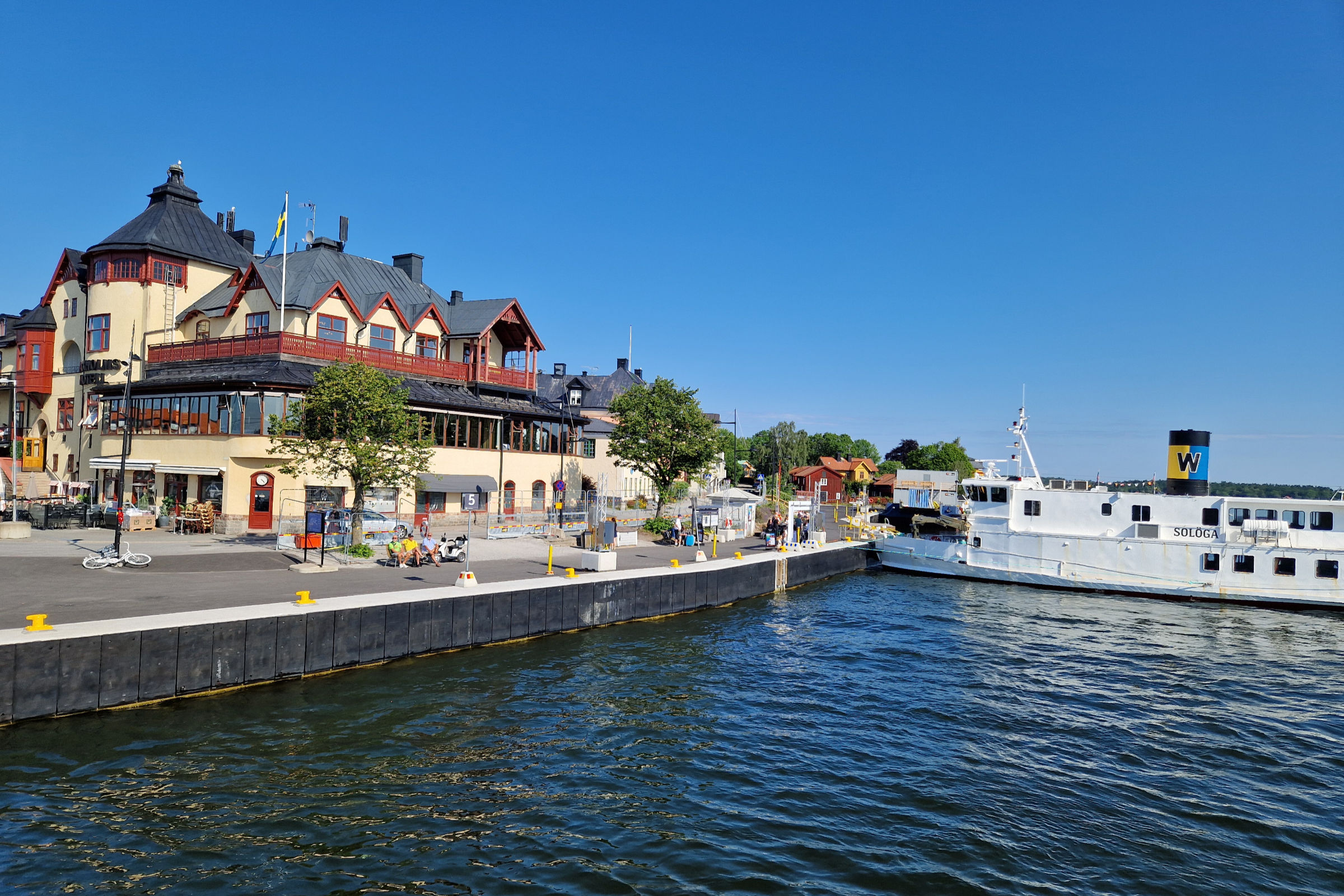
Vaxholm is the most straightforward overnight option for first-time visitors. It’s a proper town with streets, restaurants, cafés, a bakery, a 16th-century fortress, and hotel beds that you book the same way you’d book any hotel. The ferry from Stockholm takes about 75 minutes and runs regularly. You don’t need to plan meticulously. Arrive, check in, walk around the town, eat dinner on the waterfront, and leave on a morning ferry feeling like you’ve genuinely done the archipelago.
Accommodation runs from mid-range guesthouses to the Waxholms Hotell, a classic waterfront inn that is the closest thing the inner archipelago has to a proper hotel. Prices are mid-range to splurge depending on season. Book a few weeks ahead for summer weekends, but it rarely books out as early as the outer islands.
Good for: travelers prioritizing seamless logistics, couples wanting a comfortable base, and those who want a town atmosphere alongside island access.
Grinda
A nature island with one guesthouse, and cottage rentals.
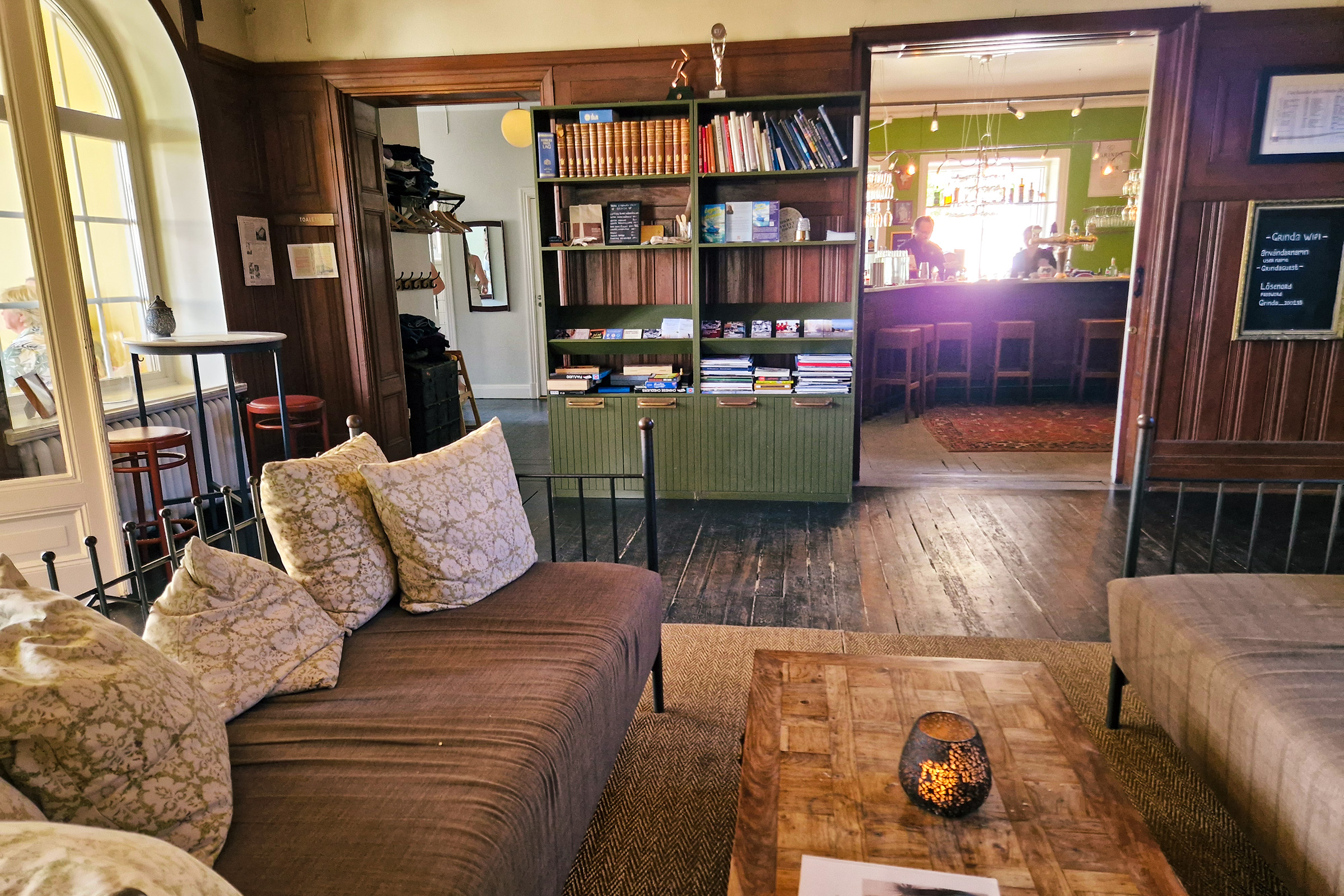
The ferry journey to Grinda typically takes between 1.5 and 2.5 hours, depending on the operator (Strömma is generally faster than Waxholmsbolaget) and the number of stops made along the route. The island centers around a single main guesthouse, Grinda Wärdshus, which also manages the island’s cottage rentals. Grinda itself is almost entirely forested, with walking paths, swimming spots, and a beach that gets busy in summer but never crowded the way Sandhamn’s does. It’s a proper nature experience without any sacrifice in comfort.
The catch is the booking window. Grinda Wärdshus is well-known and genuinely popular; in July and August, it books out months in advance. If you’re planning a summer trip, this is the one to secure first.
Prices are mid-range to splurge for the inn rooms. The self-catering cottages can work out more economically for groups.
Good for: nature seekers who still want a comfortable bed, couples, anyone who wants the quiet island experience without camping.
Sandhamn
The upscale option: remote, beautiful, and worth every minute of the ferry.
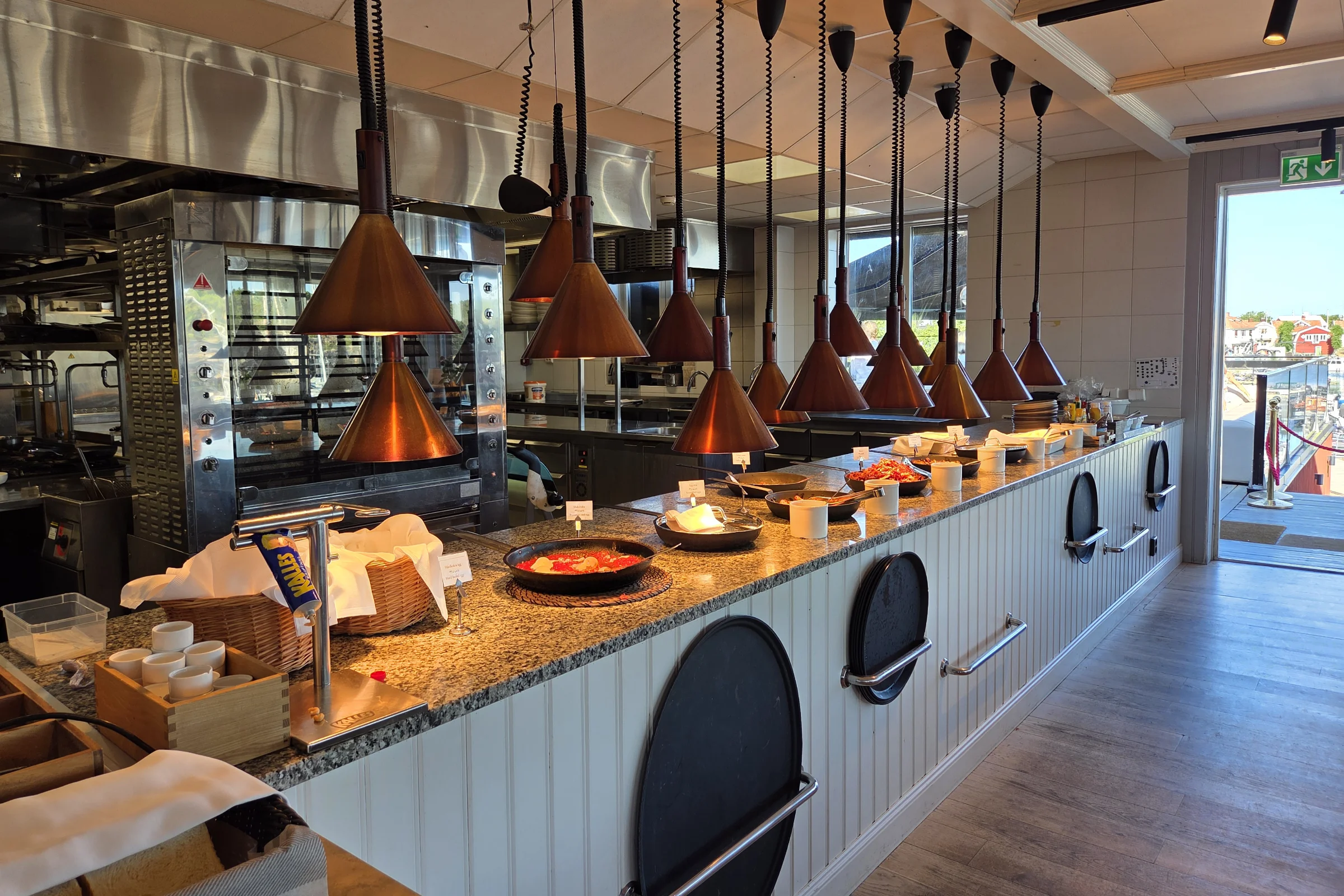
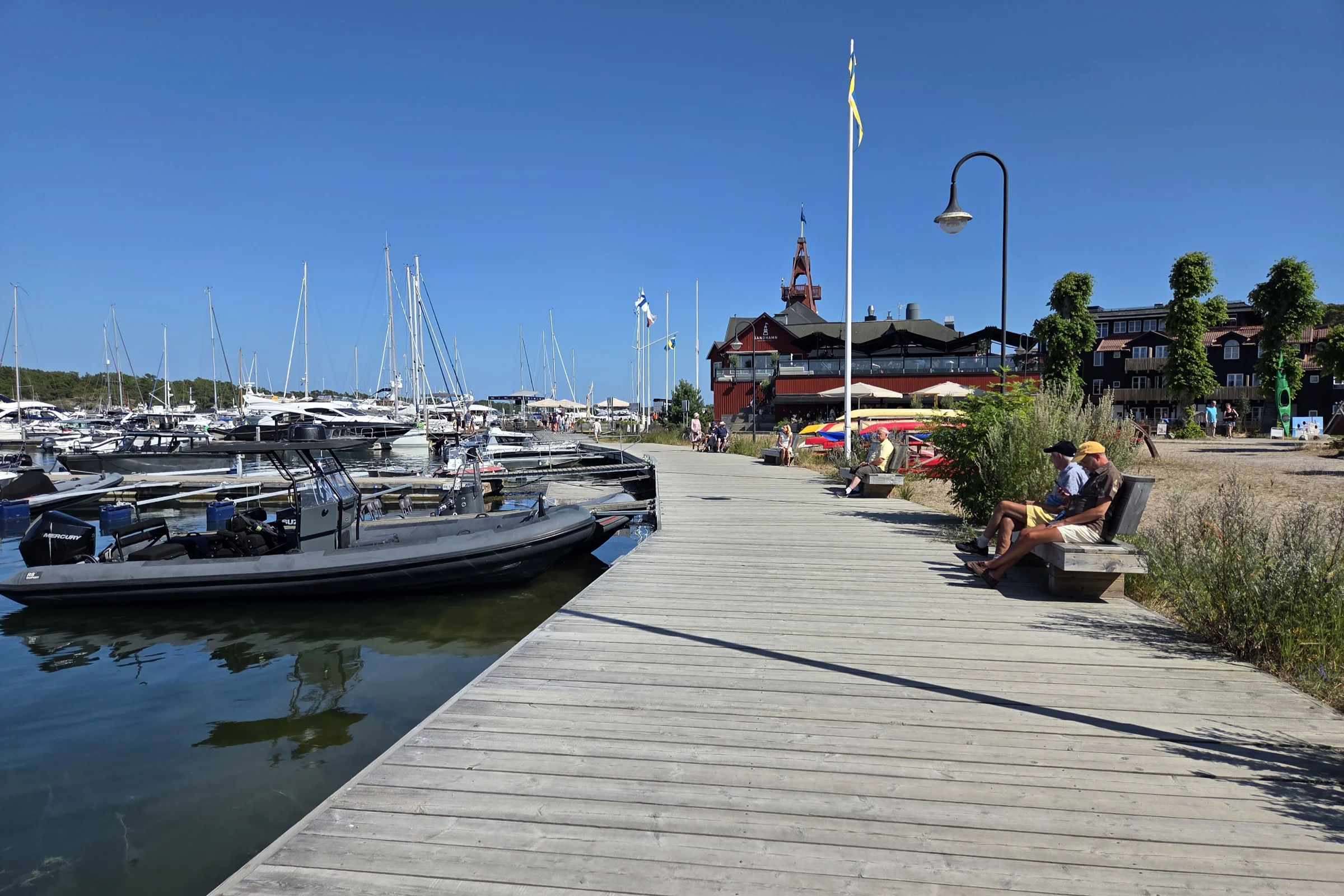
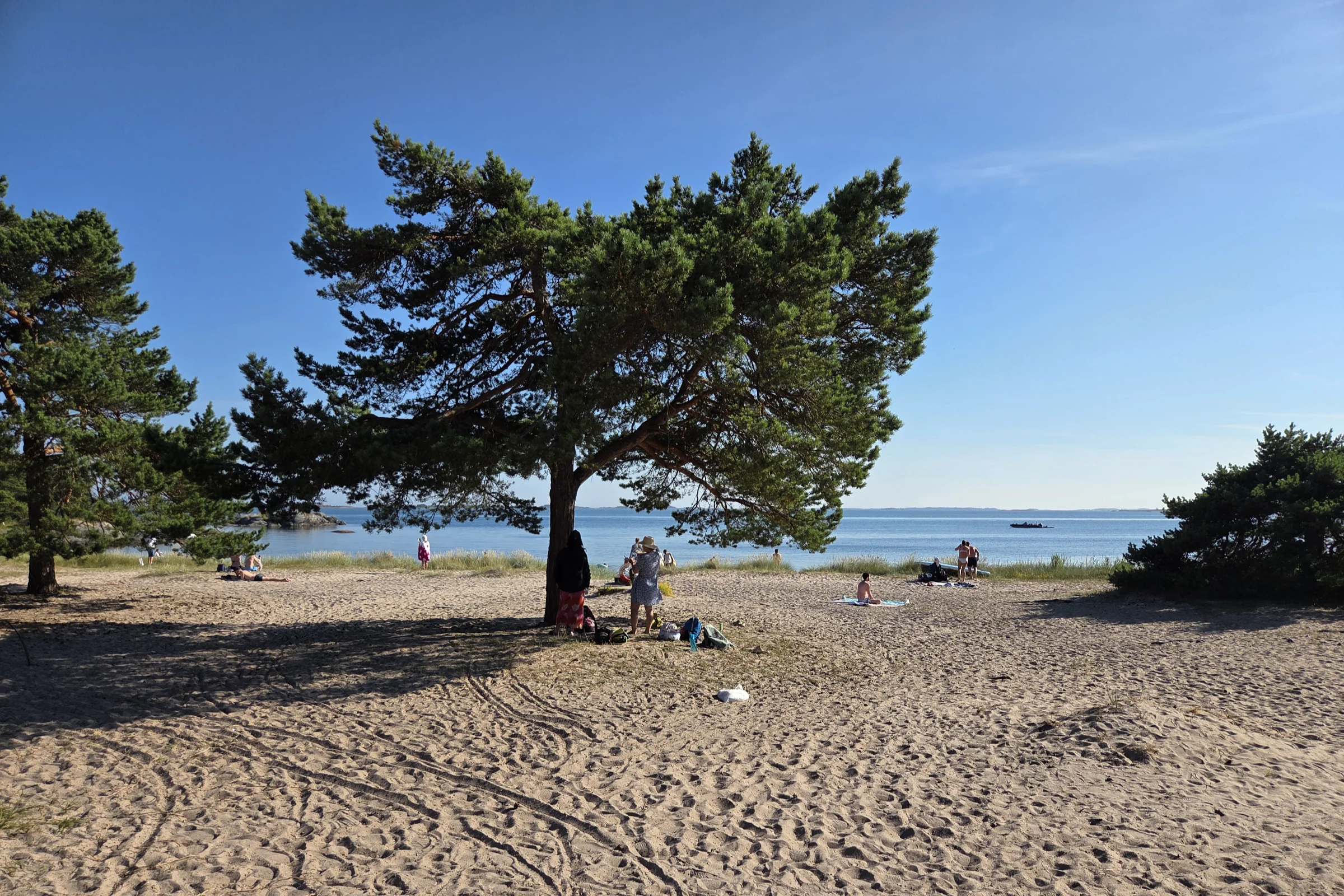
Sandhamn is the flagship overnight destination in the Stockholm archipelago. Getting there takes over two hours by ferry from Stockholm, which is part of the point. By the time you arrive, you feel genuinely far from the city. The island is famous in Sweden for its sailing culture, with the Royal Swedish Yacht Club based here, its single main street lined with painted wooden houses, and Trouville beach, one of the best beaches in the entire archipelago.
Sandhamns Värdshus is the island’s main inn: historic, well-regarded, and expensive. There are also cottages and some simpler rooms available on the island. August is extraordinarily busy; the KSSS sailing races bring significant crowds. Late June or early September are better times to visit if you want Sandhamn at a more relaxed pace.
Expect premium pricing. Book several months ahead for summer.
Good for: couples, anyone who wants a premium archipelago experience, beach lovers, sailing enthusiasts.
Svartsö
A local island that most tourists walk past on the ferry timetable.
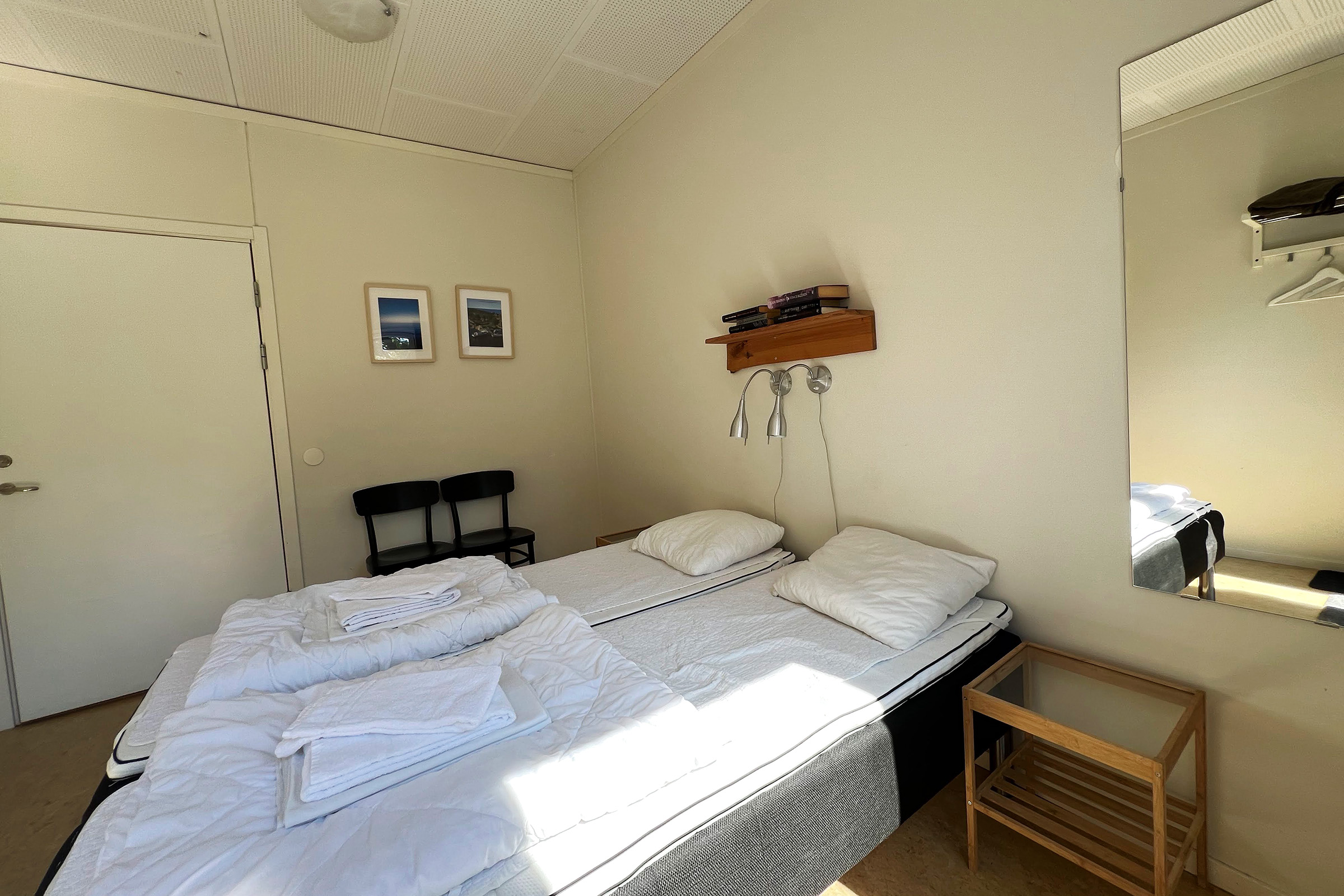
Svartsö sits quietly in the mid-archipelago and doesn’t market itself the way Sandhamn or Grinda does. It has a small permanent community, a few walking paths, swimming spots, and a very limited number of cottage rentals. Accommodation options are sparse and mostly self-catering; you’ll need to bring food supplies or plan around the island’s small café.
The reward for the lack of infrastructure is near-total quiet. This is an island where you might genuinely not see another tourist. The ferry from Stockholm takes around 1 hour 45 minutes.
Prices are budget to mid-range for cottage rentals.
Good for: travelers seeking a peaceful, unhurried nature retreat with quality dining and modern comforts.
Utö
Cycling, sandy beaches, and Stockholm’s southernmost inhabited island.
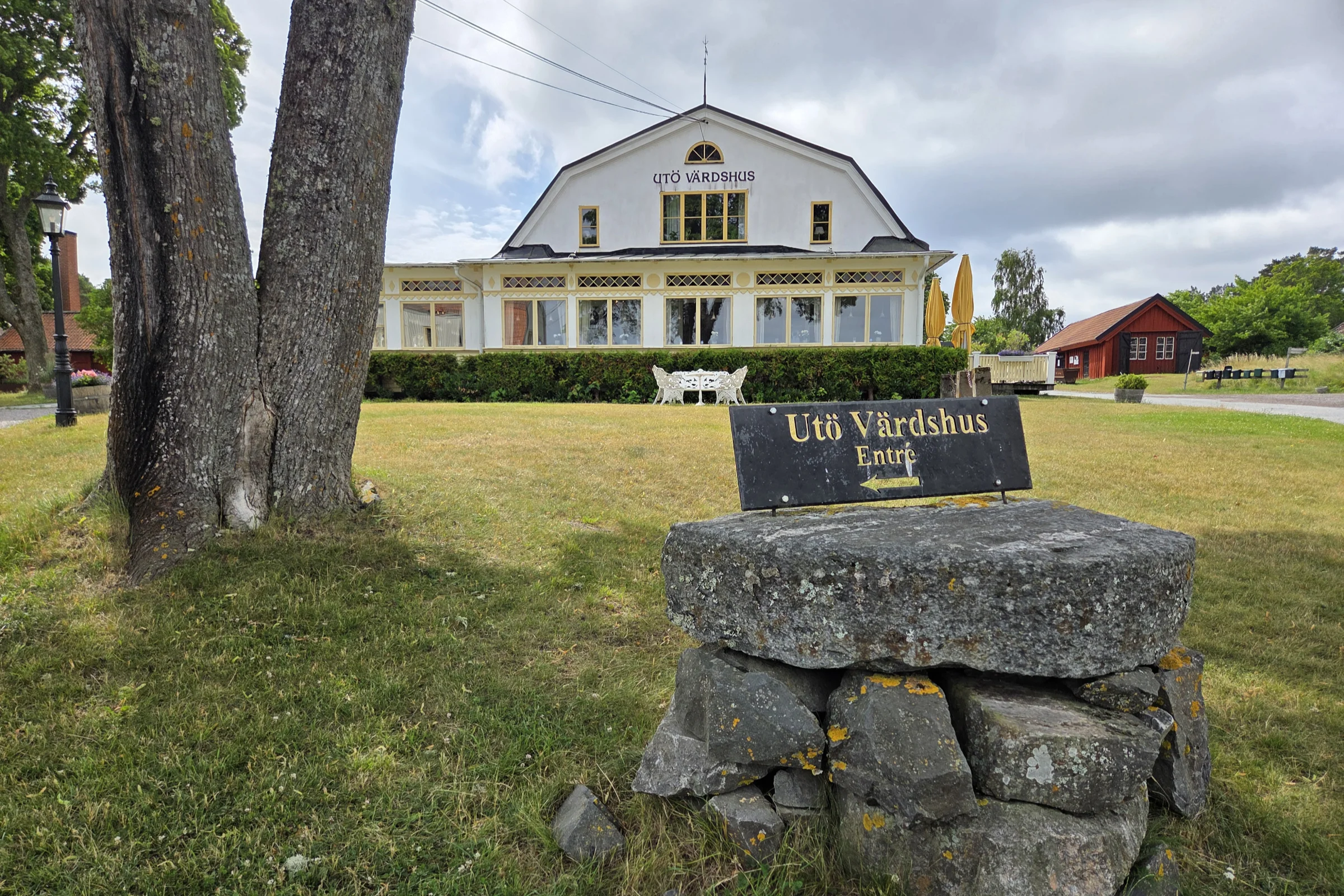
Utö is a fantastic destination for beach lovers, offering a rare stretch of sandy beaches in an archipelago where rocky shores are the norm. The best way to get around it is by bicycle, which can be rented on arrival. The island also has a 19th-century iron mine that is now a museum, giving it a layer of history that pure nature islands lack.
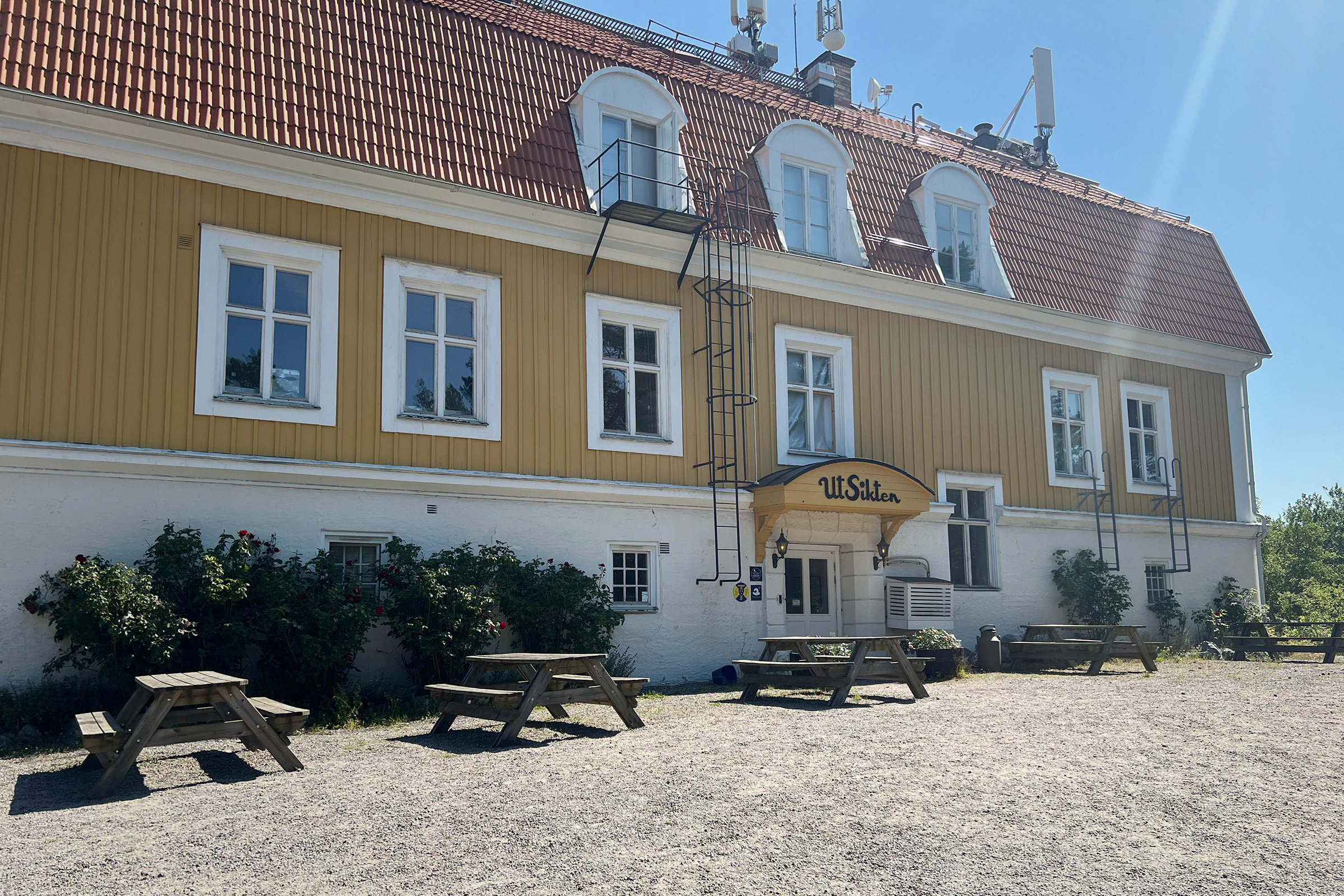
Accommodation ranges from a hostel to hotel rooms at Utö Värdshus, along with cottages and a simple campsite. The hostel makes Utö one of the most accessible overnight options for budget travellers who want to go further out than Vaxholm. The ferry from Stockholm takes around 2.5 hours, via Nynäshamn by commuter train and then ferry, or longer by the archipelago ferry route.
Prices are budget to mid-range.
Good for: budget travellers, cyclists, beach seekers, anyone who wants a proper outer-archipelago experience without camping.
Landsort
The end of the line: the southernmost lighthouse island in the Stockholm archipelago.
Landsort is the southernmost point of the Stockholm archipelago and offers a more rugged, nature-focused escape than the more developed islands. While it is quieter and more remote, it is very accessible for anyone comfortable with basic amenities. Getting there involves a train and ferry connection via Nynäshamn. Because accommodation is limited – ranging from a hostel to a small hotel – booking in advance is essential. The appeal here is the open Baltic, the historic lighthouse, and the genuine sense of being at the edge of the archipelago.
Landsort is for travelers who appreciate a rustic, quieter escape. Accommodation here is simple and limited, so booking in advance is essential. The appeal is the sense of arriving somewhere genuinely remote: the open Baltic, the historic lighthouse, and the calm of being at the edge of the archipelago.
Prices are budget.
Good for: travelers looking for a truly quiet, rustic getaway and anyone drawn to the rugged beauty of the outer archipelago.
Möja
A working island in the mid-archipelago with real community character.
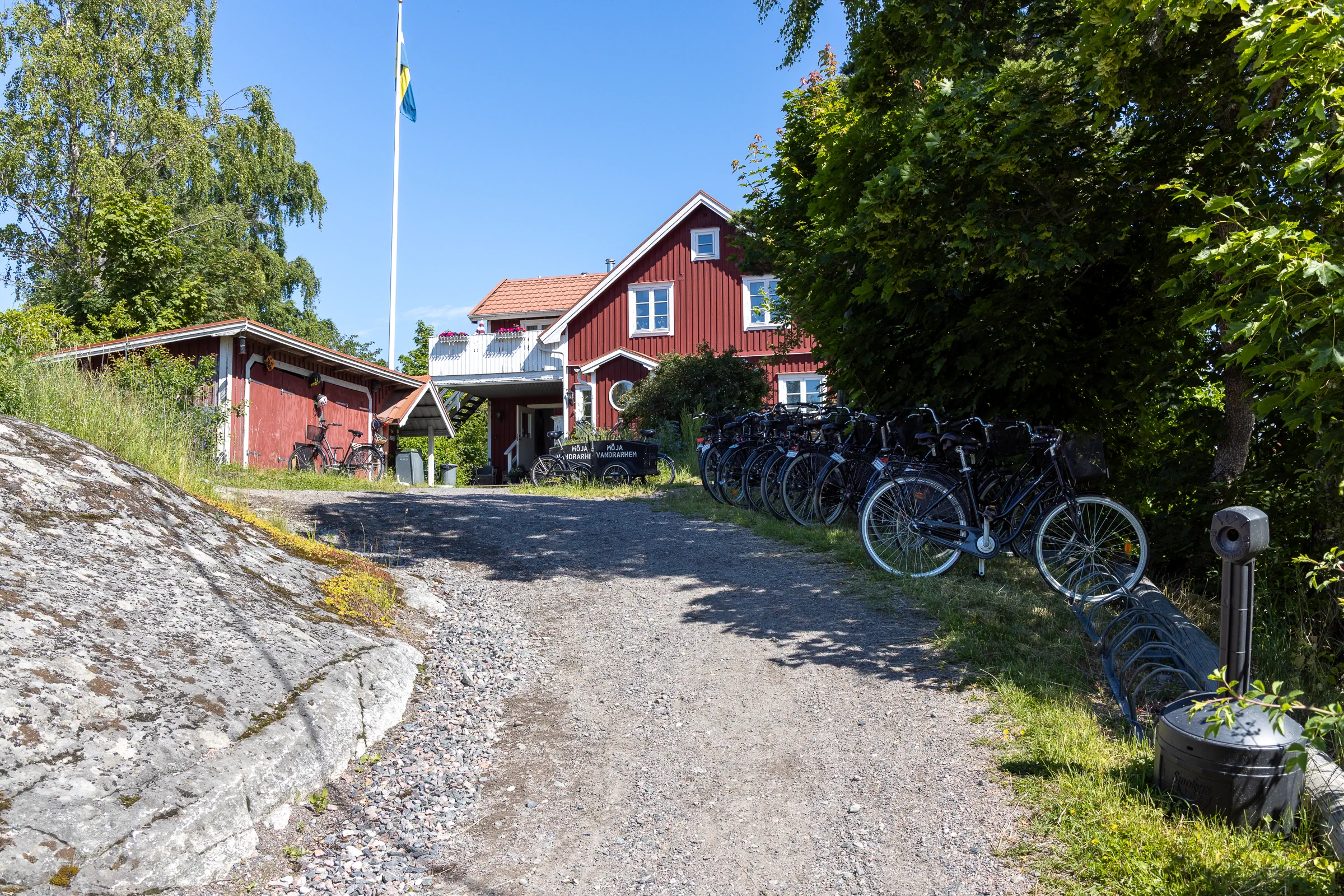
Möja is one of the larger mid-archipelago islands and has a permanent community that gives it a different feel from the more tourist-oriented islands. The island is also incredibly bicycle-friendly; with its wide, easy-to-ride country roads, cycling is the most convenient way to explore the varied landscape. It’s less visited than Grinda or Sandhamn, which means you’ll encounter more locals than tourists in summer, a rarity in the archipelago.
The ferry takes around two hours from Stockholm. Accommodation is mid-range in pricing.
Good for: visitors who want authentic local character over polished tourist infrastructure, those returning to the archipelago and looking for something less visited.
Nåttarö
A nature reserve built for camping.
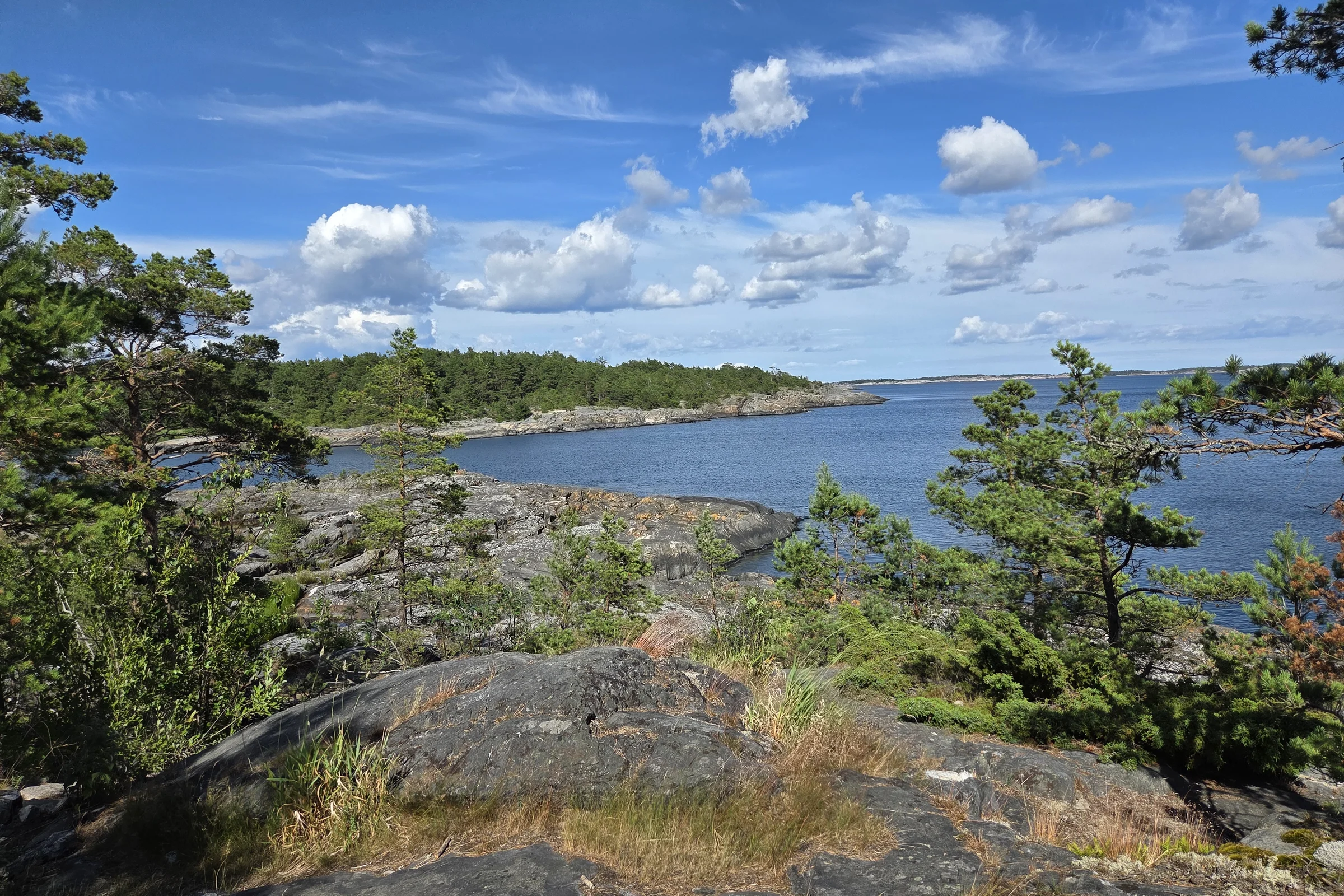
Nåttarö is primarily a camping destination. It’s a nature reserve island with sandy beaches, forested walking paths, and designated camping areas. There is minimal built infrastructure by design. You bring your tent, your food, and your own entertainment.
For international visitors unfamiliar with Swedish camping culture: this is well within the spirit of allemansrätten and completely normal Swedish summer behaviour. The island has toilet facilities at the main camping areas. Campfires are subject to seasonal restrictions; check current rules before you travel.
Prices are effectively the cost of the ferry and your camping supplies.
Good for: campers, nature enthusiasts, families comfortable with basic conditions, anyone who wants to experience the archipelago at its most undeveloped.
Arholma
As far north as the archipelago goes: a hostel at the edge of the world.
Arholma is the northernmost island in this guide and one of the most remote. It has a hostel-style guesthouse, a nature reserve character, and a lighthouse. The ferry journey from Stockholm takes around three hours. There is very little to do in the conventional tourist sense; the island is for walks, swimming, watching the sea, and slowing down entirely.
This is an island for visitors who are genuinely comfortable with their own company and not looking for restaurants or activity programmes. The accommodation is basic and affordable. The options are cottages and hostels with private rooms and shared bathrooms.
Good for: experienced independent travellers, anyone who wants maximum distance from the city.
How to choose
If you’re unsure which island fits your trip, use this as a starting point.
For those who want a comfortable base with easy logistics. Vaxholm. You can walk off the ferry and figure out the rest when you get there.
Nature experience with a proper bed. Grinda or Möja. Grinda is more polished; Möja is more local.
Upscale, beach-focused, nightlife. Sandhamn. Book at least 1-2 months ahead for summer.
Cycling, beautiful hiking nature, sandy beaches, budget-to-mid-range accommodation. Utö.
Maximum quiet, self-catering, fewer visitors. Svartsö.
Camping on a beautiful nature reserve. Nåttarö.
Total solitude, northern wilderness, self-sufficient experience. Arholma.
Historic lighthouse village, southern outpost, coastal community. Landsort.
Planning checklist for international visitors
Booking accommodation. Most archipelago hostels and cottages are booked directly by email, web form or phone. Cottage rentals often appear on the Swedish subletting service Qasa, on Airbnb or via the island’s own pages. Sandhamn and Vaxholm are also findable on major hotel platforms, but direct is usually cheaper.
Islands’ official websites for booking accommodation
- Vaxholm: https://www.destinationvaxholm.se/en/sv/boende
- Grinda: https://grinda.se/en/accommodation/
- Sandhamn: https://destinationsandhamn.se/en/stay/
- Svartsö: https://svartso.se/sovaochata/
- Utö: https://www.uto.se/boende/
- Landsort: https://www.landsortsvandrarhem.se/boende-pris/
- Möja: https://www.visitmoja.se/boende-p%C3%A5-m%C3%B6ja/
- Nåttarö: https://nattaro.se/boende/
- Arholma: https://www.arholma.nu/hitta-boende
Ferry tickets. Buy Waxholmsbolaget tickets online via their website or on board the boat. For many routes, using the SL app is the most straightforward method for international visitors. Note that your SL card is valid for Vaxholm, but for the other islands in this guide, you will need to purchase a separate ticket.
Payment. Sweden is effectively cashless. Cards are accepted everywhere: on the ferries, at the guesthouses, at island cafés. You do not need to carry cash, though having a small amount as backup on very remote islands such as Landsort and Arholma is sensible.
Mobile signal. Good on Vaxholm and Fjäderholmen, variable on mid-archipelago islands, and on Landsort and Arholma. Download offline maps before you leave Stockholm. Google Maps works offline with GPS if you save the area in advance.
Language. English is spoken universally across the archipelago, including at guesthouses and on ferries. You will not encounter a language barrier at any point.
What to pack beyond a day-trip bag. An extra layer, since even in July evenings on the water get cool. Insect repellent for wooded islands in summer. A head torch if you’re camping. Sunscreen; the light reflects off the water and you’ll burn faster than you expect. Comfortable shoes for walking on uneven rocky terrain.
Off-season
The archipelago in summer is the obvious choice, but it’s not the only one. Late May and early September offer most of the same experience, with open guesthouses, running ferries and warm enough water to swim, but with significantly fewer visitors and lower prices. The light in the archipelago in late August and September, as it turns golden and autumnal, is genuinely beautiful.
Winter is a different proposition. Ferry services run less frequently, some guesthouses close entirely between October and April, and the outer islands can become inaccessible in heavy ice years. Vaxholm, Sandhamn and Landsort all remain accessible and worth visiting year-round.