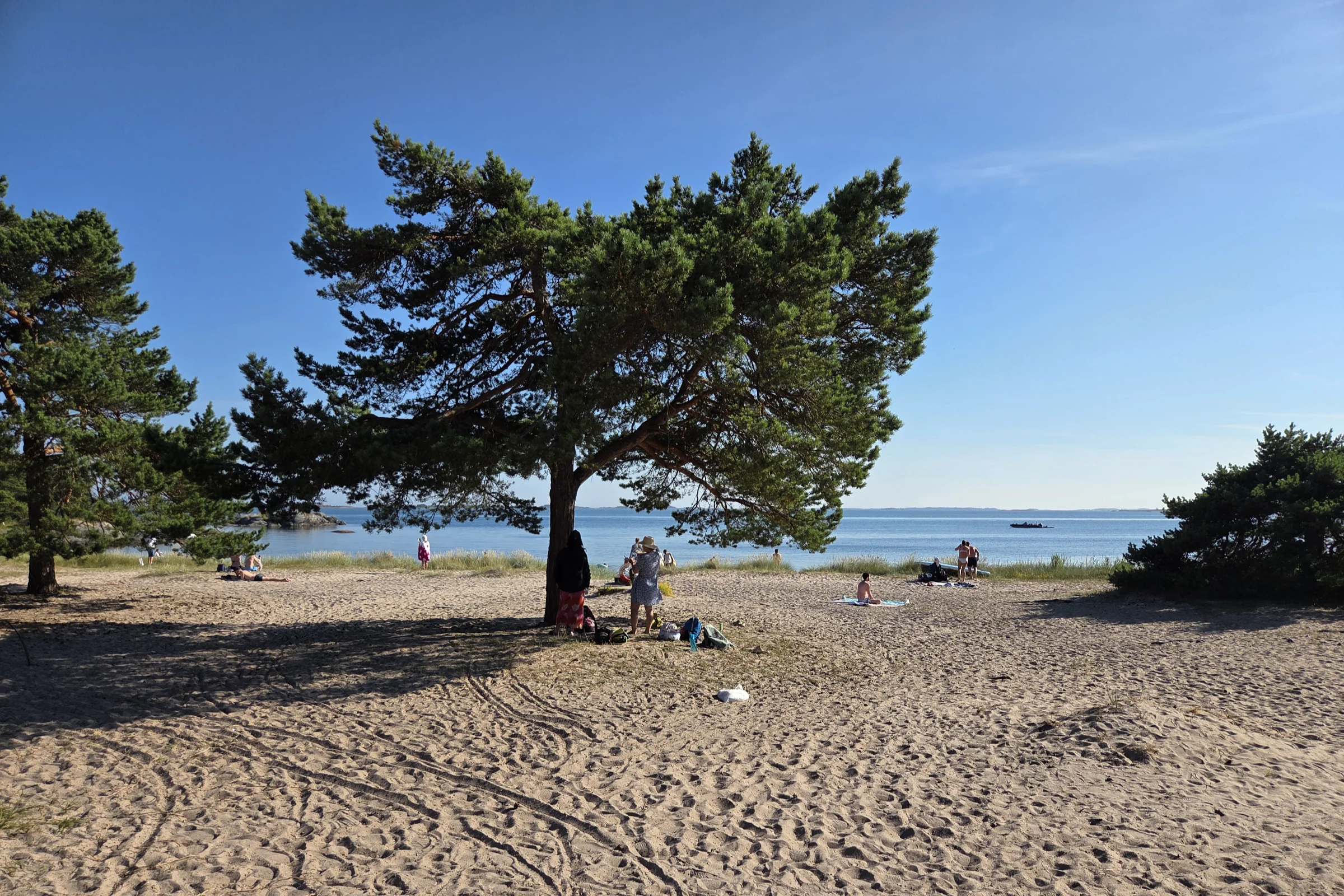
Utö is one of the more versatile islands you can visit in the Stockholm archipelago. There are forests and rocky coastlines to hike through, long gravel roads that make the island particularly good for cycling, several places to swim, and enough restaurants, cafés, and accommodation that you don’t have to plan your trip around what you can carry in your backpack.
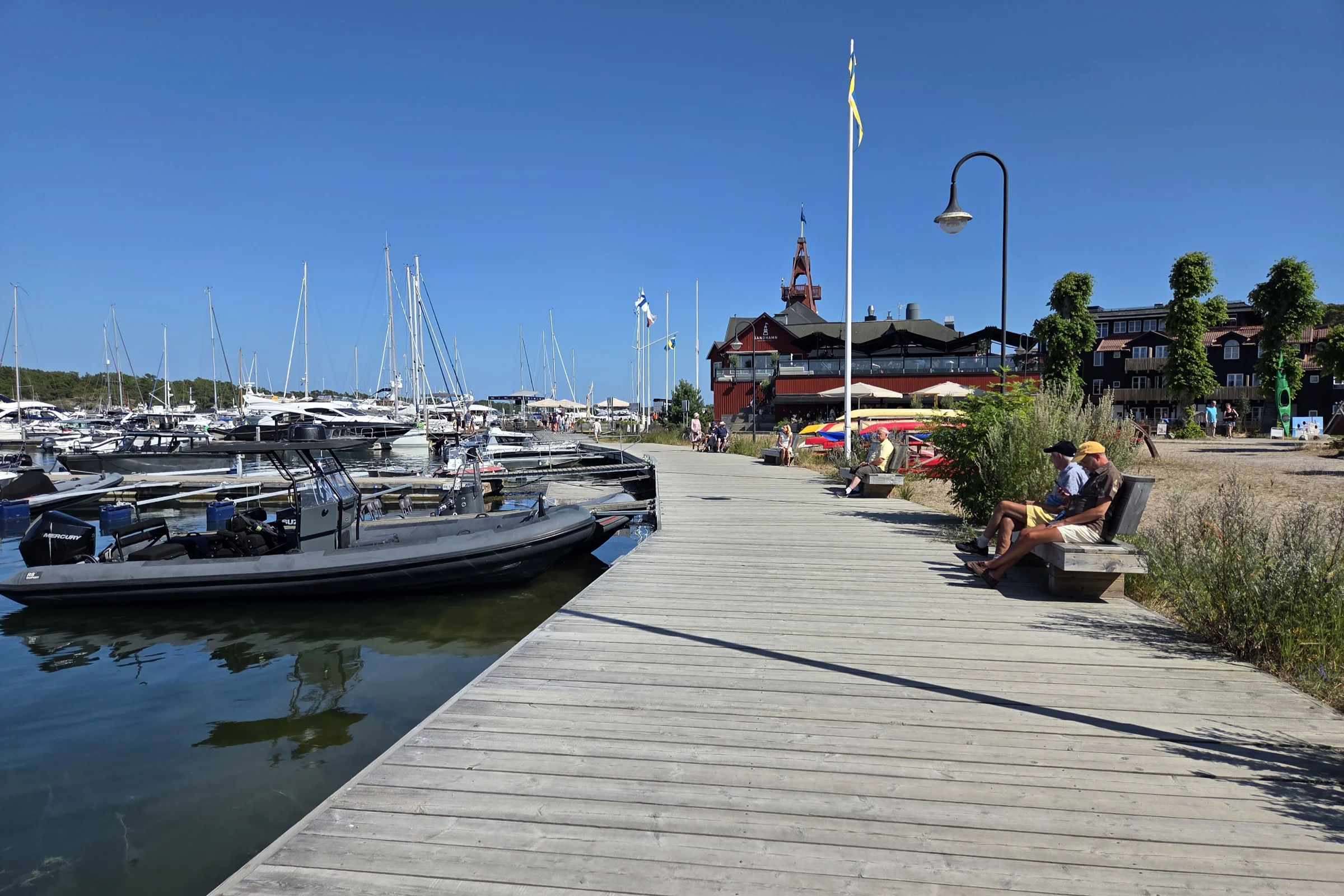
It is also considerably livelier than many smaller archipelago islands. Around Gruvbyn, the main settlement near the ferry landing, you’ll find restaurants, a bakery, a grocery store, a guest harbor, bicycle rental, and places to stay. Summer evenings can bring live music and a fairly social atmosphere, while a short walk or bike ride in the other direction quickly puts you back among forests, beaches, and quiet stretches of coastline.
That combination is probably Utö’s greatest strength. It works well for an active weekend, a family trip, or simply a couple of days by the sea, without feeling quite as focused on nightlife and boating culture as Sandhamn.
Utö also has more history than you might expect from a summer island. Miners mined iron here for centuries, and the water-filled mine pits and old miners’ buildings around Gruvbyn remain some of the most visible traces of that past. The Archipelago Foundation (Skärgårdsstiftelsen) now manages the north part of the island as a nature reserve.
What to expect on Utö
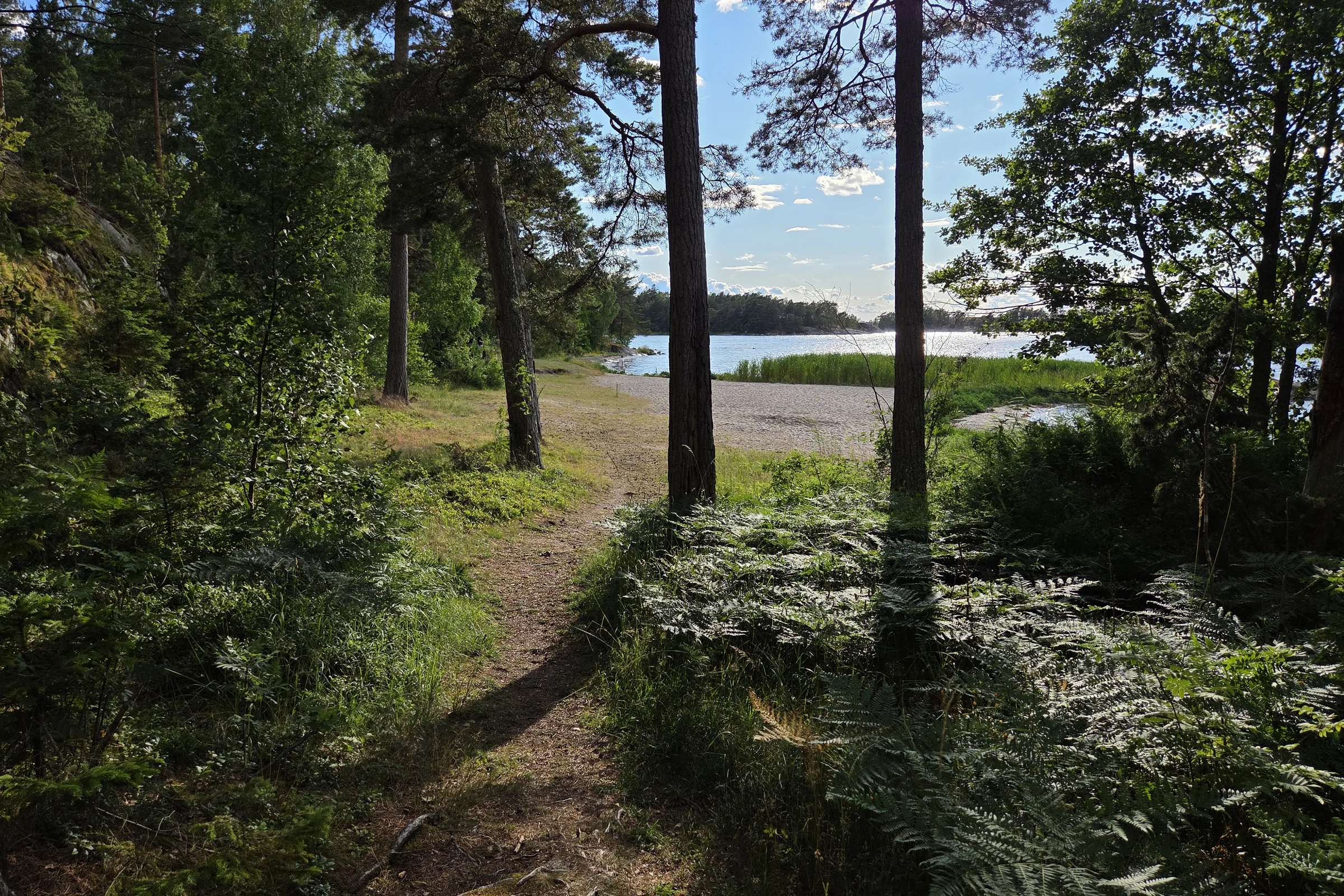
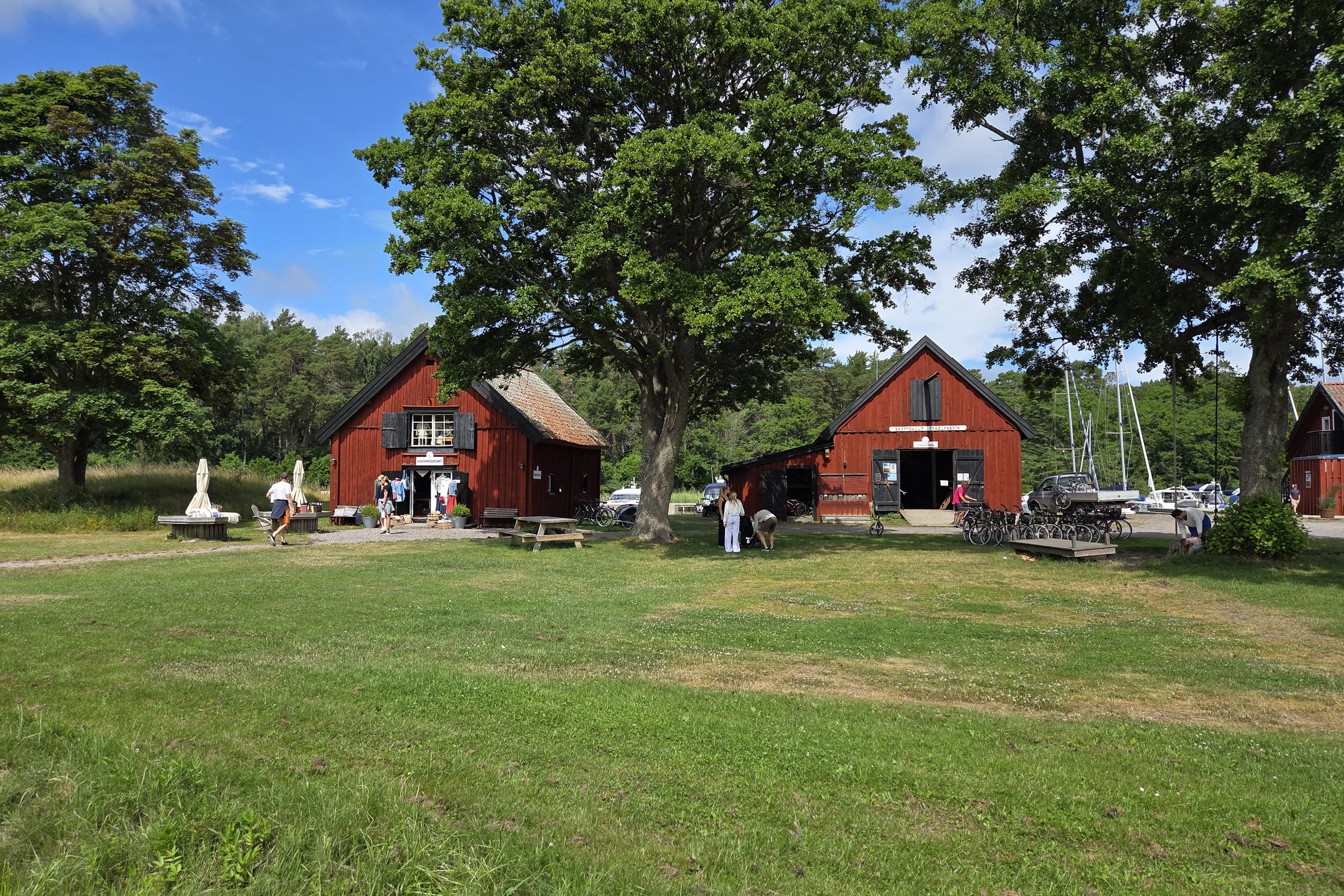
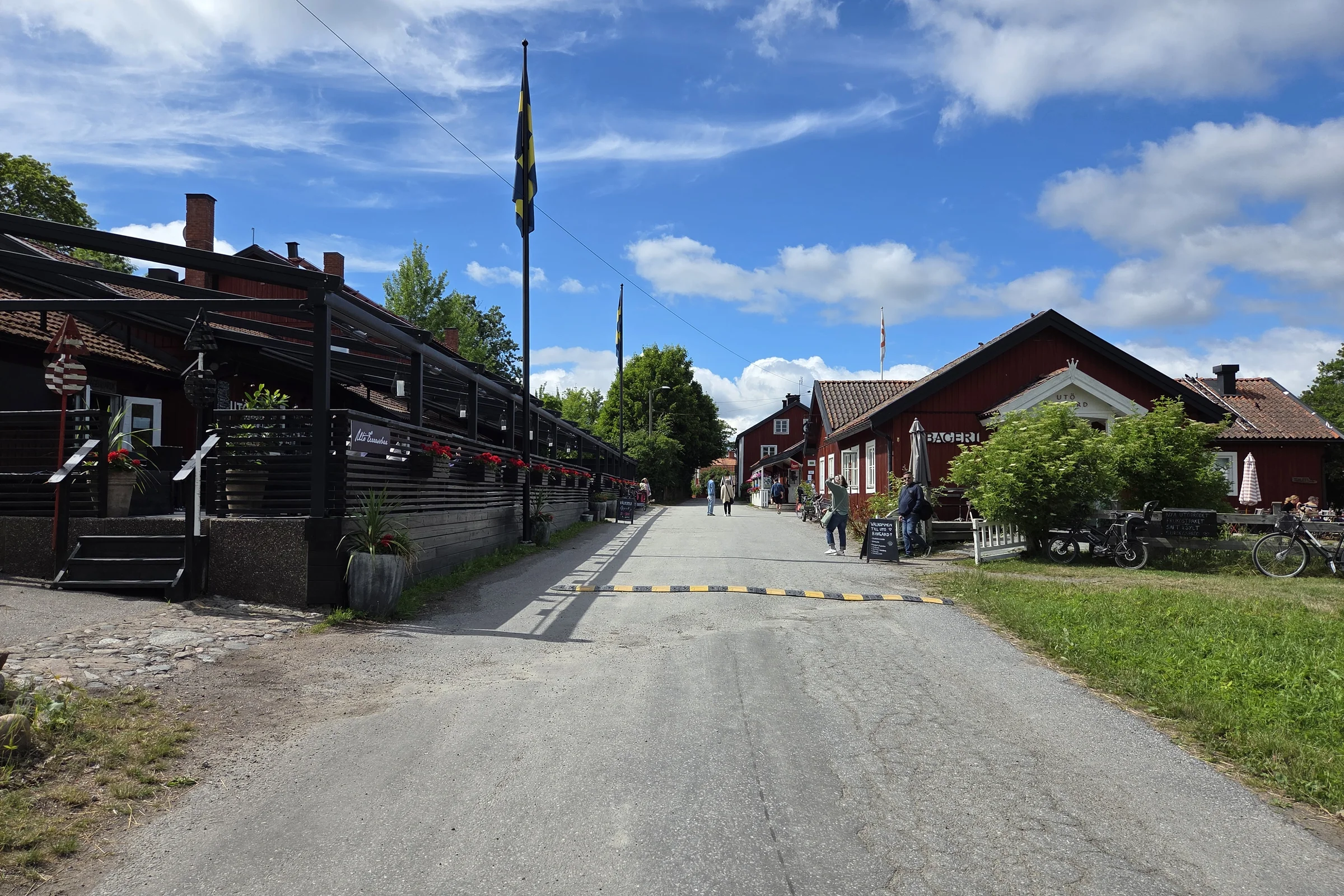
Utö is quite a large island by Stockholm archipelago standards, and that changes how you experience it. Rather than arriving at one compact village and spending the day walking around it, it makes more sense to choose what you want to do and explore from there.
For many visitors, cycling is one of the best ways to see the island. You can rent bicycles at Cykelboden near Gruvbryggan, and follow the mostly easy gravel roads south through Utö and onward to neighboring Ålö. The ride from Gruvbyn toward Ålö is roughly 11 km (7 miles), passing forests, meadows, and water along the way. The ride takes about 30 minutes and bicycles for adults and children, as well as child trailers, are available for rent on the island.
Ålö is the most natural island to combine with Utö because the two are connected by road and bridge. If you want a longer excursion, you can cycle toward Ålö Storsand, a large sandy beach, and in summer continue to Båtshaket for food. It is even possible to make this a one-way journey, continuing by boat from Ålö toward Nynäshamn rather than cycling all the way back.
One thing to know before heading south is that part of the route between Utö and Ålö passes through an active military firing range. The Stockholm Archipelago Trail instructs hikers to remain on the gravel road through this section.
Closer to Gruvbyn, you can visit the old mining area, walk up toward Utö Värdshus and the historic windmill, swim, rent a kayak, or simply spend some time around the harbor. There is also minigolf near Seglarbaren and several other outdoor activities, making this one of the easier archipelago islands to visit with children.
Hiking the Stockholm Archipelago Trail
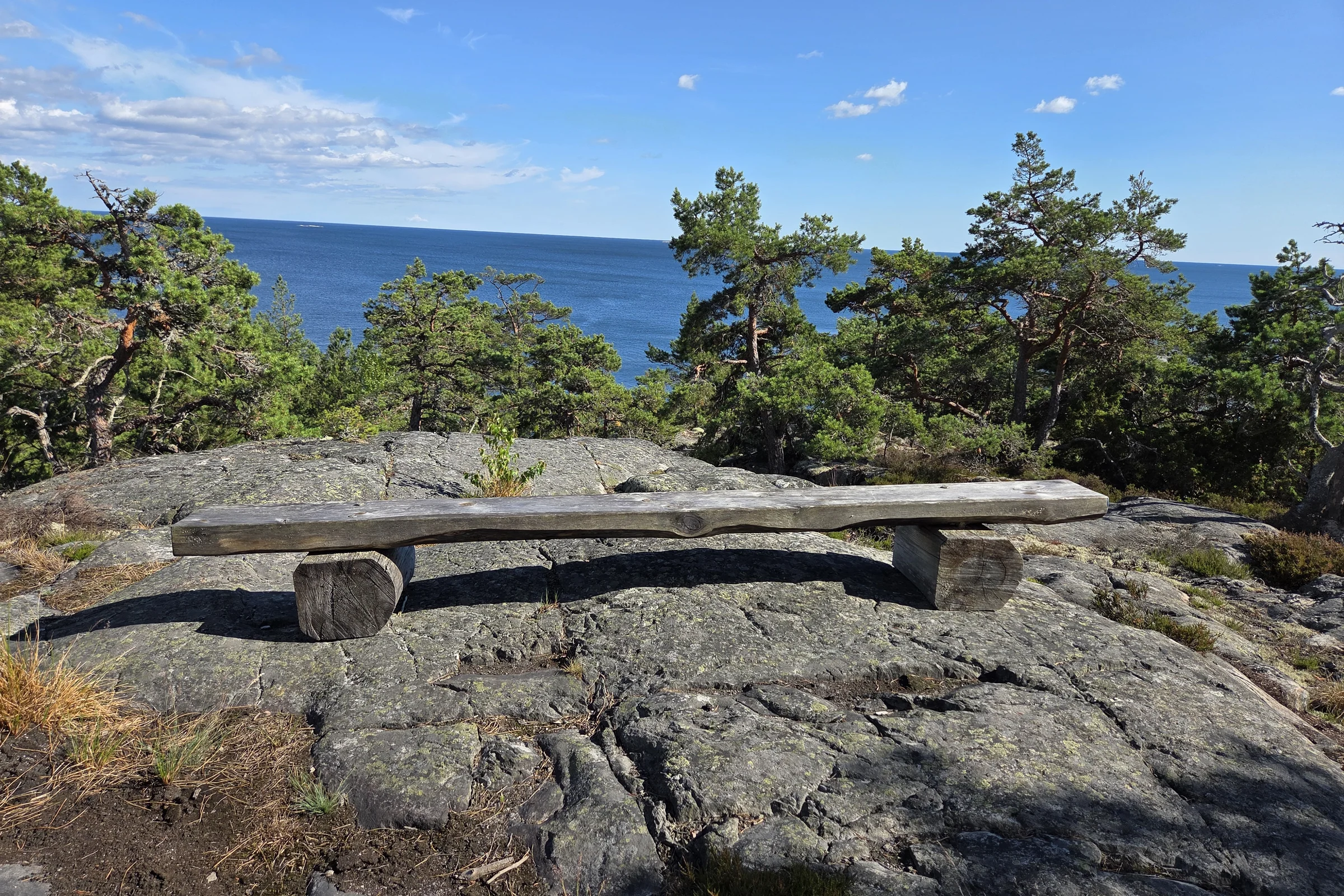
For us, hiking was one of the highlights of Utö.
The Utö section of the Stockholm Archipelago Trail runs for around 18 km (11 miles) and is officially rated challenging, the highest of the trail’s three difficulty categories. The route mixes gravel roads with forest paths, rocks, wetlands, and more technical coastal terrain.
That rating sounds more intimidating than our own experience of the trail. We did not find Utö dramatically more difficult than some sections officially rated moderate, such as Grinda. You don’t need to be an expert mountaineer to walk here.
The bigger consideration is the combination of distance and uneven terrain. Some sections require more attention, particularly over rocks that can become slippery when wet, and completing the whole route makes for a substantial day of walking. Good footwear is worthwhile. The trail organization recommends hiking boots for its moderate and challenging sections.
If you don’t want to do the entire route, you don’t have to. Several roads connect the trail back toward Gruvbyn, making shorter walks possible.
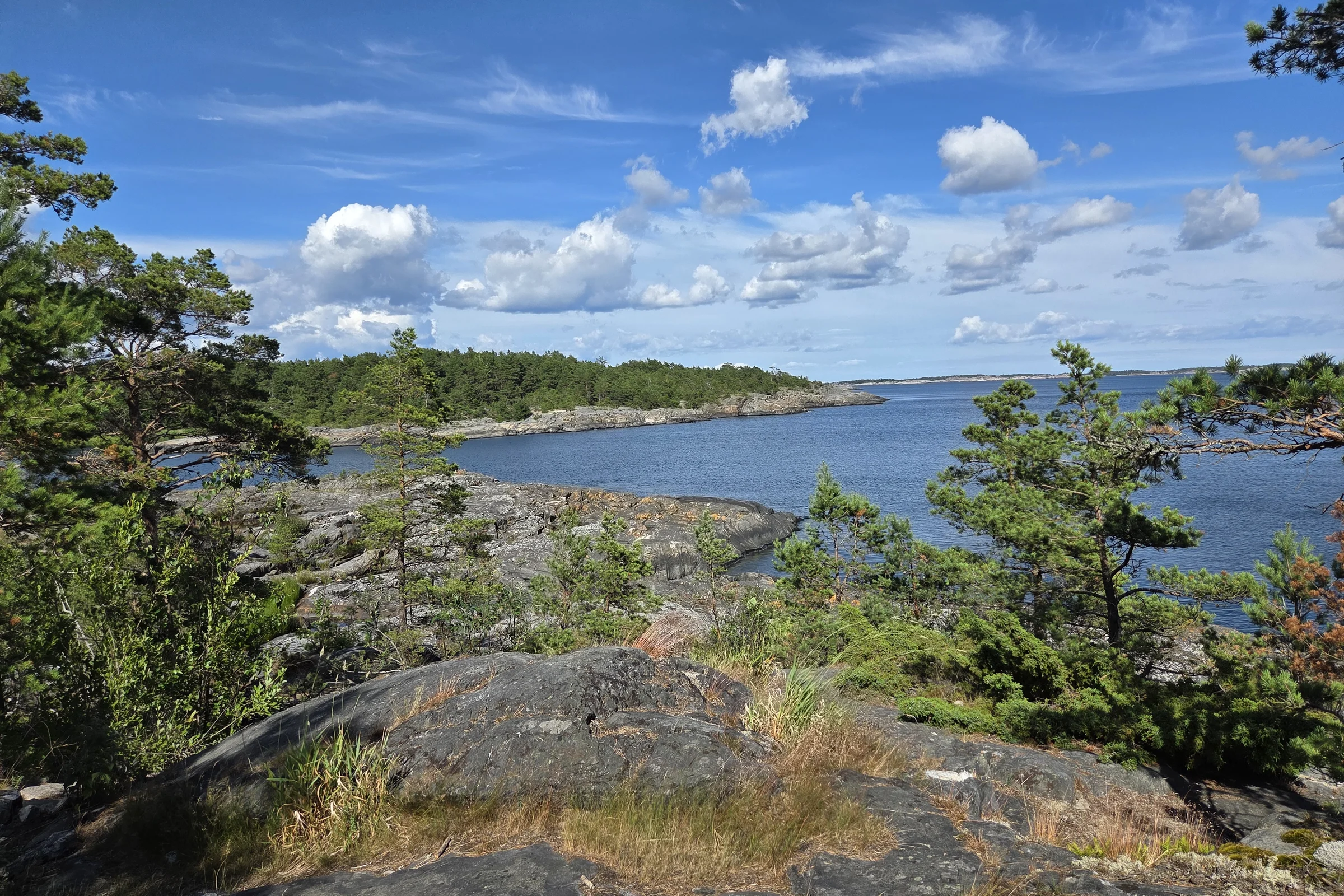
And this is one place where shortening the walk doesn’t necessarily mean missing the best parts. The stretches where the trail runs close to the open water were among the most beautiful coastal sections we have walked in the Stockholm archipelago. Particularly along the eastern side of Utö, you move between pine forest, exposed rock, and wide views across the sea.
That landscape alone would be a good reason to choose Utö over an island where most of the walking is inland.
Food and drinks
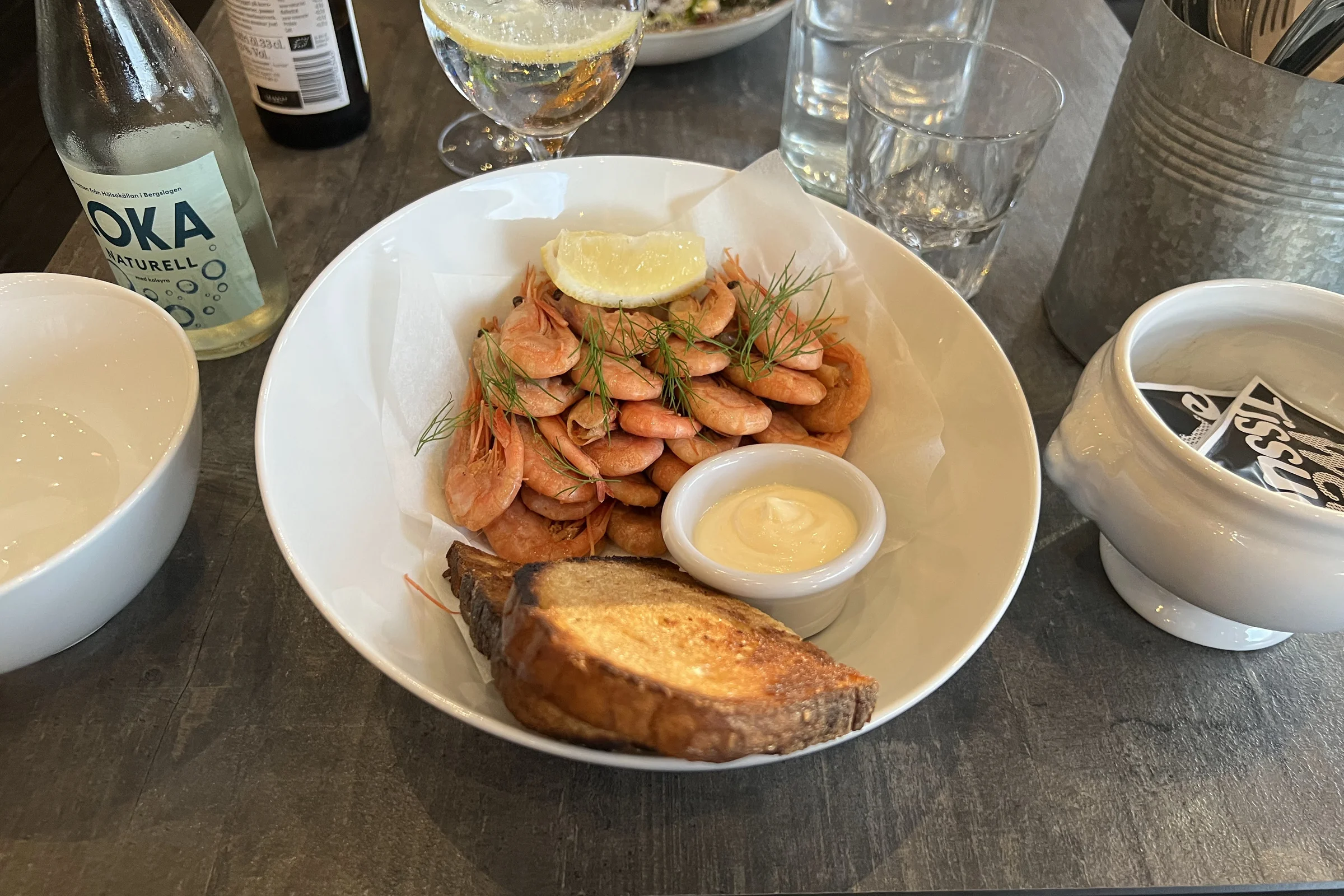
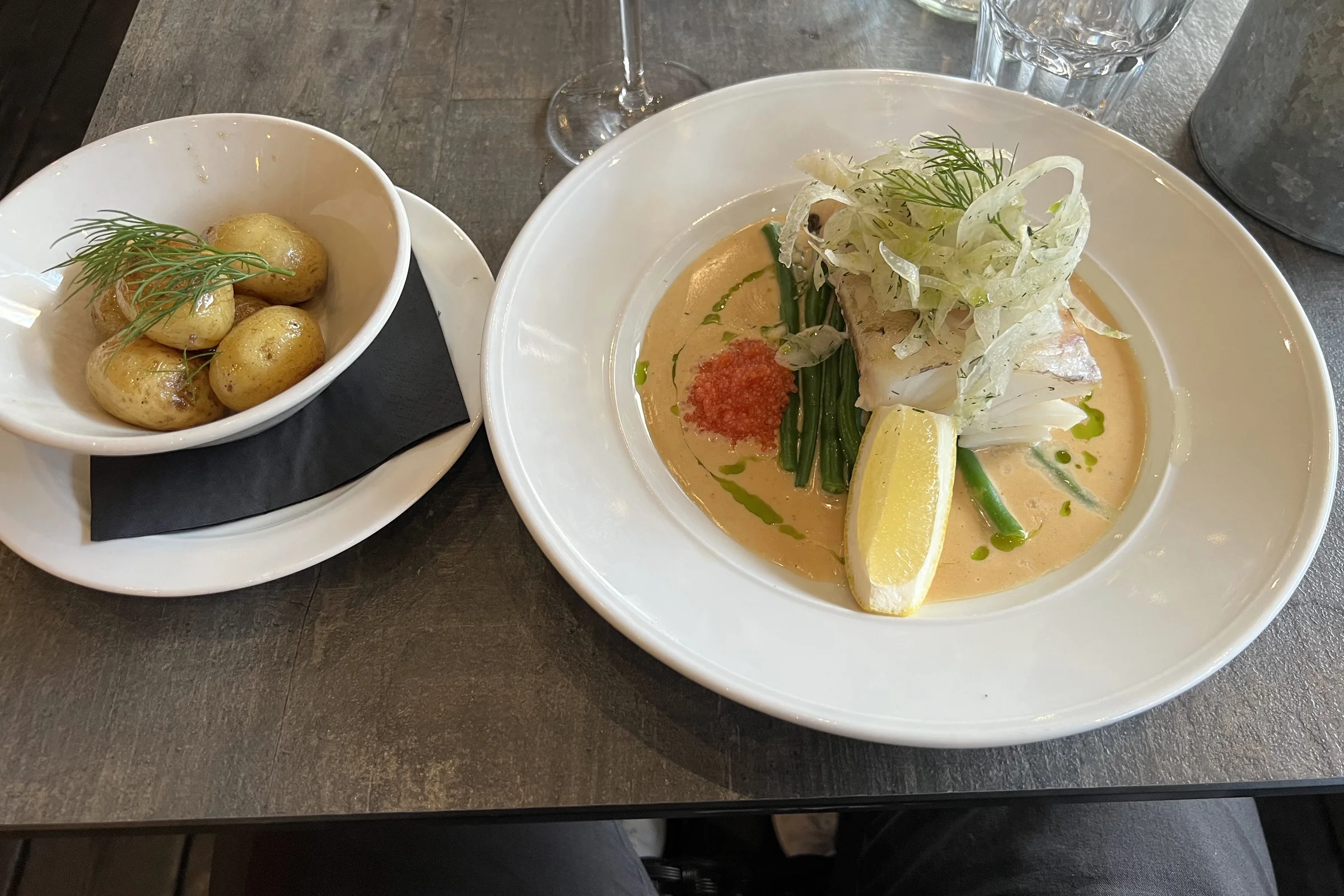
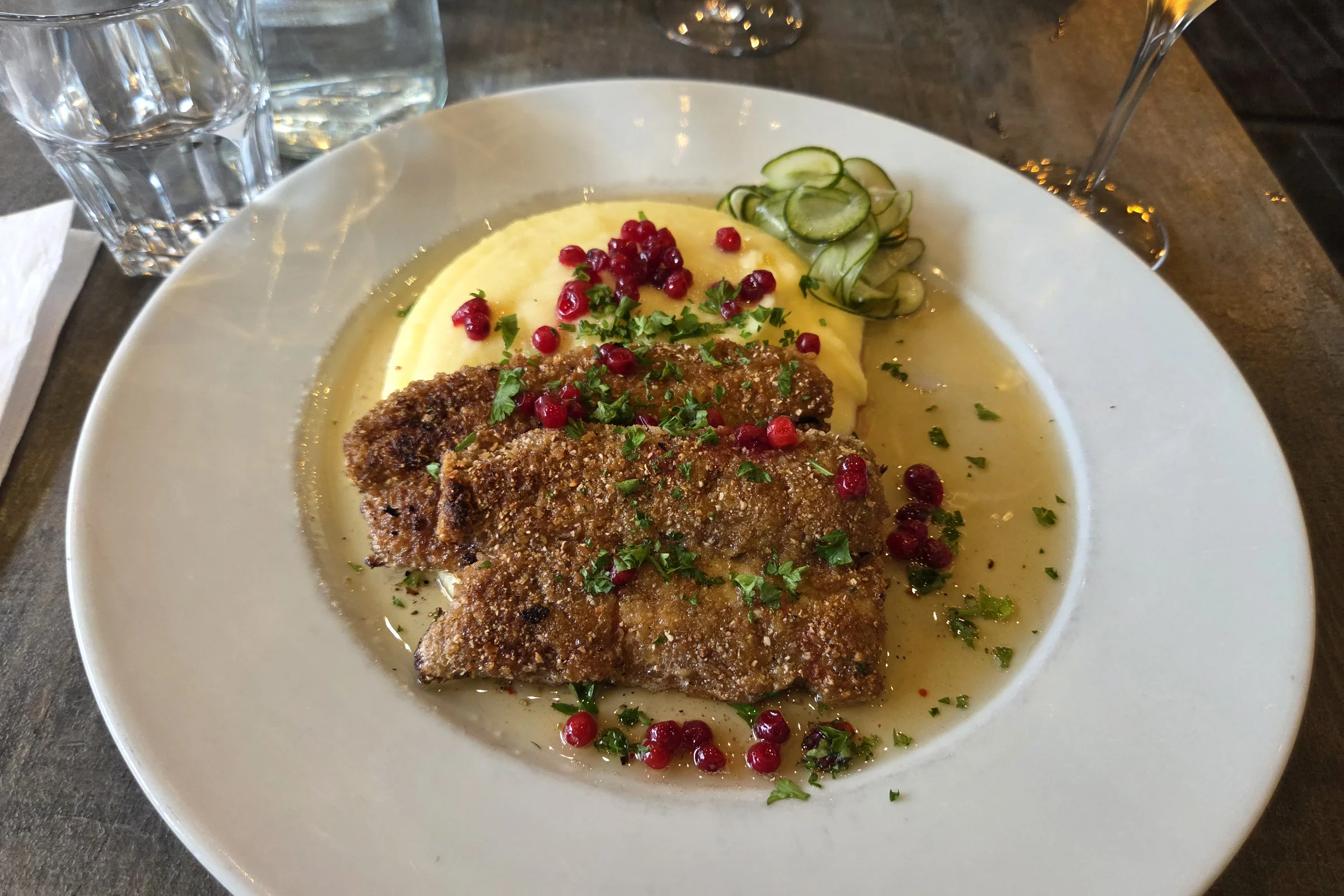
Another advantage of Utö is that you don’t need to organize your day around a single restaurant.
Most of the food options are concentrated around Gruvbyn and Gruvbryggan, where the ferry arrives. Around the harbor you’ll find casual places for a quick meal as well as Fisklådan for fish and seafood, while farther into the village there is a bakery, Nya Dannekrogen, and an ICA grocery store. Utö Värdshus sits uphill from the harbor and offers a more traditional sit-down restaurant. Utö’s official visitor information currently lists a considerably broader range of restaurants and cafés than you’ll find on many smaller islands.
This variety matters more than it may sound. On some archipelago islands, missing restaurant opening hours can leave you with very few alternatives. Utö is much more forgiving, particularly during the summer season.
It also becomes livelier in the evening. Depending on when you visit, restaurants and bars may have live music, and groups do come here for a night out. We found the atmosphere more relaxed than Sandhamn, however. You can have drinks and stay out late without the entire island feeling centered around nightlife.
Outside summer, expect considerably fewer places to be open and check opening hours before traveling.
When to visit Utö
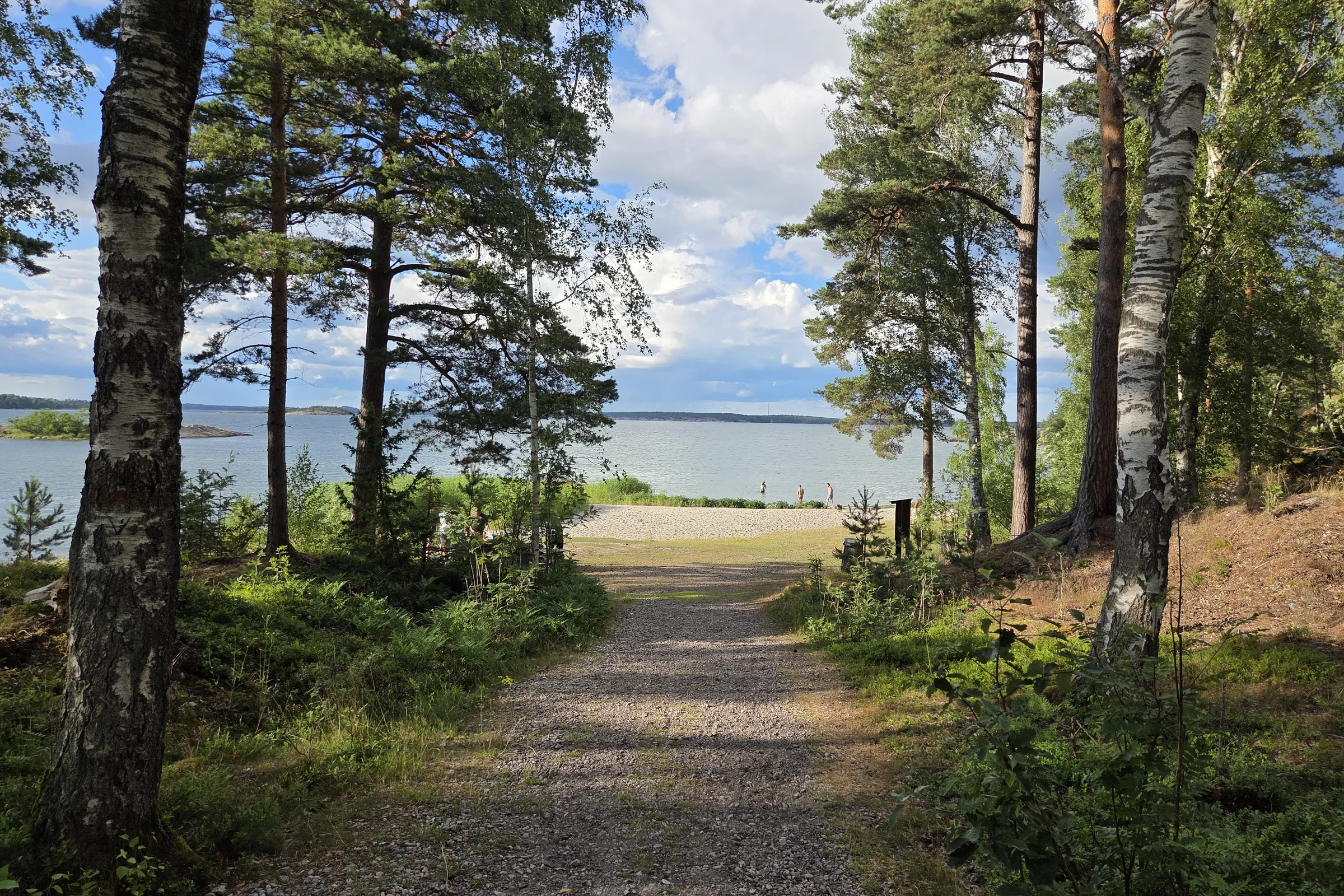
July is the safest choice if you want Utö at its liveliest. This is when you are most likely to find the full selection of restaurants, activities, and accommodation operating, and it is also normally the warmest period for swimming and spending long days outdoors.
The trade-off is that July is peak season.
That said, even during our own July visit, Utö did not feel overwhelmingly crowded once we moved away from the harbor area. The island is large enough for people to spread out.
Late June and August may be an even better compromise if your priority is hiking or cycling rather than peak summer atmosphere. You’ll generally encounter fewer visitors while still having a good chance of summer services being open.
You can visit Utö outside of summer, as the island has year-round ferry connections and Utö Värdshus remains open throughout the year. But the experience changes considerably. Some accommodation and businesses are seasonal, so an April or October visit requires more planning than a July one.
Getting to Utö
Utö takes longer to reach than islands such as Vaxholm or Grinda, so we would generally treat it as a full-day trip at minimum. Staying overnight makes even more sense, particularly if you want to hike or cycle beyond the immediate harbor area.
Via Årsta brygga
For most travelers coming from Stockholm without a car, the most practical route is:
Stockholm City → Västerhaninge → Årsta brygga → Utö
Take the commuter train south from Stockholm to Västerhaninge, then bus 846 to Årsta brygga. From there, Waxholmsbolaget operates boats to Gruvbryggan on Utö.
The boat portion itself is relatively short. The boat crossings from Årsta brygga to Gruvbryggan takes roughly 40 to 55 minutes, depending on the departure. The longer part of the journey from Stockholm is getting to Årsta brygga.
If you are driving, you can instead leave your car near Årsta brygga and take the same ferry. Parking can become busy on popular summer days, so allow some margin before your departure. For more information about the parking, see Utö Parkering.
Boat from central Stockholm
During summer, there are also boat connections between central Stockholm and Utö.
This is considerably slower, but that’s not necessarily a disadvantage. If this is your first trip into the Stockholm archipelago, spending several hours traveling through the islands can be an experience in itself.
For maximizing the amount of time you have on Utö, go via Årsta brygga. If you want the boat journey to be part of the excursion, investigate the departures from central Stockholm.
Whichever route you choose, check Waxholmsbolaget’s journey planner for your specific date rather than relying on a generic timetable. Archipelago schedules vary substantially between seasons and even between different days of the week.
Note: If you want to travel to Utö by boat directly from central Stockholm, departures are from Strömkajen (the nearest metro station is Kungsträdgården). These routes do not appear in the SL journey planner, so you will need to use Waxholmsbolaget’s journey planner. While it is only available in Swedish, you can use browser-based translation tools like Google Translate. Alternatively, visit the Waxholmsbolaget booth at Strömkajen for help planning your route in person. If using their online planner, search for the route from “Strömkajen” to “Gruvbryggan (Utö)”.
Where to stay
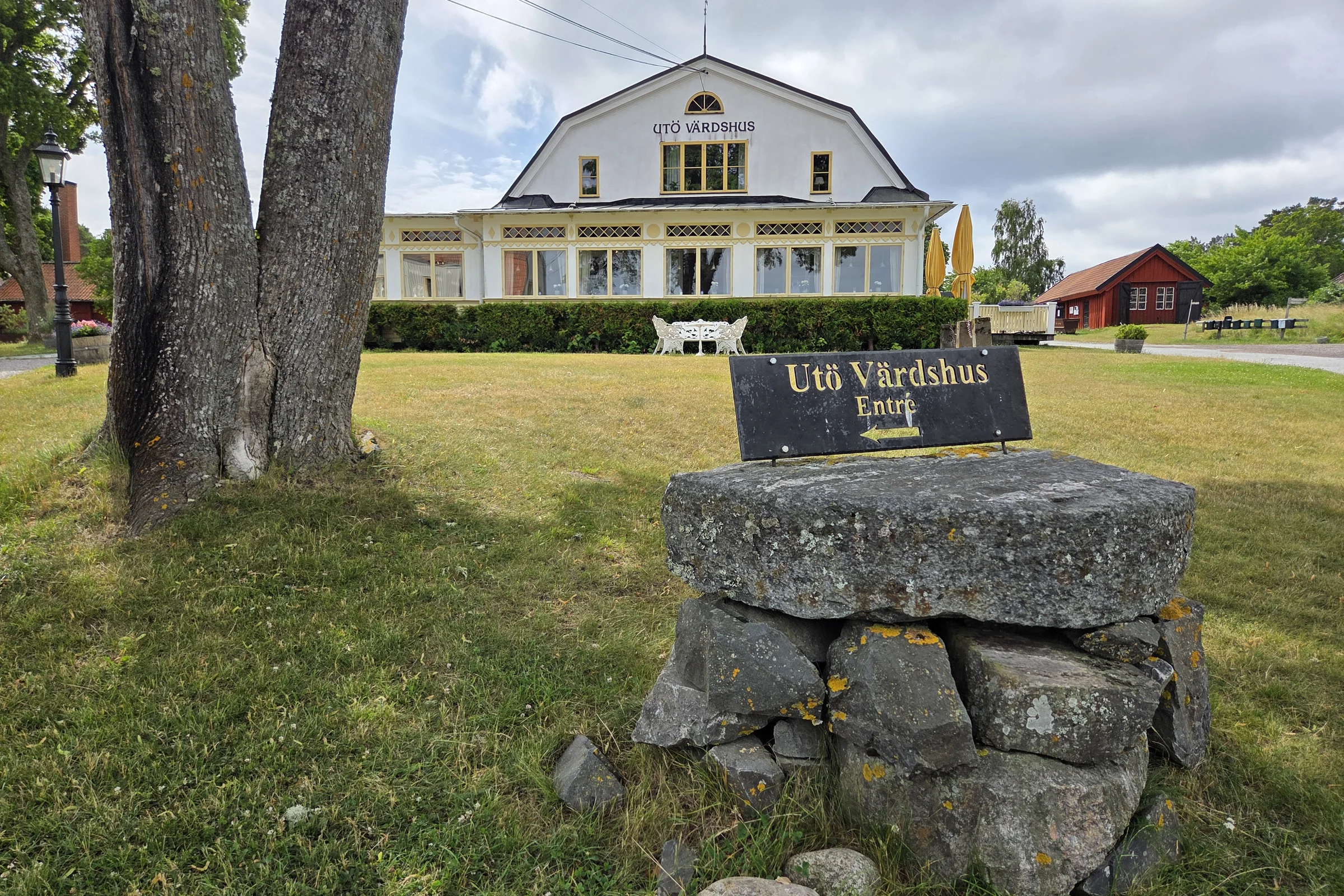
Utö has one of the broader selections of accommodation in the Stockholm archipelago, ranging from hotel rooms to hostels, cottages, glamping, and camping.
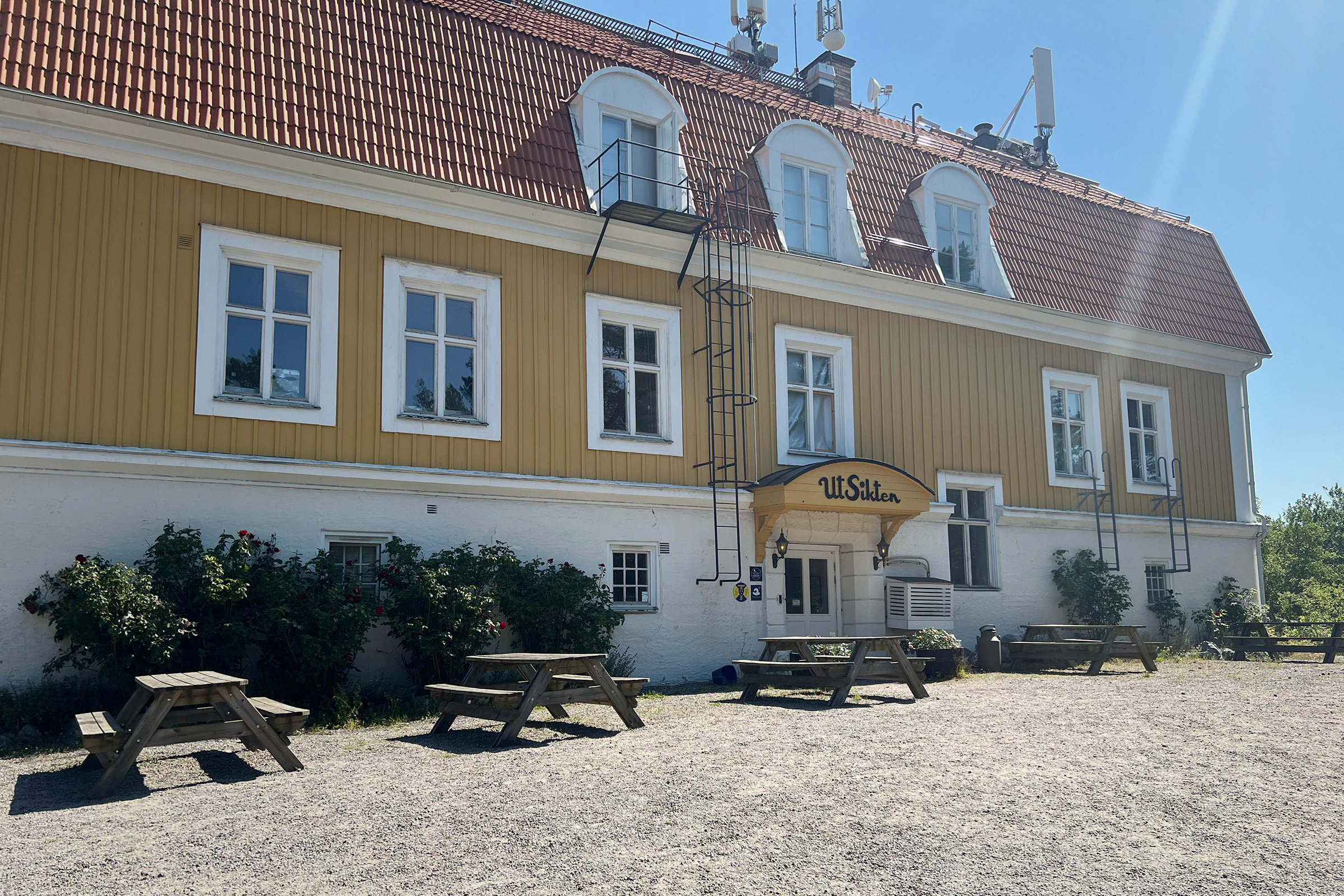
For the simplest comfortable stay, Utö Värdshus is the obvious starting point. Its hotel accommodation is split between different buildings rather than being one conventional hotel complex.
Stenhotellet is a renovated 18th-century building with 10 rooms close to Gruvbyn and the harbor, while Kvarnvillan has eight double rooms in a newer, more contemporary building about 200 m (660 feet) from the main inn. If location and historic character matter most, Stenhotellet would be our first choice of the two; Kvarnvillan may appeal more if you prefer a newer room and a slightly quieter position.
There are also simpler choices.
Utö Vandrarhem in Gruvbyn is particularly convenient because you can walk there from the ferry and remain close to the restaurants and shops. The hostel is normally open during the summer half of the year, approximately April through October, and has shared kitchens.
We should add one reservation based on our own stay: we found the hostel practical rather than particularly atmospheric. From outside, the old building is attractive, but inside it felt more institutional than hostels we have stayed at on Möja and Finnhamn. There are several floors of rooms with relatively small shared kitchen areas rather than a large communal dining or lounge space.
That doesn’t make it a bad place to stay, especially given the location and price. But if the character of your accommodation is an important part of the trip, we would look at the hotel or one of Utö’s smaller cottage options first.
For an inexpensive outdoor stay, Utö Camping is a few hundred meters from Gruvbyn beside the water. It is deliberately simple, with toilets, showers, a small cooking area, and no individually numbered pitches. Individual campers normally don’t need to reserve a spot, although larger groups do.
There are also cottages and glamping options if you want something between camping and a hotel.
Whatever you choose, book earlier for summer weekends. Accommodation in the archipelago is finite, even on a relatively well-equipped island such as Utö.
Is Utö the right archipelago island for you?
Choose Utö if you want variety.
It is particularly good for travelers who want to combine several different parts of an archipelago trip rather than choose between them. You can spend the morning hiking, the afternoon swimming, eat at a restaurant instead of cooking dinner, and still find a bar or live music in the evening.
It is also one of the islands we would particularly recommend for cycling. The long gravel roads and connection to Ålö give you much more territory to explore than on smaller islands.
Families have an unusually easy time finding things to do here. There are beaches, cycling, minigolf, playground facilities, and plenty of places where you can get food without planning far ahead. Some sections around Gruvbryggan, Barnens bad, and Rävstavik are also accessible along gravel roads for strollers and visitors with limited mobility.
Hikers have one of the most varied sections of the Stockholm Archipelago Trail at their disposal, although you should allow enough time if you intend to walk the full route.
Utö also works surprisingly well for groups of friends looking for some nightlife. It isn’t the obvious party island in the way Sandhamn can be, but in summer there is enough going on that you aren’t necessarily heading to bed when dinner ends.
On the other hand, if what you want is a tiny, sleepy island where almost nothing happens, Utö probably isn’t the best fit. Gruvbyn can feel busy in summer, and the island has more infrastructure and visitors than places such as Svartsö or Möja.
Likewise, if you only have half a day available, choose somewhere closer to Stockholm. Utö rewards having time.
Is Utö worth visiting?
Yes, particularly if you want an archipelago trip built around doing things rather than simply arriving somewhere scenic.
There are prettier individual villages elsewhere and quieter islands if complete seclusion is the objective. Utö’s appeal is the combination: genuinely beautiful coastal nature, unusually good hiking, some of the best cycling possibilities among Stockholm’s ferry-accessible islands, beaches, restaurants, accommodation, and enough evening life that staying overnight feels worthwhile.
The coastline was the part that stayed with us most. Some stretches of the Stockholm Archipelago Trail, where the forest opens onto smooth rock and uninterrupted views across the Baltic, were among our favorite landscapes we encountered while hiking through the archipelago.
For a first-time visitor trying to decide between different islands, we would put Utö particularly high on the list for an active one- or two-night trip. It gives you a much broader taste of what the Stockholm archipelago can be than most islands manage on their own.