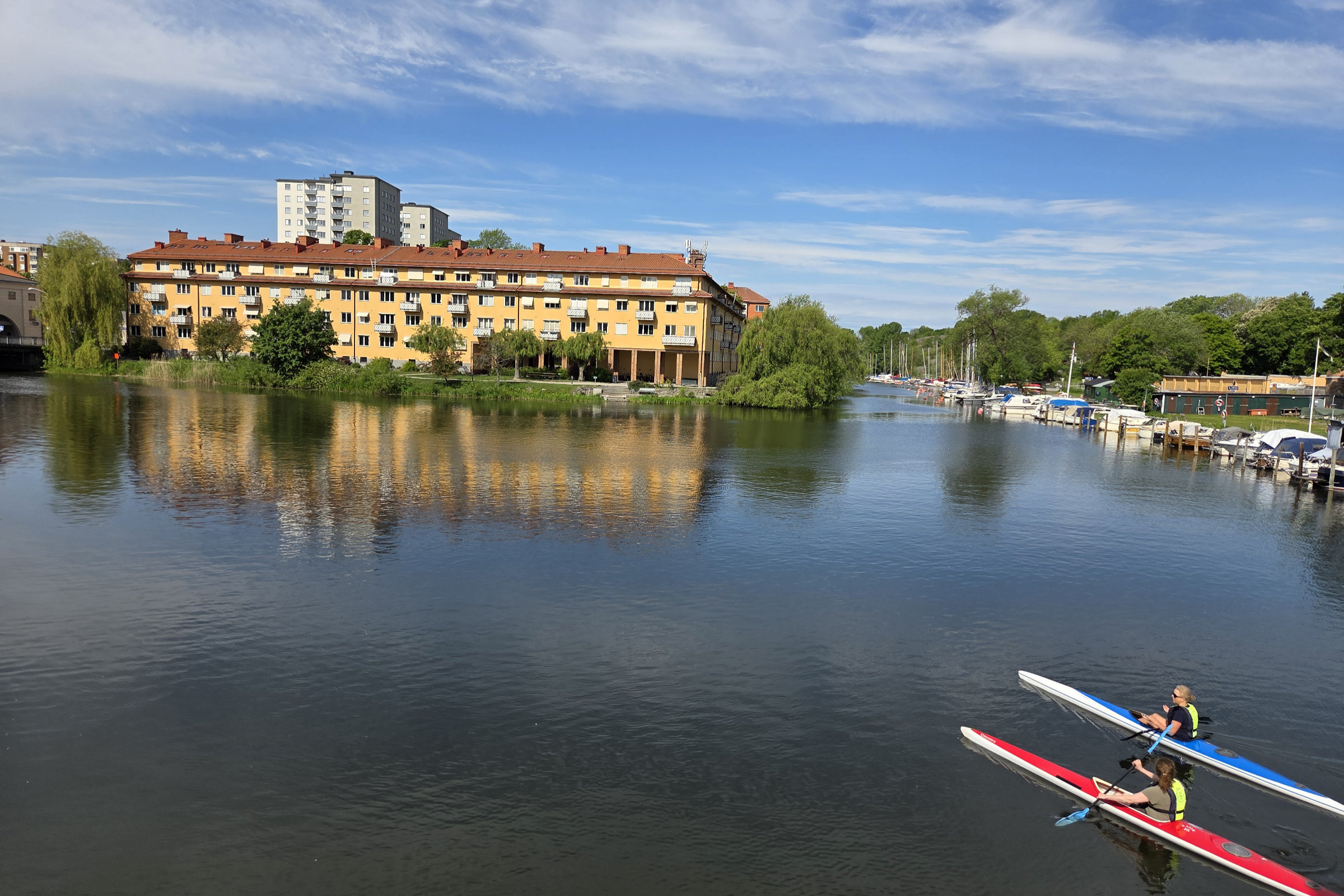
The easiest way to get around Stockholm is a mix of walking and public transport. The city centre is compact, so you can walk between Gamla stan, Norrmalm and Södermalm, and for longer trips one SL ticket covers the metro, buses, trams, commuter trains and the city ferries.
We’re two Stockholm locals, and this guide is how we’d tell a friend to get around: which option suits which trip, what tickets cost, and when a taxi is worth it.
Which way should you get around?
| Option | Best for | Cost |
|---|---|---|
| Walking | Gamla stan, Norrmalm, Södermalm and Östermalm | Free |
| Metro (tunnelbana) | Fast trips across the city and out to the suburbs | 43 SEK single, or a travelcard |
| Tram 7 | Djurgården’s museums, Skansen and Gröna Lund | SL ticket |
| Bus | Places the metro doesn’t reach, and night trips | SL ticket |
| SL ferry | Djurgården from Slussen (line 82) or Nybroplan (line 80) | SL ticket |
| Bike or e-scooter | Waterfront rides and hopping between neighbourhoods, spring to autumn | Rental, price shown in the app |
| Taxi, Uber or Bolt | Late nights, luggage and groups | Around 200–300 SEK within the city |
Common trips from Central Station
- Gamla stan: walk (about 10–15 minutes), or ride one stop on the red or green metro line.
- Södermalm: red or green line to Slussen. For SoFo, stay on the green line to Medborgarplatsen or Skanstull.
- Östermalm: one stop on the red line to Östermalmstorg.
- Djurgården (Vasa Museum, Skansen, Gröna Lund): tram 7 from Sergels torg, next to T-Centralen, or the line 82 ferry from Slussen. Read more about Djurgården.
- Arlanda Airport: see our guide to getting to and from Arlanda Airport, which compares every option.
How much does a ticket cost?
| Ticket | Adult price in 2026 | Discounted | Valid for |
|---|---|---|---|
| Single journey | 43 SEK | 26 SEK | 75 minutes, with unlimited transfers |
| 24-hour travelcard | 180 SEK | 110 SEK | 24 hours from first use |
| 72-hour travelcard | 360 SEK | 220 SEK | 72 hours from first use |
| 7-day travelcard | 470 SEK | 290 SEK | From 00:00 on the first day of travel |
The discounted fare is for under-20s, over-65s and students with a Swedish student ID card with the SL logo. A student ID from another country doesn’t count, so visiting students pay the full fare. Children under 7 travel free with a ticket holder. All single tickets cost the same, and travelcards cover the whole county.
- Pay as you go: tap a contactless Visa, Mastercard or American Express card, or a phone wallet such as Apple Pay or Google Pay, on the reader to buy a single ticket.
- App or SL card: the free SL app sells single tickets and travelcards. A reusable green SL card costs 50 SEK.
- No cash on board: you can’t buy a ticket with cash on buses, trams or trains.
- Ferries: all travelcards are valid on SL’s commuter ferries: 80 (Nybroplan to Djurgården, Nacka and Lidingö), 82 (Slussen–Skeppsholmen–Djurgården), 84 (Strömkajen and Slussen to Värmdö) and 89 (Klara Mälarstrand to Ekerö).
- Fines: travelling without a valid ticket costs 1,850 SEK plus a single fare.
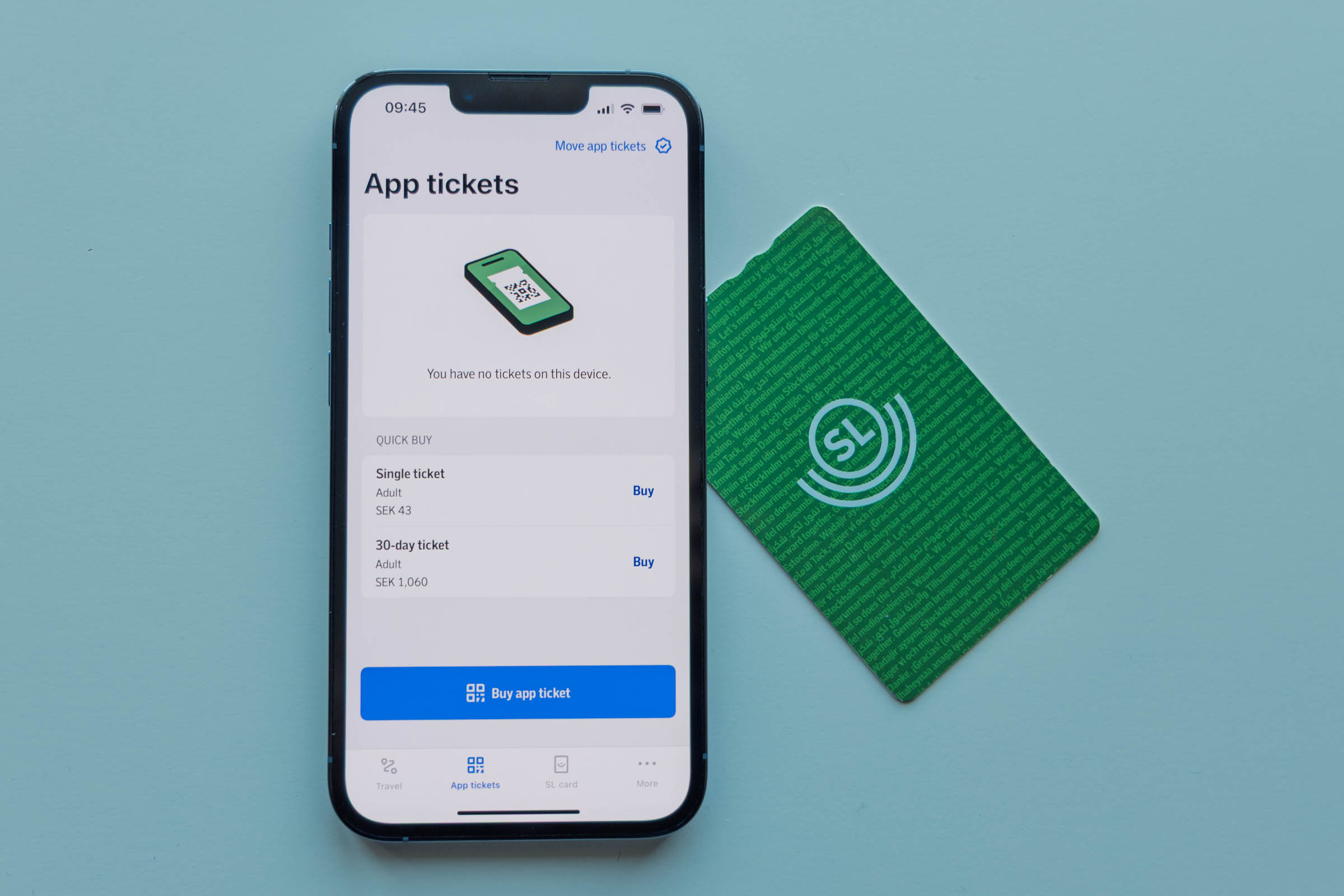
Not covered: SL tickets aren’t valid on the Arlanda Express. You can take the SL commuter train to Arlanda instead, but you then pay a 157 SEK passage fee on top of your ticket (free for under-18s), or 200 SEK for a single ticket that includes it. Our guide to getting to and from Arlanda Airport compares every option.
Not sure which ticket to buy? Our guide to which SL ticket is right for your Stockholm trip compares them for different trip lengths.
Public transport options
Metro (Tunnelbana)
The Metro, known as Tunnelbana in Swedish, is the fastest and most popular way to get around Stockholm. The metro network consists of three main lines: the Green, Red, and Blue lines, each with several branches that cover most parts of the city. The trains are modern and frequent, running every few minutes during peak hours. The metro is also famous for its art; many stations are decorated with sculptures, mosaics, and paintings, making it known as the world’s longest art gallery.
The metro runs from about 05:00 to 01:00 on weekdays and all night on Friday and Saturday nights, with fewer trains in the small hours. On other nights, night buses take over, and your SL ticket is valid on them too.
Buses
Stockholm’s bus network is extensive, covering areas not served by the metro, including the outer suburbs and some rural areas. Buses in the inner city run frequently, typically every 5-15 minutes, while buses in less busy areas may run less often. Most buses are equipped with digital screens that display the next stop, making it easy to know when to get off.
Trams

Trams are a convenient and scenic way to travel in Stockholm, especially if you’re visiting popular areas like Djurgården. The most well-known tram line is Spårväg City (Line 7), which runs from T-Centralen to Waldemarsudde, passing many attractions such as the Vasa Museum and Gröna Lund. There are also other tram lines, including Djurgårdslinjen (Line 7N) with its vintage cars, and Tvärbanan, which connects various neighborhoods outside the city center.
Commuter Trains (Pendeltåg)
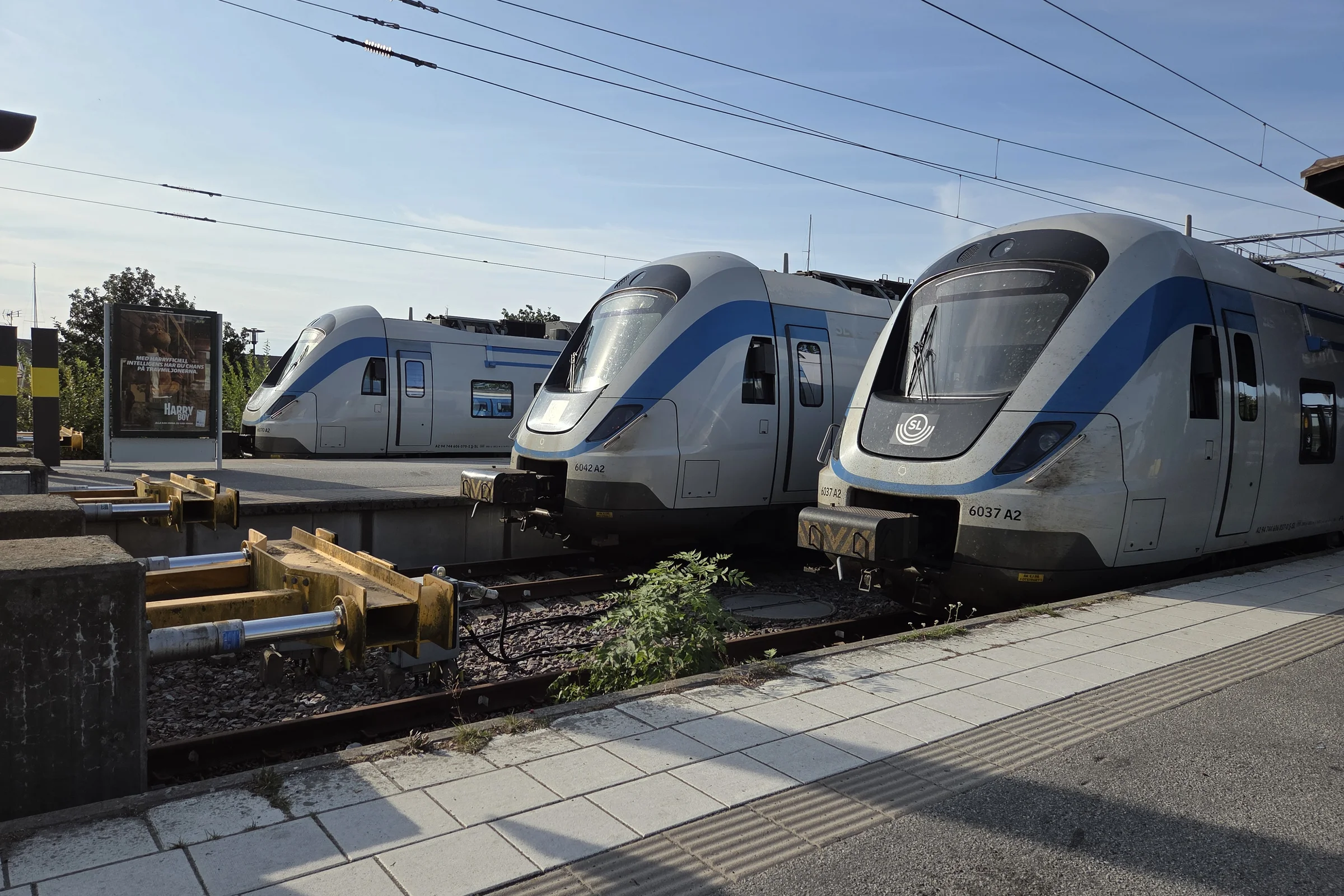
For longer distances or trips to the suburbs, Stockholm’s commuter trains, known as Pendeltåg, are a great option. The commuter train network extends far beyond the city, connecting Stockholm to nearby towns and regions. Trains run frequently, and most lines pass through Stockholm’s central station, T-Centralen, making transfers between different modes of transport easy.
Ferries

Stockholm has a vast archipelago, but SL’s commuter ferries mostly cover the inner waters. For visitors, the most useful one is the Djurgården ferry (line 82) from Slussen, and line 80 links Nybroplan with Djurgården, Nacka and Lidingö. To reach the outer archipelago you need Waxholmsbolaget’s boats, like M/S Vånö in the photo. They have their own tickets and aren’t covered by SL travelcards. Our guide to getting to the Stockholm archipelago by ferry explains routes and tickets.
Walking

Central Stockholm is compact and built around the water, so walking is often the quickest way between nearby neighbourhoods, and the best way to see the city. Gamla stan, Norrmalm, Södermalm and Östermalm all sit close together. Expect cobblestones in Gamla stan and a few hills on Södermalm. Our scenic walks around Stockholm are a good place to start.
Bikes and e-scooters

Bolt and Voi run the city-approved e-bike schemes, mostly in the inner city, and both also have e-scooters. Unlock a bike in the app and end your ride in a parking zone shown on the app’s map. For a full day or several days, a rental shop or a hotel bike is a better fit. Cycling is easiest from spring to autumn. See our guide to renting a bike in Stockholm.
Taxis, Uber and Bolt
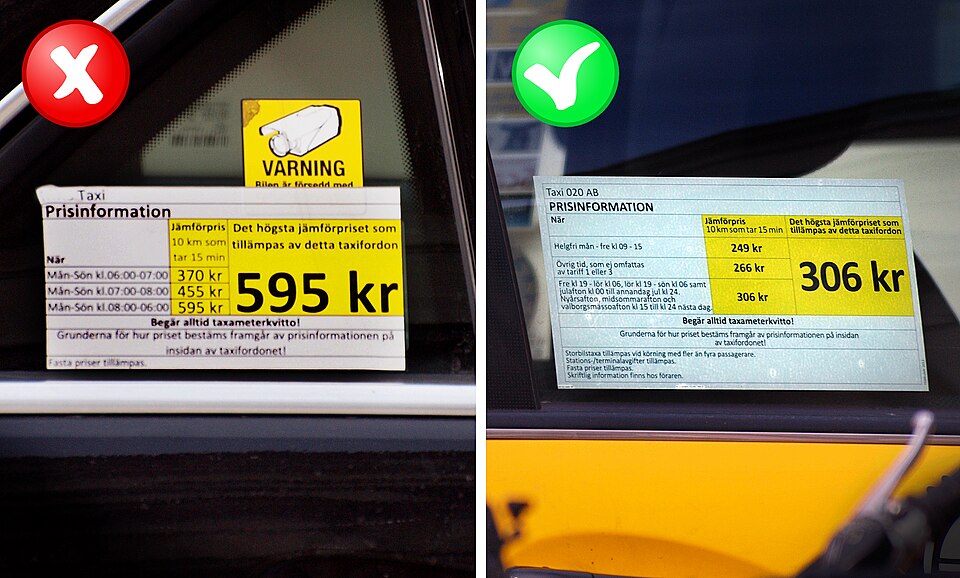
Taxis are expensive, and fares aren’t regulated, so prices vary between companies. A typical ride within the city costs around 200–300 SEK. Stick to the big companies (Taxi Stockholm, Sverigetaxi, Taxi Kurir and Topcab) or book Uber or Bolt in the app, and check the comparison price on the yellow sticker in the window before you get in. If it’s over 400 SEK for a standard taxi, choose another one.
Taxis make most sense late at night, with luggage, or when you’re travelling as a group. Our guide to taking a taxi in Stockholm compares the companies and their prices.
Final tips
- Plan Your Journey: Use the SL app or website to plan your route and check timetables. This will help you make the most of your time in Stockholm.
- Avoid Rush Hour: If possible, avoid traveling during peak hours (7-9 AM and 4-6 PM) to enjoy a more comfortable ride.
- Explore Beyond the City Center: Stockholm’s public transport system makes it easy to explore beyond the inner city, so take advantage of it and discover the beautiful suburbs and islands around Stockholm.
- Go by bike: From spring to autumn, cycling is a pleasant way to get between neighbourhoods and along the waterfront. See our guide to renting a bike in Stockholm.
- Check lift status: if you travel with a stroller, a wheelchair or heavy luggage, check the SL app for lifts that are out of service before you set off.
Frequently asked questions
Walk in the compact city centre and use public transport for longer trips. One SL ticket covers the metro, buses, trams, commuter trains and city ferries, and the metro (tunnelbana) is the fastest option.
The metro has three main lines, the Green, Red and Blue lines, each with several branches that cover most parts of the city. Trains are modern and frequent, running every few minutes during peak hours.
Many metro stations are decorated with sculptures, mosaics and paintings. Together they have made the metro known as the world’s longest art gallery.
Spårväg City (Line 7) runs from T-Centralen to Waldemarsudde, passing attractions such as the Vasa Museum and Gröna Lund. Djurgårdslinjen (Line 7N) runs with vintage cars.
Yes. SL-operated ferries are part of the public transport system and go to several archipelago and city islands. They are particularly useful for reaching Djurgården and the Stockholm Archipelago.
Peak hours are 7–9 AM and 4–6 PM. Avoid traveling then if you can for a more comfortable ride, and use the SL app or website to plan your route and check timetables.
Only on Friday and Saturday nights. On other nights the metro runs from about 05:00 to 01:00, and night buses cover the main routes in between. Your SL ticket is valid on night buses too.
Only when it’s worth it: late at night, with heavy luggage, or as a group. A ride within the city typically costs 200–300 SEK. Use one of the big taxi companies, Uber or Bolt, and check the comparison price on the window sticker before you get in.