Planning your Swedish Christmas Buffet (Julbord)?
While these festive feasts usually run from November through December, the best spots sell out months in advance. If you want to secure a table at the top venues, now is the perfect time to book. Check out our guide to the best Julbord in Stockholm to find your perfect match.
Traditional Swedish food is easy to find in Stockholm, and most classics stay on the menu all year. Swedes call this everyday home cooking husmanskost: simple, hearty dishes built on potatoes, fish, meat, dill and lingonberries.
This guide explains 11 dishes worth trying. For each one, you’ll learn what it is, how to order it and what it typically costs. Then, once you know what you want, our guide to the best Stockholm restaurants for traditional Swedish food shows you where to go.
Prices are approximate à la carte prices at classic Stockholm restaurants in 2026. Many places also serve these dishes for less at weekday lunch.
Swedish meatballs – the iconic classic
Rimmad lax (lightly salted salmon) – Nordic elegance
Sill (pickled herring) – A holiday tradition year-round
Wallenbergare – a veal patty named after a Swedish family
Pyttipanna – Swedish comfort food
Toast Skagen – Scandinavian seafood
Biff Rydberg – a comfort food classic from Stockholm
Kroppkakor – potato dumplings from southern Sweden
Raggmunk – Swedish potato pancakes
Stekt Strömming – fried herring with mashed potatoes
Blodpudding – the Swedish blood sausage
Swedish meatballs – the iconic classic
What it is: Köttbullar are small, pan-fried meatballs of beef and pork, seasoned with onion, white pepper and often a hint of allspice. They are also Sweden’s most famous dish, and for good reason.
How to order it: Look for köttbullar on the menu. They come with creamy mashed potatoes, brown cream sauce, lingonberries and pressgurka (quick-pickled cucumber). Add a little lingonberry to each bite, because the sweet-tart berries balance the rich sauce.
Typical price: Around 250–300 SEK at a sit-down restaurant. However, a weekday lunch portion often costs less.
Where to eat it: Find the best meatballs at our favorite restaurants for traditional Swedish food.
Rimmad lax (lightly salted salmon) – Nordic elegance
What it is: Rimmad lax is salmon cured in salt and sugar for a short time, usually a day or less. As a result, the fish stays soft but gets a gentle, salty taste. Gravlax, by contrast, cures for longer and also includes dill.
How to order it: Order it as a main course. Then expect it to come with stuvad potatis (potatoes in a creamy dill sauce) or boiled potatoes with melted butter. It’s also lighter than most classics, so it works well for lunch.
Typical price: Around 290–340 SEK as a main course.
Where to eat it: See which classic Swedish restaurants in Stockholm we recommend.
Sill (pickled herring) – A holiday tradition year-round
What it is: Sill is pickled herring, and Swedes eat it at every big holiday: Easter, Midsummer and Christmas. However, many restaurants serve it all year. The herring sits in a sweet vinegar brine with flavors like onion (löksill), mustard (senapssill) or dill. Matjessill is a softer, sweeter style.
How to order it: Order it as a starter. For example, the classic choice is S.O.S., short for smör, ost och sill (butter, cheese and herring). It comes with crispbread and boiled potatoes, and many Swedes add a small glass of snaps. Some menus also offer a plate with two or three herring flavors, so you can compare them.
Typical price: Around 150–220 SEK for a herring starter. An S.O.S. plate costs around 200–290 SEK.
Where to eat it: Try it at one of the best places for traditional Swedish food.
Wallenbergare – a veal patty named after a Swedish family
What it is: Wallenbergare is a soft, rich patty of finely ground veal, egg yolks and cream, rolled in breadcrumbs and fried in butter. It takes its name from the Wallenberg family, one of Sweden’s most powerful business dynasties. Many Swedes see it as the most luxurious dish in traditional home cooking.
How to order it: First, expect it with buttery mashed potatoes, green peas, lingonberries and melted brown butter. Some restaurants also offer a fish version. Since the patty is large and rich, you won’t need a starter.
Typical price: Around 270–320 SEK.
Where to eat it: Our guide to traditional Swedish restaurants lists great places to try it.
Pyttipanna – Swedish comfort food
What it is: Pyttipanna (or pytt i panna) means “small pieces in a pan”. It’s a hash of diced potatoes, onion and meat, fried until golden. Swedes originally made it from leftovers. Today, however, restaurants often use beef, ham or sausage.
How to order it: It almost always comes with a fried egg or a raw egg yolk on top, plus pickled beetroot on the side. Then break the yolk and stir it into the hash. Many restaurants also offer a vegetarian version.
Typical price: Around 220–280 SEK.
Where to eat it: Pick a place from our Stockholm restaurant guide for Swedish food.
Toast Skagen – Scandinavian seafood
What it is: Toast Skagen is butter-fried white bread topped with hand-peeled shrimp in mayonnaise, crème fraîche and dill. Restaurateur Tore Wretman created it in the late 1950s. He then named it after Skagen, a fishing port in Denmark. Most versions also add a spoonful of löjrom (vendace roe).
How to order it: Order it as a starter or as a light lunch on its own. It pairs well with a glass of white wine or a light lager. If the menu says Kalix löjrom, it’s a premium roe from northern Sweden, so the price goes up.
Typical price: Around 230–290 SEK.
Where to eat it: Find it at the best Stockholm restaurants for traditional Swedish food.
Biff Rydberg – a comfort food classic from Stockholm
What it is: Biff Rydberg is Stockholm’s own luxury hash. Chefs fry cubes of beef tenderloin, potatoes and onion separately and then plate them side by side. The dish comes from Hotel Rydberg, a famous Stockholm hotel that no longer exists.
How to order it: It comes with a raw egg yolk and a mustard or horseradish cream. So mix a little of everything in each bite. Because it uses tenderloin, it’s one of the most expensive classics on the menu.
Typical price: Around 350–430 SEK.
Where to eat it: Look for it at our recommended traditional restaurants.
Kroppkakor – potato dumplings from southern Sweden
What it is: Kroppkakor are large, boiled potato dumplings from southern Sweden, especially Småland and Öland. The classic filling is salted pork and onion. However, many Stockholm restaurants also serve a vegetarian version with mushrooms.
How to order it: They come with melted butter or a little cream, and also lingonberries. Cut each dumpling open so the filling mixes with the butter. Two dumplings make a very filling meal.
Typical price: Around 230–290 SEK.
Where to eat it: Check our list of restaurants for Swedish food for where to try them.
Raggmunk – Swedish potato pancakes
What it is: Raggmunk is a thin potato pancake made from grated raw potato in a simple batter. When you fry it in butter, it turns crispy and golden at the edges but stays soft in the middle.
How to order it: Restaurants serve it with crispy fried pork belly (stekt fläsk) and lingonberries. Meanwhile, the salty pork and sweet berries balance the mild potato. You’ll often find raggmunk on weekday lunch menus, so check the lunch board too.
Typical price: Around 180–260 SEK.
Where to eat it: Browse our favorite places for traditional Swedish food.
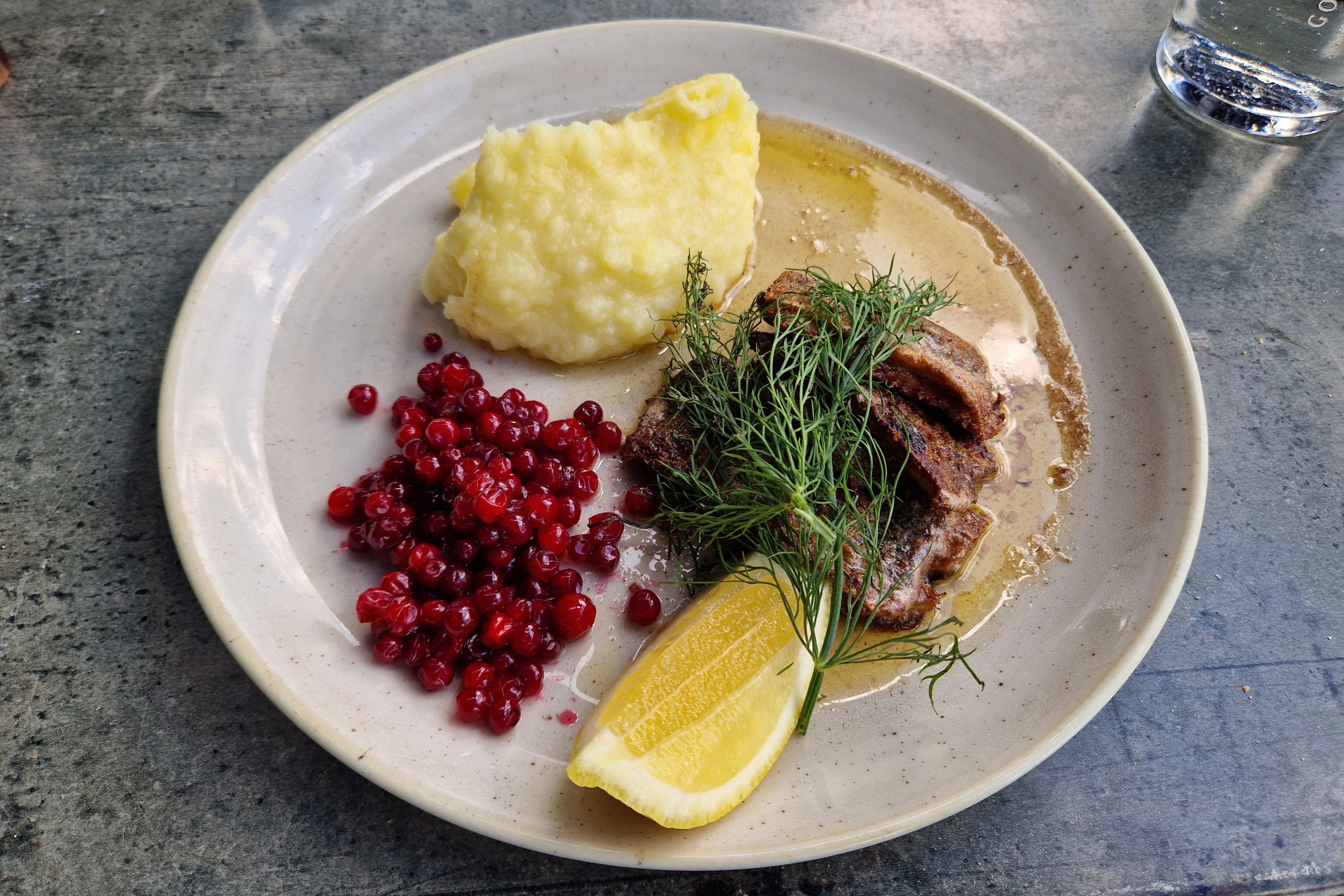
Stekt Strömming – fried herring with mashed potatoes
What it is: Strömming is Baltic herring, a smaller cousin of the Atlantic herring used for sill. For stekt strömming, cooks fillet the fish, coat it in rye flour or breadcrumbs, and then fry it in butter until crispy. Because it was cheap and plentiful, it has been everyday food along the Stockholm coast for centuries.
How to order it: Order stekt strömming med potatismos, fried herring with mashed potatoes. It comes with lingonberries and often melted butter or pressgurka. You’ll also find it at casual fish stalls, where vendors fold it into a soft flatbread wrap.
Typical price: Around 220–280 SEK at a restaurant. A street-stall wrap costs less.
Where to eat it: See where to eat traditional Swedish food in Stockholm.
Blodpudding – the Swedish blood sausage
What it is: Blodpudding is Swedish blood pudding, made from pig’s blood, rye flour and spices like marjoram. Unlike most blood sausages, it comes as a baked loaf rather than in a casing. Instead, restaurants slice it and fry it until crispy on the outside.
How to order it: It always comes with lingonberries, and often with fried bacon. The rich, slightly sweet taste divides opinion, so share a plate if you’re unsure. You’ll mostly find it on lunch menus, too.
Typical price: Around 150–220 SEK.
Where to eat it: Find a lunch spot in our guide to Stockholm restaurants for Swedish food.
Tips for ordering traditional Swedish food in Stockholm
Before you sit down, a few local habits will help you order with confidence.
- Eat the classics at lunch. On weekdays, many restaurants serve dagens lunch (dish of the day), usually between 11:00 and 14:00. It costs around 135–185 SEK and often includes salad, bread, water and coffee.
- Look for “husmanskost” on the menu. In other words, it signals traditional home-style dishes like the ones in this guide.
- Expect lingonberries with almost everything. Swedes use them the way other cuisines use ketchup or chutney.
- Book ahead on weekends. The most popular traditional restaurants fill up quickly, especially on Friday and Saturday evenings.
- Tipping is optional. Service is part of the price, but many guests round up for good service.
Where to eat traditional Swedish food in Stockholm
Now that you know what to order, it’s time to pick a table. Our guide to the best Stockholm restaurants for traditional Swedish food covers our favorite places, from historic dining rooms to budget-friendly spots.
Also, if you visit in November or December, don’t miss a Swedish Christmas buffet. Start with our simple guide to julbord food, and then book a table at one of the best julbord in Stockholm.