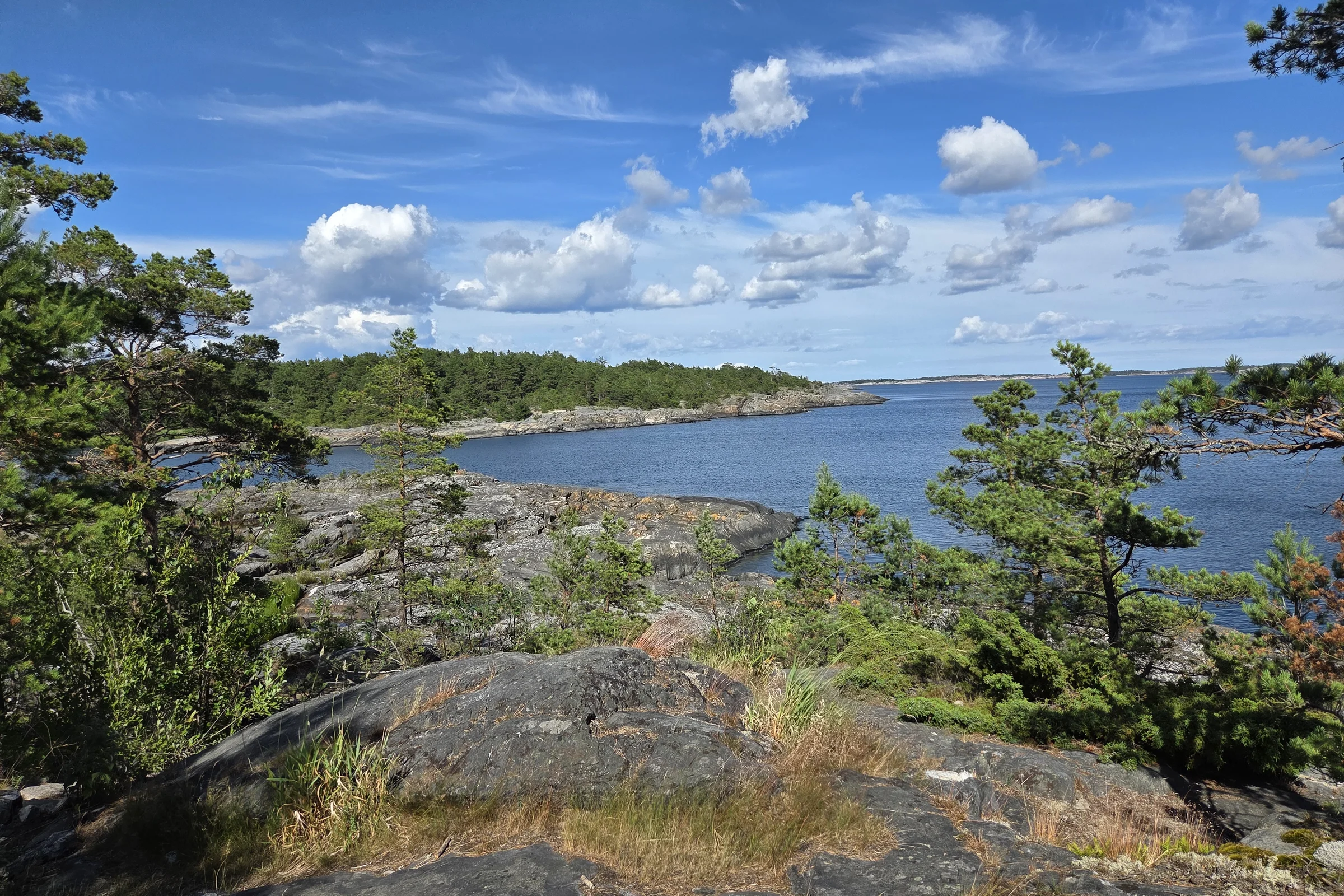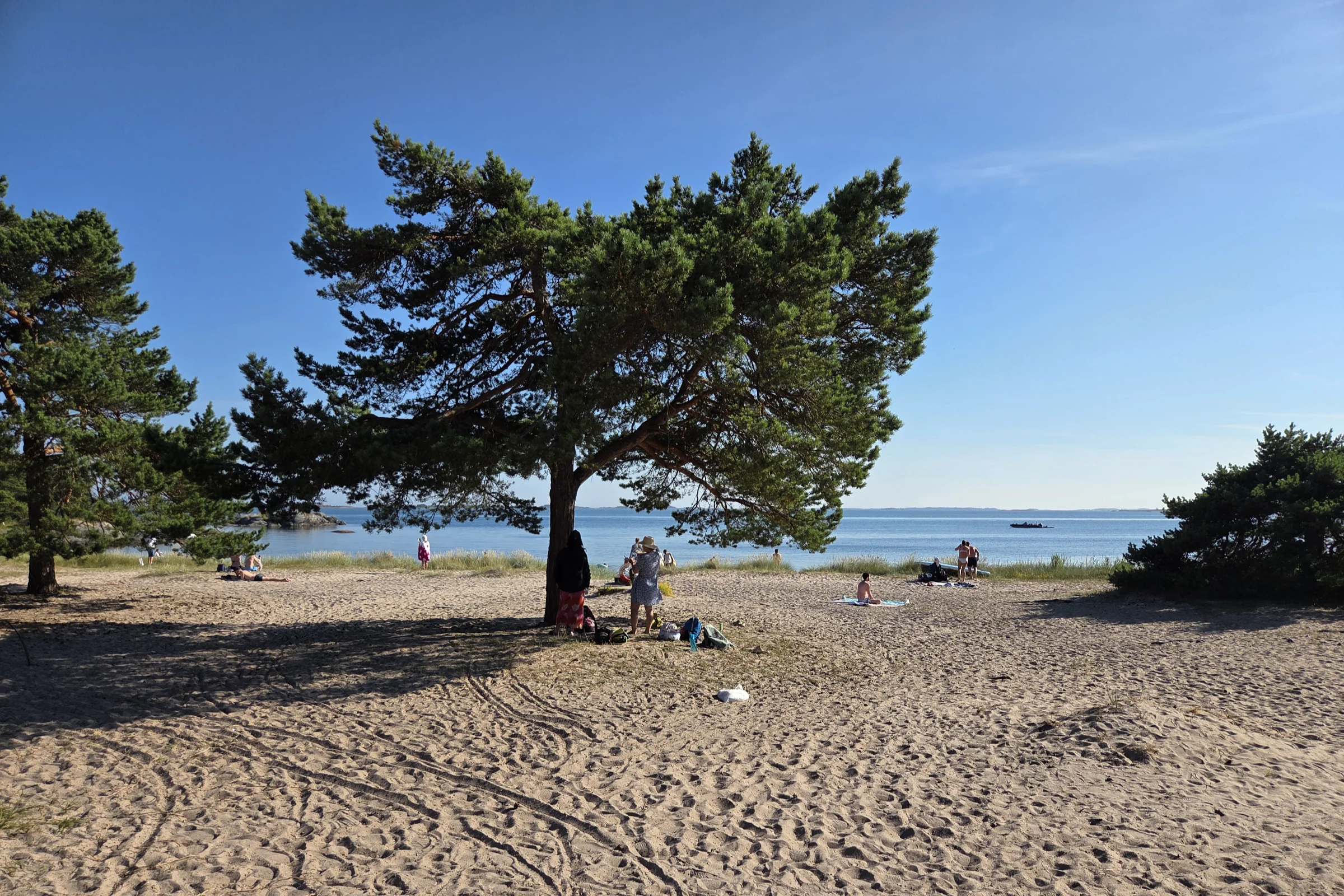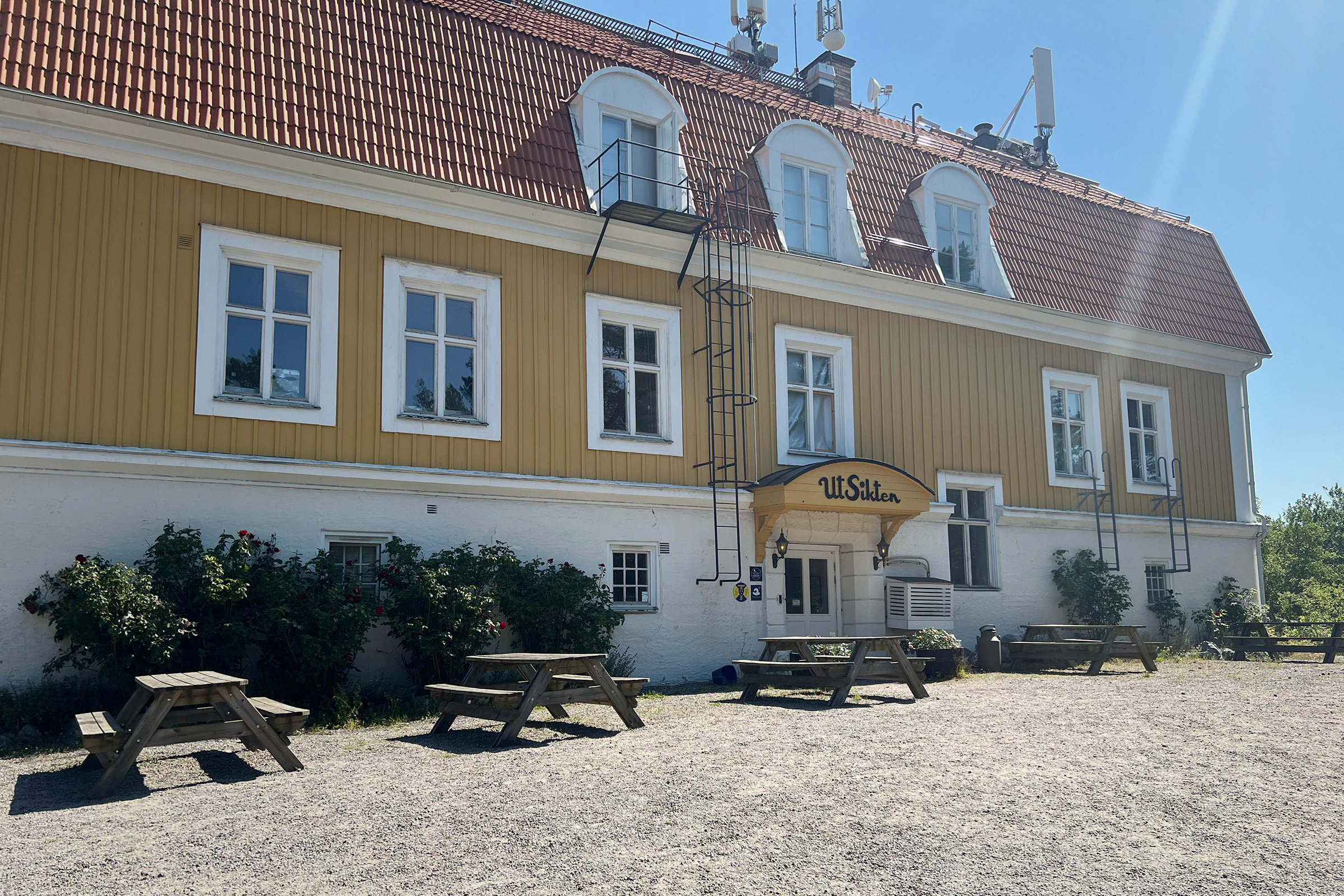
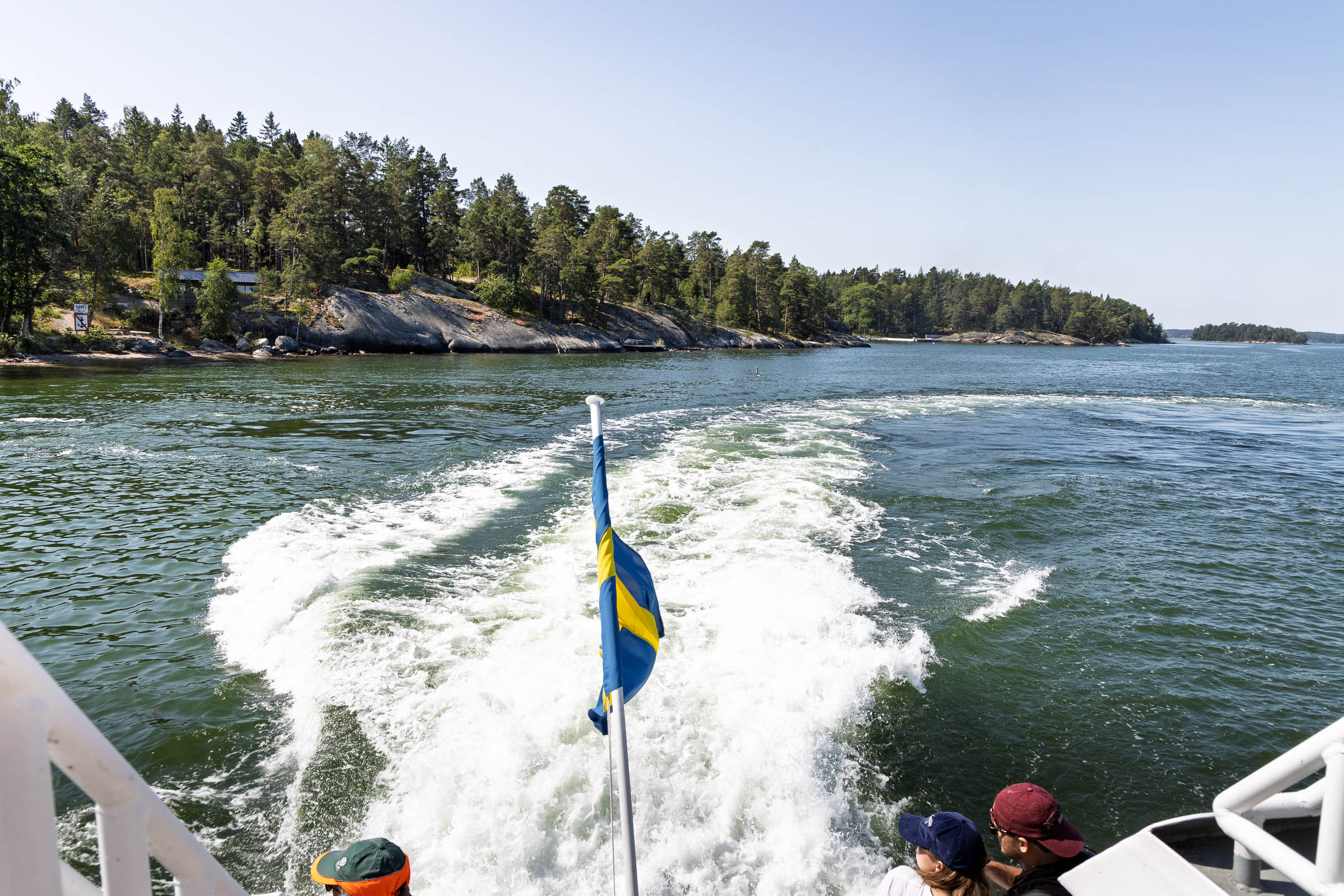
Most visitors to Stockholm don’t realize that some of Sweden’s most beautiful nature begins just 30 minutes away by ferry. The closest island, Fjäderholmarna, makes for an easy half-day trip, while the rest of the 30,000-island chain stretches out into the Baltic Sea, with around 100 islands reachable by public ferries.
The beauty of exploring Stockholm’s archipelago is that it’s incredibly accessible. Regular ferries run year-round to many islands, and during summer months, you’ll have boats departing every hour or so to the most popular destinations. For Waxholmsbolaget’s public ferries, no advance booking is needed, just show up at the dock and hop on. For commercial boats like Strömma’s Cinderella routes, tickets should be booked in advance, especially in summer.
Ferry companies and routes
Two main ferry operators will get you out to the islands: Waxholmsbolaget (the local public transport company) and Cinderella Boats (run by Strömma, geared toward visitors). Each has its advantages depending on where you want to go and how you prefer to travel. The most popular islands include Fjäderholmarna, Grinda, Vaxholm, and Sandhamn; each offering its own character and attractions.
| Comparison | Waxholmsbolaget | Cinderellabåtarna (Strömma) | Fjäderholmslinjen |
|---|---|---|---|
| Type | Public transport | Tourist / visitor | Single-route tourist |
| Departure point | Strömkajen (also Slussen and other stops) | Strandvägen | Slussen |
| Season | Year-round | May – September | May – mid-September |
| Booking required | No, pay on board or via SL app | Recommended, especially Jun–Aug | No, pay on board |
| SL travel card accepted | Yes (within SL zone) | No | No |
| Destinations | Widest range (~100 islands) | Popular islands (Fjäderholmarna, Grinda, Sandhamn, Vaxholm) | Fjäderholmarna only |
| Journey speed | Slower (more stops) | Faster (fewer stops) | Direct |
| Price to Fjäderholmarna | 168 SEK return (2026) | 205 SEK return (2026) | 205 SEK return (2026) |
| Payment | Card or SL ticket (cashless) | Card (cashless) | Visa/Mastercard only (cashless) |
| Bikes allowed | Yes (space permitting) | Varies by boat | – |
| Wi-Fi | Yes | Yes | – |
| Best for | Budget travellers, SL cardholders, off-season visits, reaching remote islands | First-time visitors wanting speed and simplicity | Quick trips to Fjäderholmarna from Slussen |
Waxholmsbolaget
Waxholmsbolaget is Stockholm’s public transport company for the archipelago. Think of it as the maritime equivalent of the city’s buses and metro. Most locals rely on Waxholmsbolaget for their island trips, and it’s the backbone of year-round archipelago transport.
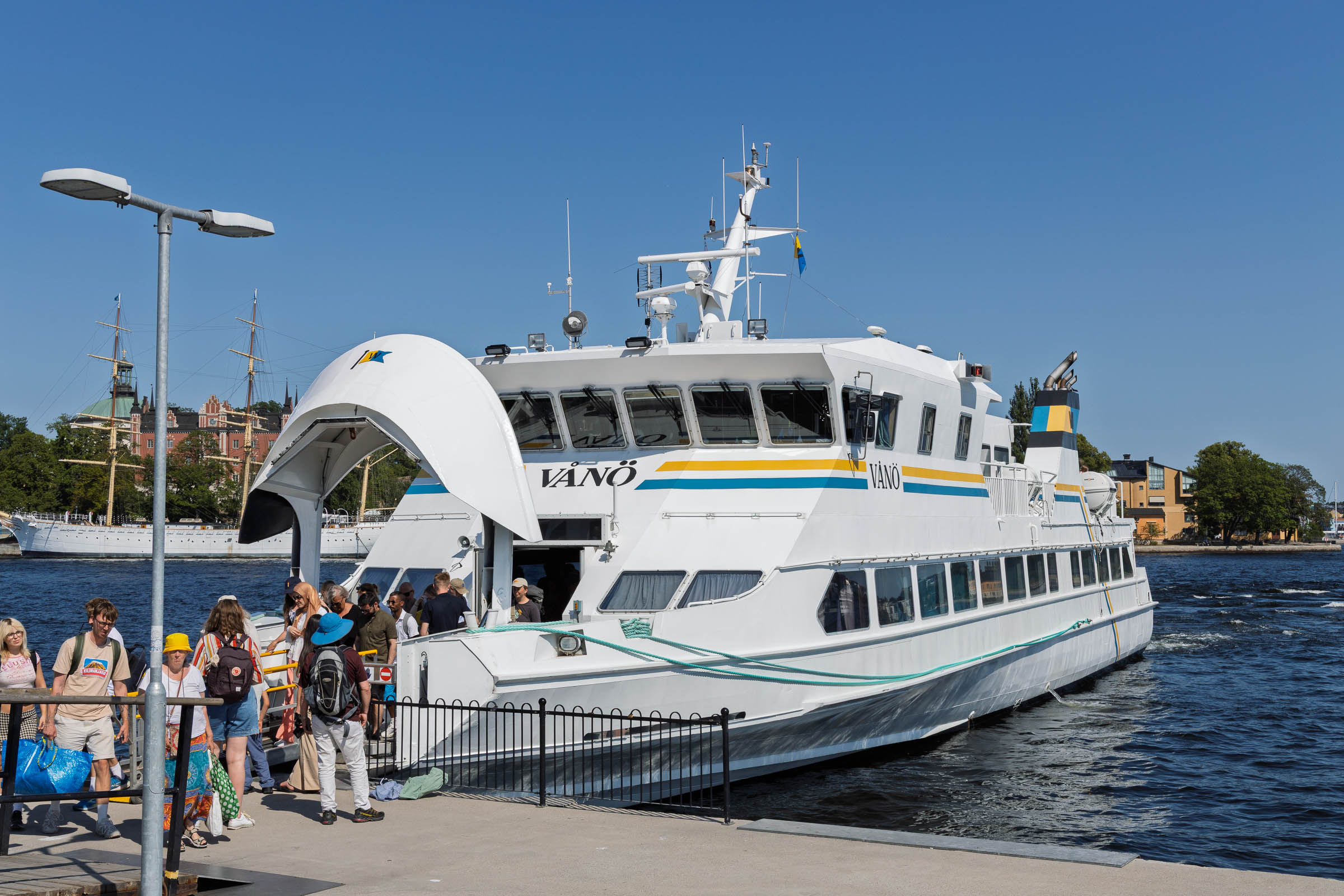
Their ferries depart from Strömkajen quay, in front of the Grand Hôtel and National Museum, though you can also board at other stops along the route, including the popular Slussen terminal. One of Waxholmsbolaget’s strengths is that you’re not limited to a single departure point.
First-time visitors often find Waxholmsbolaget’s system a bit overwhelming. The company operates numerous ferry lines with different schedules, and some islands have multiple docks (Grinda, for example, has both northern and southern stops), which can make route planning confusing. The official website’s (waxholmsbolaget.se) trip planner is only available in Swedish, so most visitors find it easier to use the SL app, which covers all Stockholm public transport including archipelago ferries.
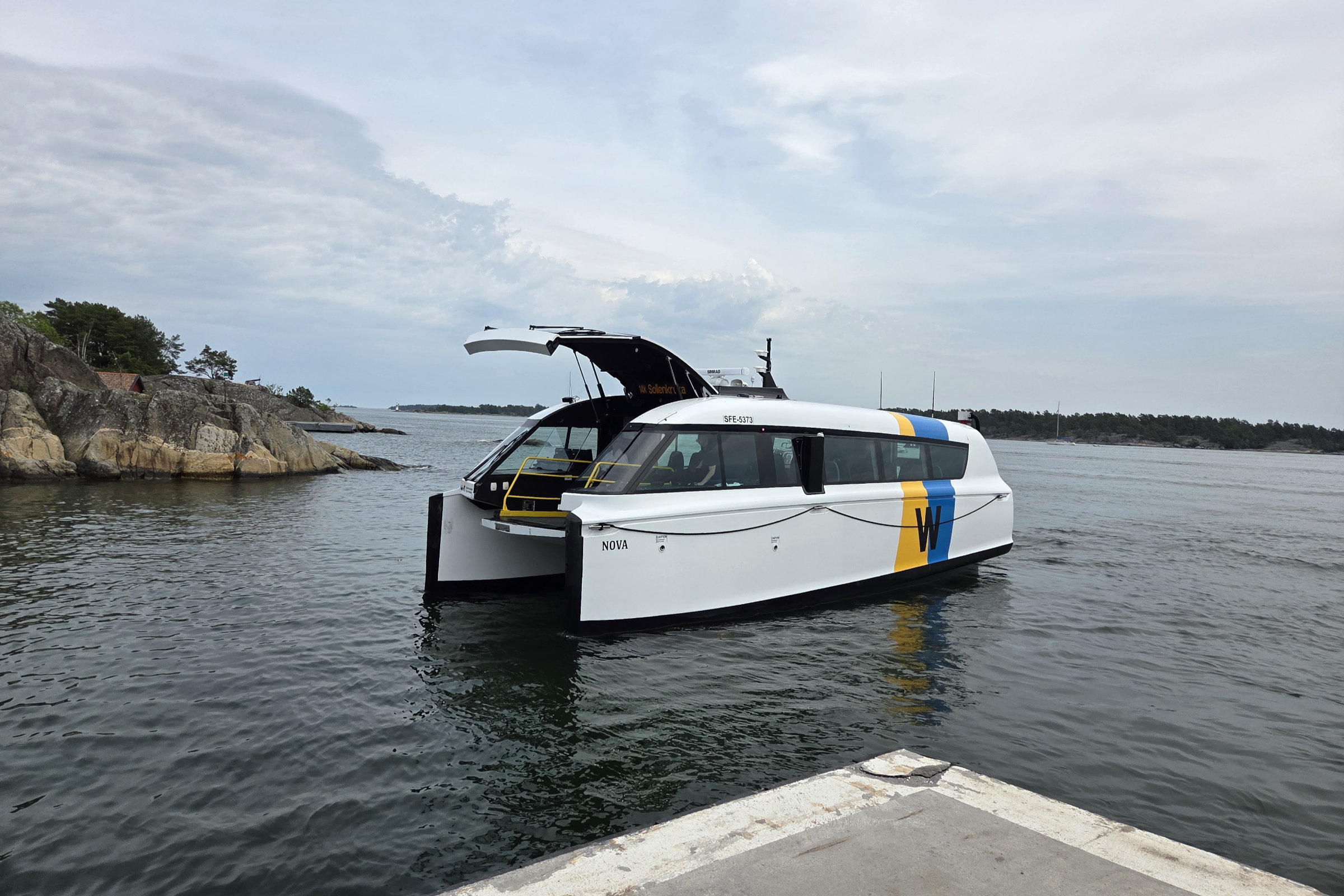
During summer 2026, Waxholmsbolaget is running a new hydrofoil, Nova, on the route between Sollenkroka and the piers on Möja (Södermöja, Möja Ström, Berg). The trip between Sollenkroka and Möja Berg takes about 30 minutes on Nova, compared with 1 hour 10 minutes on the traditional boats.
Nova has noticeably fewer seats than a standard Waxholmsbolaget ferry, and the difference is the ride itself with less rocking, a smoother ride, and the sense of skimming rather than plowing through the water. Seats often sell out in high season, so reserve one in advance through the SL app (see the FAQ below for details).
Why choose Waxholmsbolaget: They offer the most authentic local experience and the most budget-friendly option. If you already have an SL travel card, you can use it to travel all the way to Vaxholm. They also cover the widest range of destinations and run year-round, which is essential if you’re visiting during off-season (October-April), when other operators shut down.
Cinderellabåtarna
Cinderellabåtarna caters specifically to visitors and operators during the peak archipelago season from May through September. Their ferries depart from Strandvägen 8, right in front of Hotel Diplomat – an easy location to reach from central Stockholm.
The key advantage of Cinderellabåtarna is efficiency. Since they’re designed for tourists rather than local commuters, they make fewer stops and take more direct routes to popular destinations. This typically means faster journey times and a more straightforward travel experience for first-time archipelago visitors.
Why choose Cinderellabåtarna: Faster travel times and a more visitor-friendly experience with fewer stops along the way. The boats are geared toward tourists, so the staff are accustomed to helping international visitors navigate the archipelago. Perfect for those who want to maximize their island time during a Stockholm visit.
Ferries to Fjäderholmarna
Fjäderholmarna is the closest island in Stockholm Archipelago – just30 minutes from the city – and a popular choice for a quick getaway. If you’re planning a visit, you have three ferry options: Strömma, Fjäderholmslinjen and Waxholmsbolaget. Both Strömma and Fjäderholmslinjen stop at the northern docks, where the restaurants and shops are located, so that’s where you’ll want to get off. Waxholmsbolaget takes you to the southern docks (Ångbåtsbryggan), which is a short walk from the main area.
Strömma to Fjäderholmarna
Strömma operates a dedicated service to Fjäderholmarna from Strandvägen, running from late June (typically after Midsummer) through mid-September. Their boats dock at the northern part of the island, right by Fjäderholmarna’s restaurants, craft shops, and main attractions.
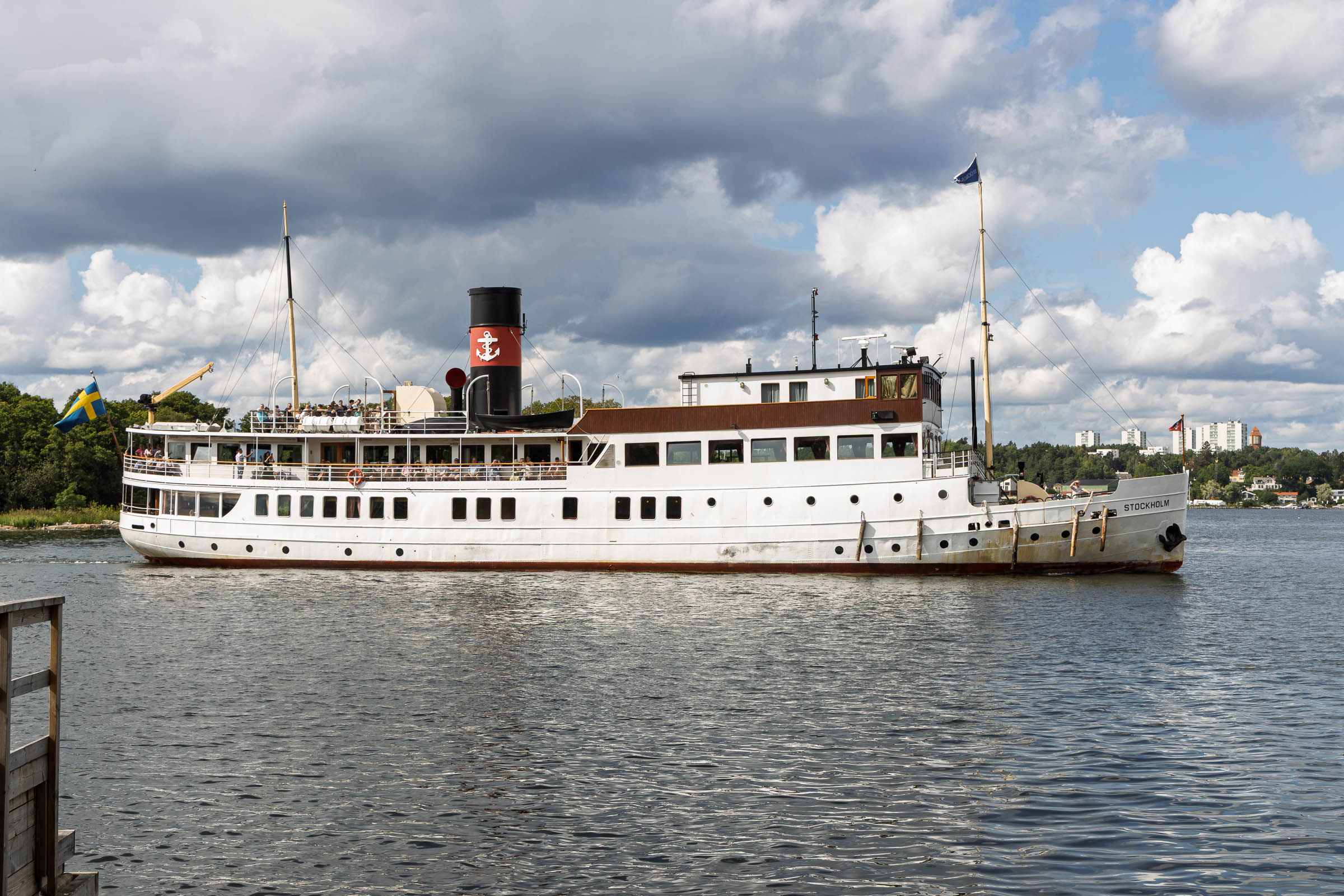
This is a straightforward tourist service with fixed routes and clear signage—no need to navigate detailed timetables or worry about choosing the wrong dock. The boats are geared toward international visitors, with onboard announcements in English and a relaxed, sightseeing-friendly setup.
Price: 205 SEK (round-trip, 2026 year’s prices)
Why choose Strömma: The most direct route to Fjäderholmarna’s main attractions, departing from the convenient Strandvägen location. Ideal if you’re already planning other Strömma tours or prefer a dedicated tourist service.
Fjäderholmslinjen to Fjäderholmarna
Fjäderholmslinjen goes only between Stockholm and Fjäderholmarna. They leave from the Slussen dock every hour, from May to mid September. You cannot reserve seating in advance, just go down to the dock and pay at the terminal. They only accept Visa and Mastercard, you cannot pay with cash.
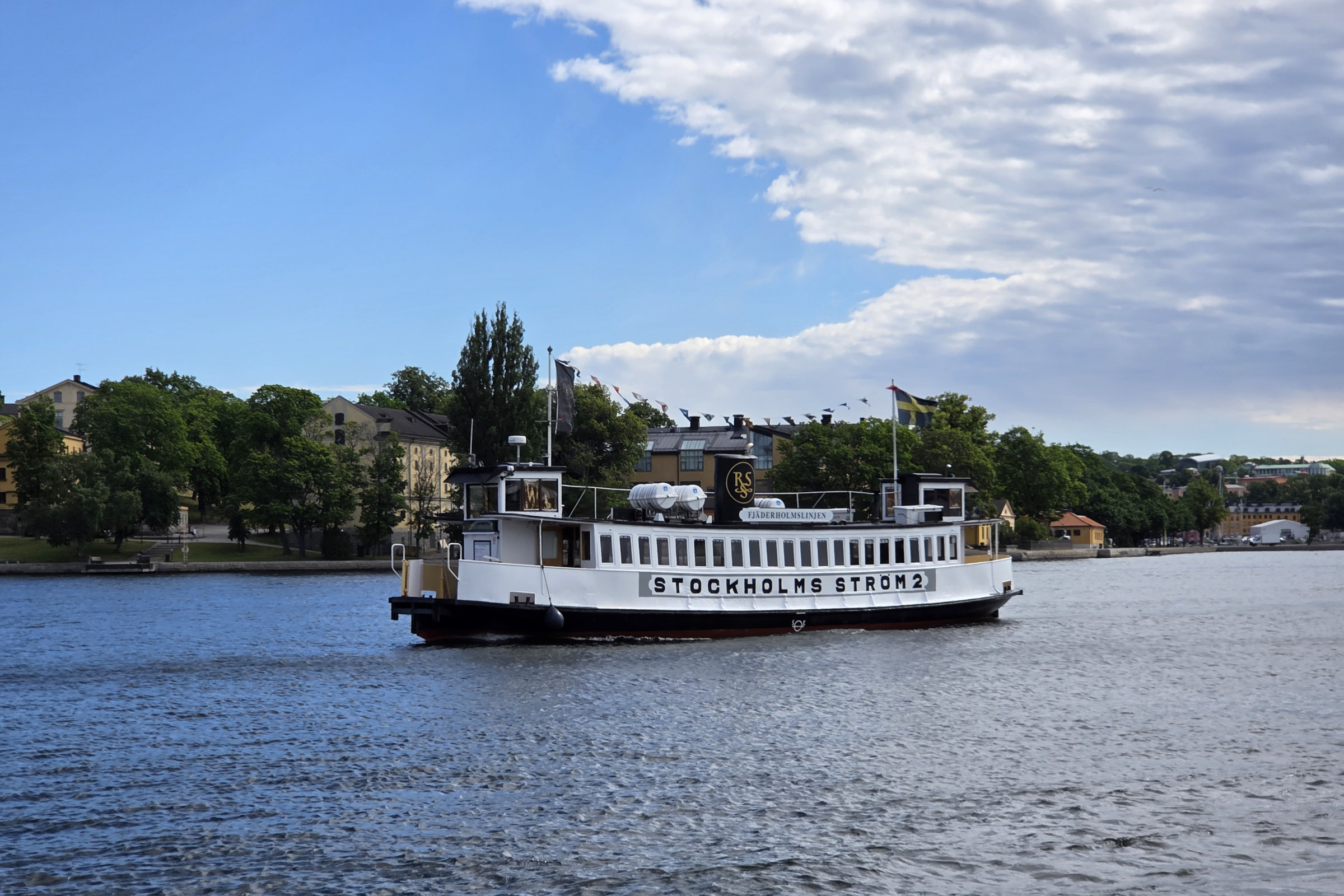
Price: 205 SEK (round-trip, 2026 year’s prices)
Why choose Fjäderholmslinjen: The most convenient option if you’re starting from Slussen, with hourly departures and no need to book ahead. Simply show up and board. Perfect for spontaneous trips to the closest archipelago island.
Waxholmsbolaget to Fjäderholmarna
Waxholmsbolaget mainly serves year-round traffic to and from the islands, including residents and commuters. When visiting Fjäderholmarna, we generally recommend taking one of the other boats instead, as Waxholmsbolaget has fewer departures and docks at the southern side of the island, which is a few minutes’ walk from the restaurants and shops.
Price: 168 SEK (round-trip, 2026 year’s prices)
Why choose Waxholmsbolaget: If you already have an SL travel card, taking Waxholmsbolaget is the most budget-friendly way to reach Fjäderholmarna. It’s also the only service that runs year-round, making it your best option during the off-season.
Taxi boats
For those wanting maximum flexibility or traveling to islands without regular ferry service, taxi boats offer a premium alternative to the scheduled ferries. While significantly more expensive, they provide door-to-door service between any points in the archipelago and can be particularly worthwhile for groups or special occasions.
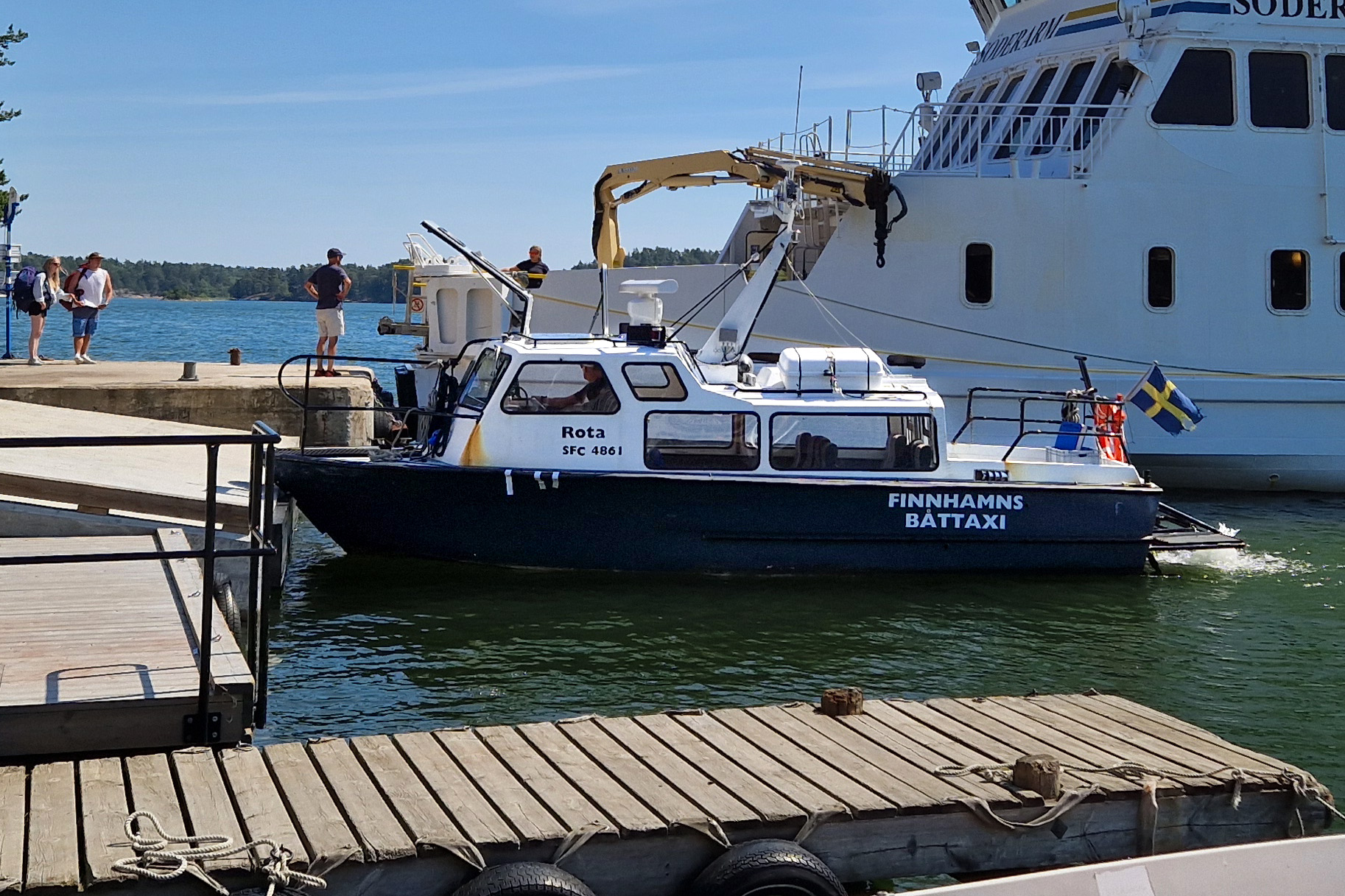
Taxi boats operate on-demand throughout the archipelago and can take you virtually anywhere with a suitable dock or landing spot. This makes them ideal for reaching private islands, remote restaurants, or simply creating your own custom island-hopping itinerary without being tied to ferry timetables. They’re also a lifeline if you miss the last ferry back to Stockholm – though this convenience comes at a premium.
Pricing typically runs around 2,500-3,000 SEK for a one-hour journey, but costs vary based on distance, boat size, and time of day. Evening and weekend rates are often higher. The expense becomes more reasonable when split among a group – a taxi boat for eight people isn’t dramatically more per person than individual ferry tickets, especially when you factor in the time savings and convenience.
Several established companies serve the archipelago, including Stavsnäs Båttaxi, Stockholm Watertaxi and Gustavus Taxiboats. Most can be booked by phone or through their websites, and many offer fixed-price packages to popular destinations. During peak summer season, it’s wise to book ahead, particularly for evening returns or weekend travel.
For special occasions, such as anniversaries, proposals, or simply treating yourself to a more luxurious archipelago experience, taxi boats offer an intimate way to see the islands that scheduled ferries simply can’t match.
How to use semaphores
If you’re visiting islands in the Stockholm Archipelago that are served by Waxholmsbolaget ferries, you’ll likely come across the semaphore system. It’s a simple but essential way to signal passing ferries that you want to board.
A semaphore is a large paddle or disc mounted on the dock. If it’s not raised, the ferry may not stop, unless passengers are already scheduled to disembark there. Even at busier docks, it’s best to raise the semaphore just to be sure.
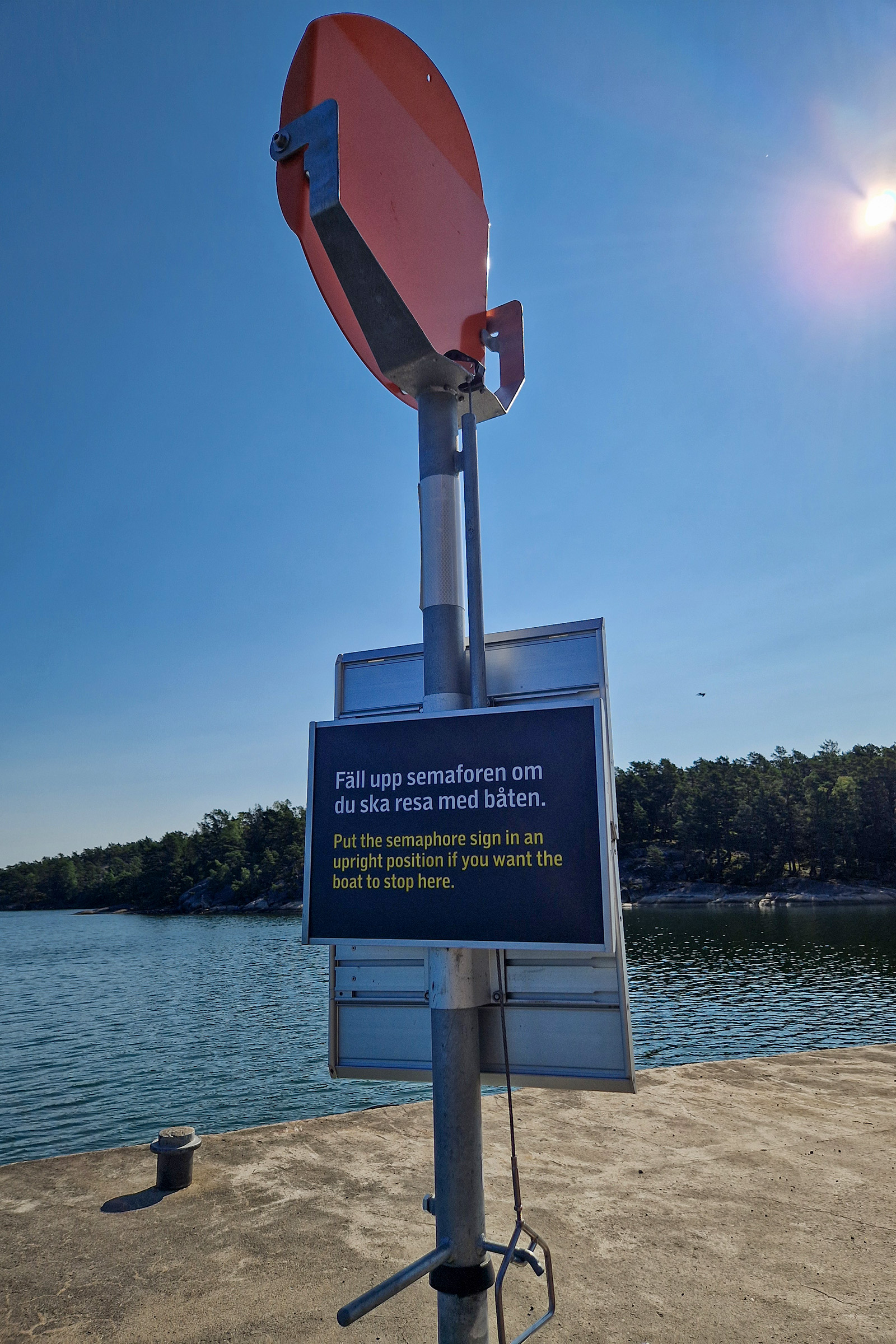
When you arrive at the dock, locate the semaphore (usually near the ferry landing) and raise it fully upright. Keep it up until the ferry is clearly approaching – some semaphores stay up on their own, while others need to be held or secured.
The system might seem old-fashioned, but it works: a raised semaphore tells the captain to slow down and dock. During peak summer season on popular routes, this is less critical since ferries will often stop regardless, but on quieter routes or in the off-season, failing to raise the semaphore can be the difference between catching your ferry and waiting for hours for the next one.
Most major stops like Vaxholm, Grinda, and Sandhamn don’t require semaphore use since they’re regular scheduled stops with ferry staff, but it’s worth familiarizing yourself with the system if you’re planning to explore the more remote corners of the archipelago.
Practical tips
How early to arrive at the docks
The boats usually arrive 5-10 minutes before departure. Aim to be at the dock 20-30 minutes before departure to get a good spot in the line. This increases your chances of getting a better seat, while keeping your wait reasonably short.
What happens if you miss the last boat back
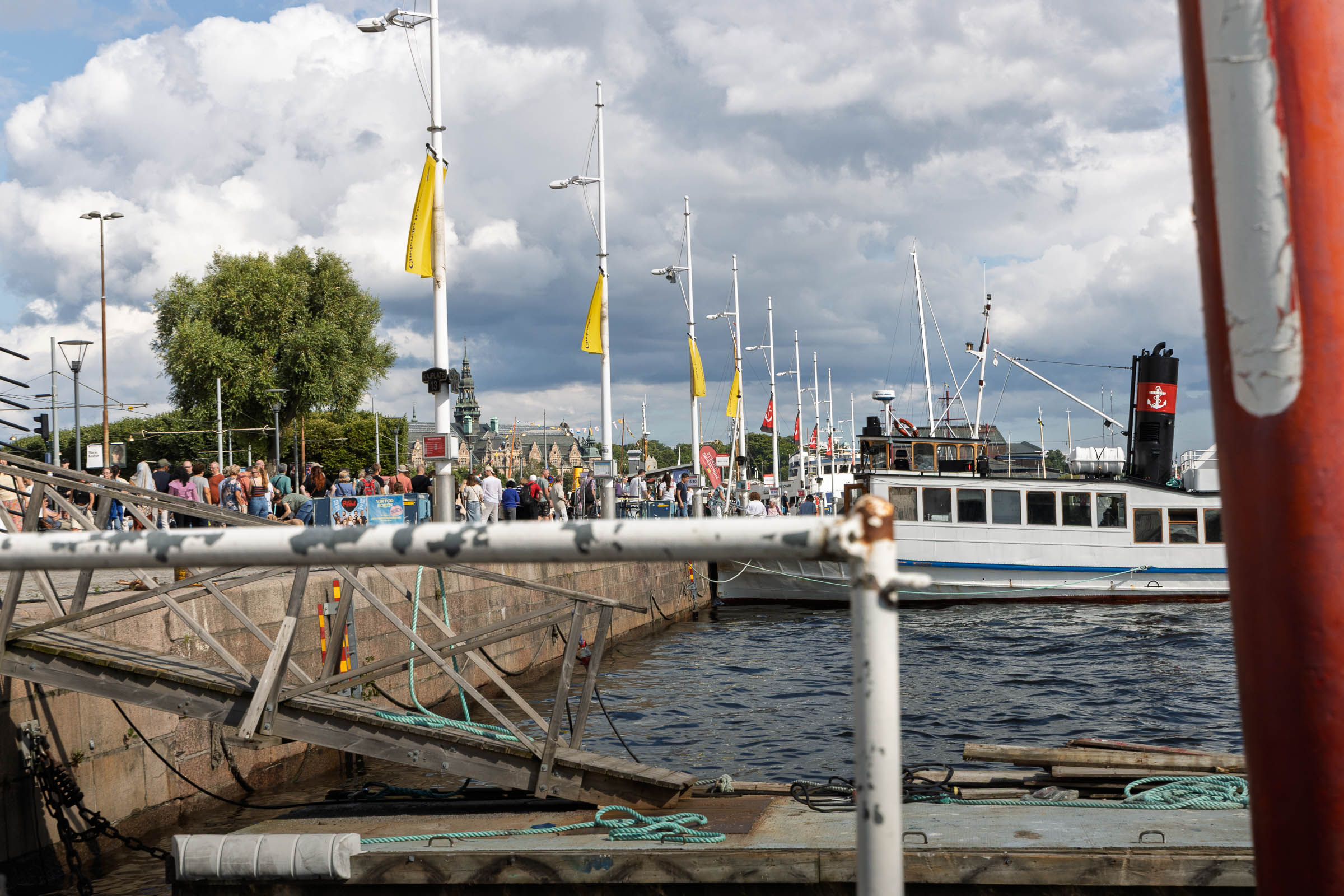
Always check the timetable for departures back to Stockholm before heading to the archipelago. In summer there are usually several boats back each day, but the last one may leave as early as 7 or 8 pm.
If you miss it, your options are limited: look for a local hotel or hostel, or call a taxi boat—though this can be expensive, with a 60-minute ride costing around 3,000 SEK. You could also ask around in the guest harbor to see if anyone with a private boat is heading back to Stockholm and willing to take you along.
Food and bathrooms on the boats
All boats have cafés selling snacks, drinks and lighter meals. Instead of a full restaurant with table service, you’ll usually find a kiosk where you can buy food and eat at one of the tables on board. All boats also have toilets onboard.
When to visit
Peak season (mid-June to mid-August)
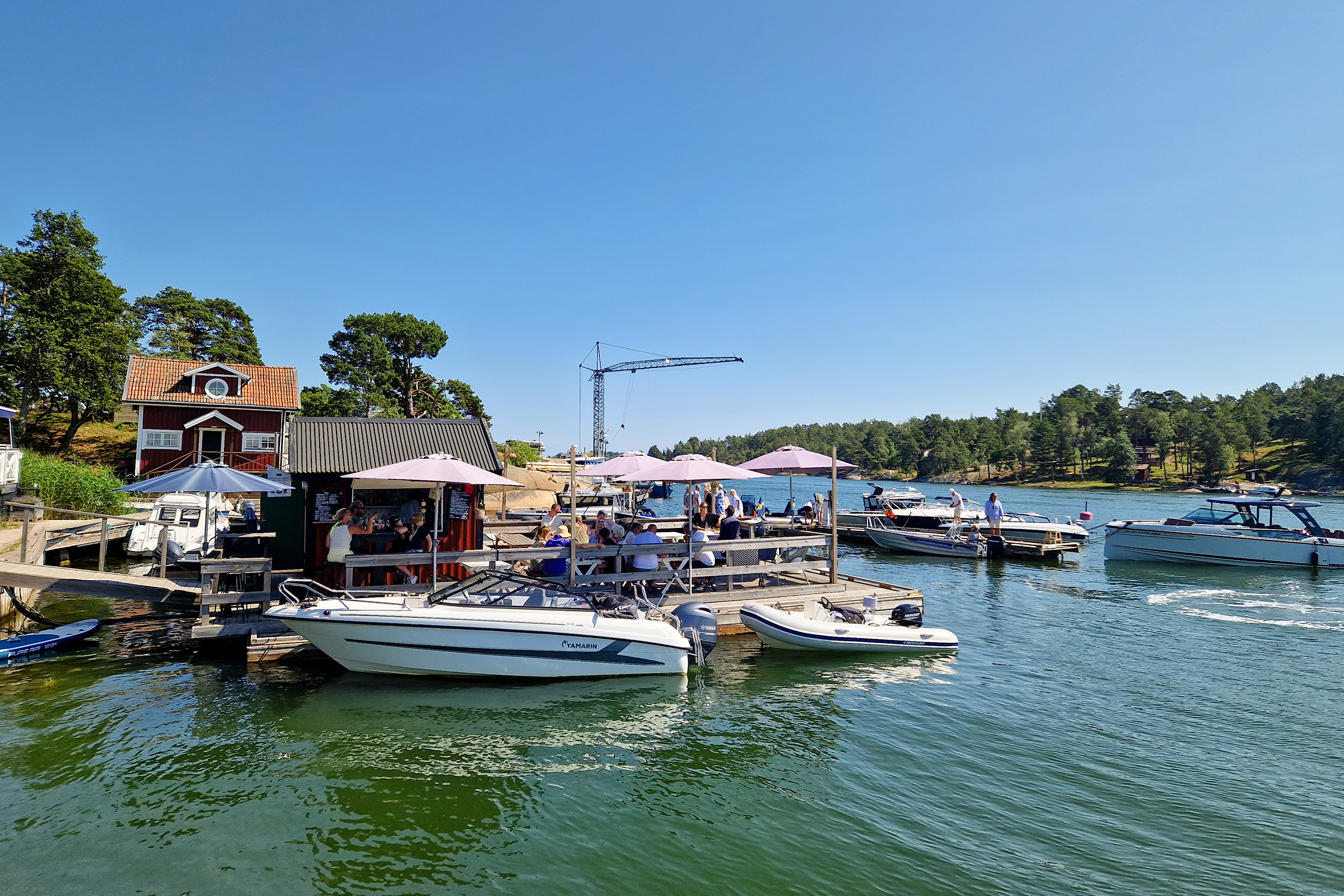
Summer is when the archipelago truly comes alive. The weather is at its warmest and most settled, with long days that stretch well into the evening – perfect for those extended Swedish summer nights you’ve heard about. Water temperatures reach their warmest, and ferries run on their peak schedule with frequent departures throughout the day.
This is also when Swedish summer culture is in full swing. Outdoor restaurants and cafés spill onto the streets, local markets brim with fresh produce and crafts, and the harbors buzz with activity. Many islanders open their summer cottages during this period, so you’ll experience the archipelago much as Stockholmers do.
The busiest period runs from after Midsummer weekend (late June) through the end of July. While it’s the most crowded time, it’s also the most energetic. If you don’t mind sharing the experience with other visitors and locals, you’ll find more to see and do than at any other time of year.
Shoulder season (May to early June, and September)
These months offer some of the best value for exploring the archipelago. The weather can still be quite pleasant, especially in early September when you might catch some beautiful late-summer days. Ferry schedules are reduced but still regular, and the number of visitors drops noticeably compared to peak season.
Some locals consider mid-August through September to be the archipelago’s best time to visit, which is why it’s called the magical season. The summer crowds have thinned, the sun still has real warmth, and the water holds much of its summer temperature. There’s a peaceful quality to the islands during this period that’s hard to find in peak season.
Restaurant and shop hours can be shorter, and some seasonal businesses close for the year, but the natural beauty is just as compelling. September is especially lovely as the leaves begin to change color.
Off-season (October to April)
During these months, Waxholmsbolaget becomes your primary option, as most tourist-oriented ferry services shut down. The archipelago takes on a completely different character – stark, peaceful, and distinctly Nordic. If you’re visiting Stockholm during winter and want to experience the archipelago’s quieter side, it’s entirely possible. Just dress warmly and check ferry schedules carefully as departures are much less frequent.
Frequently asked questions
It depends on which ferry you’re taking. For Waxholmsbolaget’s archipelago ferries, you normally don’t need to book ahead. Just show up at the dock, and buy your ticket in the SL app or pay on board (cashless). SL travelcards work on some routes and the rules change by season, so double-check for your destination.
For Fjäderholmslinjen, you can’t reserve seats, so you typically just show up and buy a ticket on the boat.
However, for Cinderellabåtarna (Strömma’s tourist boats), we recommend booking in advance, especially during summer months (June-August) when these popular routes fill up quickly. If a departure sells out, you may need to wait for the next boat.
You can book on Strömma’s website. If you prefer to keep things flexible, you can often buy tickets at Strömma’s ticket kiosks near the waterfront (for example at Strandvägen terminal), but booking online is the best way to secure your preferred departure time.
Yes, you can use your SL travel card on Waxholmsbolaget ferries within the so-called “SL area”. This is the most budget-friendly way to start exploring, because regular SL tickets are valid on these routes. The area includes Strömkajen and stretches out to Vaxholm and nearby islands (for example Rindö and Tynningö). The exact boundary is easiest to understand using the map on SL’s website.
Important seasonal note: how far your SL ticket takes you depends on the season and the type of ticket. In low season (Sep 14–Apr 29), SL period tickets valid for 30 days or longer can be used on all Waxholmsbolaget services.
For trips outside the SL area , you’ll need a Waxholmsbolaget ticket for the part beyond the SL zone. You can buy it in the SL app, on board the ferry, or at the Waxholmsbolaget ticket office at Strömkajen.
Keep in mind that SL cards don’t work on Cinderellabåtarna (Strömma) or Fjäderholmslinjen, you’ll need a separate ticket for those trips.
How long does it take to reach the most popular islands?
Journey times vary depending on your destination and which ferry operator you choose:
Fjäderholmarna: 30 minutes (from Strömkajen with all operators)
Vaxholm: Around 1 hour from central Stockholm
Grinda: Approximately 1-2 hours depending on route and stops
Möja: 3-4 hours (one of the furthest destinations)
Cinderellabåtarna generally offers faster journey times than Waxholmsbolaget since they make fewer stops along the way. Check the specific timetables on each operator’s website, as routes can vary throughout the season.
Payment options depend on the ferry operator:
Fjäderholmslinjen accepts card payments only (Visa or Mastercard). No cash. You pay on board after boarding.
Waxholmsbolaget is cashless. You can pay on board with a debit/credit card (Visa/Mastercard), and on routes where it’s valid you can also travel using your SL ticket or travelcard. If you prefer to sort it out beforehand, you can buy Waxholmsbolaget tickets in the SL app.
Cinderellabåtarna accepts major credit and debit cards when booking online or at their Strandvägen terminal. Cash isn’t usually accepted.
Sweden is largely cashless, so having a card is essential for ferry travel.
Yes, you can bring a bike on Waxholmsbolaget’s ferries, as long as there’s room on board. Space is limited, especially during busy summer weekends, and the crew decides on the spot whether bikes can be taken. Arriving early usually helps, but it’s still not guaranteed.
Cinderellabåtarna’s policy varies by boat and route – some vessels have limited bike space, while others don’t accommodate bikes at all. If you’re planning to bring a bike, contact Strömma in advance to confirm availability on your specific departure.
What happens if weather conditions are bad?
Ferry services in the Stockholm Archipelago are generally reliable, but strong winds and rough seas can sometimes cause delays or cancellations, especially in autumn and winter. In extreme conditions, departures may be postponed or cancelled for safety reasons.
Waxholmsbolaget posts service updates on their website during weather disruptions, though only in Swedish. If your ferry is cancelled, you can usually get a refund or rebook onto a later departure, depending on your ticket.
During summer months, weather-related cancellations are rare. Winter travel carries more risk of disruptions due to ice, storms, or low visibility. If you’re traveling during off-season (October-April), check the weather forecast and service status before heading to the dock, and have a backup plan if conditions look questionable.
Yes, dogs are allowed on all archipelago ferries, though policies vary slightly between operators.
On Waxholmsbolaget ferries, dogs travel for free but must be kept on a leash. During busy periods, you may be asked to keep your dog in a designated area away from the main seating sections.
Cinderellabåtarna also welcomes dogs on leash. There’s typically no additional fee for bringing your dog, but check with the specific boat tour when booking to confirm current policies. Different rules may apply depending on whether you’re taking a sightseeing tour, a regular archipelago ferry, or a food cruise.
Be aware that not all islands are equally dog-friendly. On some islands (especially nature reserves), dogs may need to be kept on a leash, and certain areas can have seasonal restrictions during bird nesting season (often April–July). Check the rules for your destination before you bring your pet.
Yes, most ferries operating in the Stockholm Archipelago now offer WiFi onboard.
Cinderellabåtarna has Wi-Fi on its Stockholm-area boats, so you can get online on routes to the archipelago islands.
Waxholmsbolaget has equipped most of their vessels with Wi-Fi, though availability can vary depending on which specific boat you board. If having Wi-Fi is important for your trip, check the individual boat details on Waxholmsbolaget’s website before departure – each vessel’s amenities are usually listed in the timetable information.
Keep in mind that while the boats themselves have Wi-Fi, the signal can vary once you’re further out in the archipelago due to distance from cellular towers. The connection is usually reliable near Stockholm and on popular routes, but it may become slower or intermittent on longer journeys to outer islands.
If you need to work or stay connected during the ferry ride, it’s still smart to plan for patchy signals. Download any essential documents, maps, or tickets before you board.
But many visitors find the lack of connectivity refreshing. For some, that little gap is part of the archipelago’s charm: you get to properly switch off for a few hours.
Yes, for one specific route. During summer 2026, the new hydrofoil Nova runs between Sollenkroka and the piers on Möja (Södermöja, Möja Ström, Berg). It’s faster than Waxholmsbolaget’s regular boats but has fewer seats, and during high season it usually fills up.
You can board without a reservation if there’s space, but on a popular route with a small boat, that’s not something to count on in July. Reserve a seat through the SL app; look for line 14X between Sollenkroka and Möja in both directions.